Vape Coil Resistance Made Simple

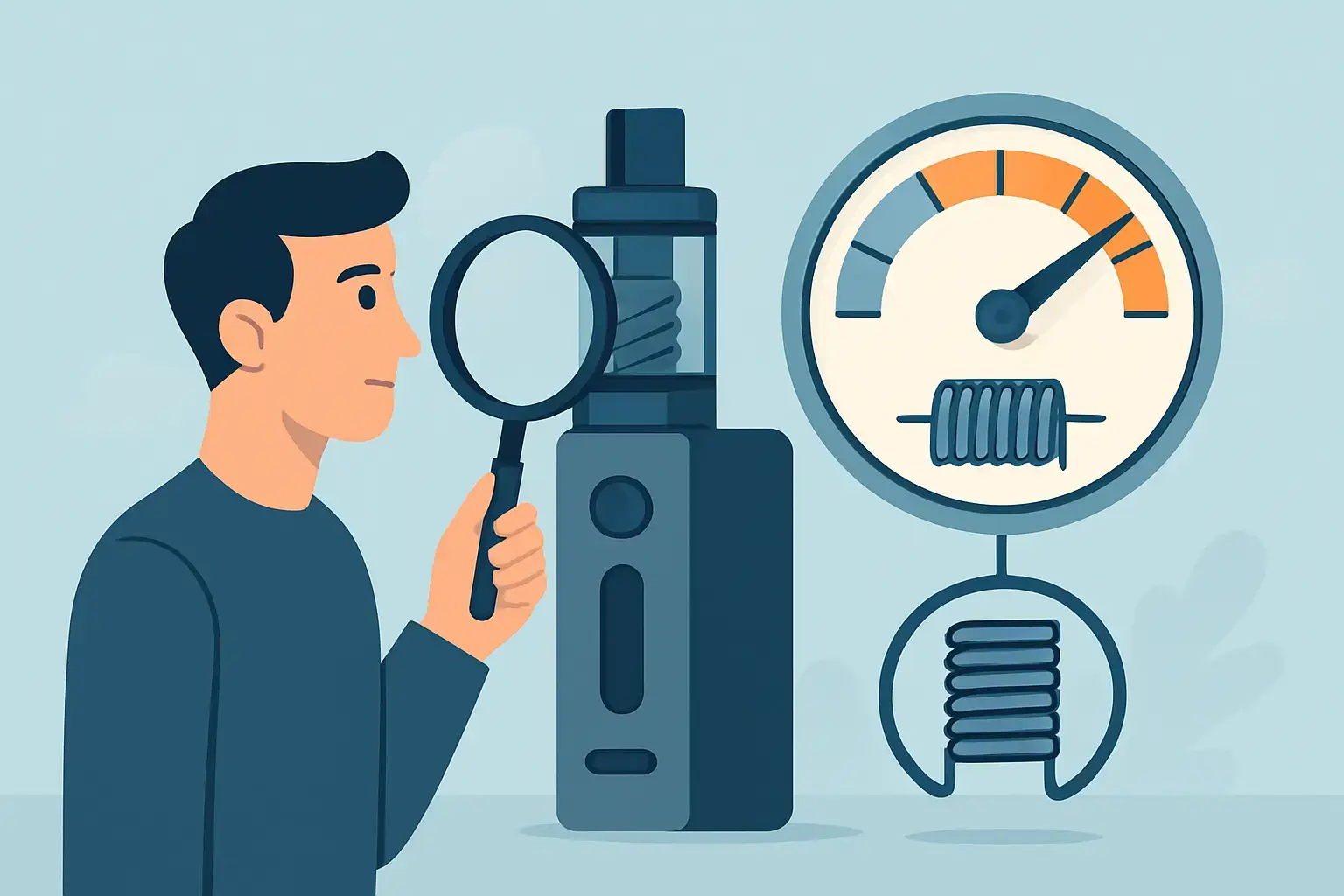
That burnt hit almost always has a backstory. It is usually not “bad juice” or a “bad device” – it is a mismatch between the coil’s resistance, the power you’re running, and the way you vape.
This guide to vape coils and resistance is here to make those choices feel obvious. You do not need to be an engineer. You just need to understand what resistance changes about heat, airflow, and how quickly your e-liquid can keep up.
What a vape coil actually does
A vape coil is a small heating element (usually wire or a mesh strip) wrapped with cotton. Your e-liquid soaks into the cotton, and when you press the button or take a puff on an auto-draw device, the coil heats up and vaporizes that liquid.
Coils are consumable parts. Over time, sweeteners darken the cotton, residue builds up, flavor dulls, and eventually the coil tastes burnt or gurgles. Resistance is one of the main reasons two coils can feel completely different even in the same tank.
Resistance in plain English: what “ohms” means
Resistance is measured in ohms (Ω). You will see numbers like 0.2Ω, 0.6Ω, 1.0Ω, or 1.2Ω printed on the coil.
Here is the simplest way to think about it:
Lower resistance coils (sub-ohm, under 1.0Ω) heat up faster and typically use more power. They usually produce warmer vapor and bigger clouds.
Higher resistance coils (around 1.0Ω and above) heat more gently and typically use less power. They usually feel smoother, use less e-liquid, and pair better with higher nicotine strengths.
That is the big picture. The “right” resistance depends on what you want from the vape and what device you are using.
The relationship between resistance, wattage, and heat
Resistance does not act alone. The wattage (power) you apply is what turns resistance into heat.
A lower-ohm coil is designed to handle higher wattage ranges. A higher-ohm coil is designed to run at lower wattage.
If you run too much power for the coil, the coil vaporizes e-liquid faster than the cotton can re-supply it. That is when you get scorching, burnt taste, and a coil that is ruined early.
If you run too little power for the coil, you often get weak vapor, thin flavor, and sometimes flooding or gurgling because the liquid is not being vaporized efficiently.
Most coils include a recommended wattage range. Treat that range like the coil’s comfort zone, then fine-tune within it based on warmth and flavor.
Coil resistance and nicotine: the match that matters
Nicotine strength changes the entire experience, especially with salt nicotine.
Sub-ohm coils (0.15Ω to 0.8Ω, roughly) are usually best with low nicotine e-liquid (often 3 mg to 6 mg freebase). They create more vapor per puff, so high nicotine can feel harsh and overwhelming.
Higher resistance coils (1.0Ω to 1.4Ω is common) are usually best with nic salts (often 20 mg to 50 mg, depending on local limits and personal tolerance) because you are inhaling less vapor per puff. These setups tend to be tighter, more cigarette-like, and more satisfying for quick nicotine delivery.
There are exceptions, but if someone tells you nic salts feel “too strong,” a very common reason is that they are using them in a low-resistance, high-wattage coil.
Airflow and draw style: MTL vs DTL
Resistance also tracks closely with airflow and the style of inhale.
MTL (mouth-to-lung) is similar to smoking: you pull vapor into your mouth first, then inhale. MTL setups usually use higher resistance coils and tighter airflow, with lower wattage and less vapor per puff.
DTL (direct-to-lung) is like taking a deep breath: you inhale straight into your lungs. DTL setups usually use sub-ohm coils, open airflow, and higher wattage for warm vapor and bigger clouds.
If you want a discreet vape with less vapor and a familiar pull, aim for a higher resistance coil and a tighter pod or tank. If you want dense clouds and a more open draw, sub-ohm coils are the natural fit.
Coil types you will see and what they change
The resistance number tells you part of the story, but coil design matters too.
Mesh coils
Mesh is popular because it heats more evenly than a simple round wire. It usually gives strong flavor and consistent performance. Many mesh coils are low to mid resistance and like moderate-to-higher wattage.
Round wire coils
Traditional wire coils can be very good, especially in higher resistance MTL coils. They sometimes feel a little less “punchy” than mesh, but they can be smooth and efficient.
Dual or multi-coil designs
More surface area usually means more vapor, but also more power demand. These are often sub-ohm and best for DTL.
The takeaway: do not choose by resistance alone. If two coils both say 0.6Ω, but one is mesh and the other is a different build, they may still feel different at the same wattage.
How to pick the right resistance for your device
Most people are choosing between a pod system (with replaceable pods or coils) and a mod with a tank. Here is a practical way to decide.
If you use a small pod device and want strong nicotine satisfaction with a tight draw, look for 1.0Ω to 1.2Ω coils or pods, and run them at the lower end of the suggested wattage. Pair with nic salt e-liquid.
If you use a more powerful device or a pod that is designed for “RDL” (restricted direct lung), a mid-range coil like 0.6Ω to 0.8Ω often hits the sweet spot for flavor, moderate vapor, and reasonable battery life. This range can work with low-nic freebase, and sometimes with lower-strength salts depending on your comfort.
If you want big clouds and warm, dense vapor, you are typically looking at 0.15Ω to 0.4Ω coils with open airflow and higher wattage. Plan on using more e-liquid and charging more often.
If you are unsure, a mid coil around 0.6Ω is often the easiest starting point for many modern devices that support multiple coil options, as long as you choose nicotine strength accordingly.
Getting the best performance: priming, break-in, and settings
A lot of “coil problems” are actually setup problems.
Priming matters because dry cotton burns fast. Before you vape a new coil, add a few drops of e-liquid directly onto the exposed cotton openings. Then install the coil, fill the tank or pod, and let it sit. Ten minutes is a safe baseline.
Break-in matters because a coil can taste harsh if you hit it at full power immediately. Start at the low end of the recommended wattage for the first few minutes, take a few gentle puffs, then step up slowly until the flavor and warmth feel right.
Your puff style matters too. If you chain vape quickly on a high-watt coil, the cotton may not have time to re-saturate. A few seconds between puffs can make the difference between a coil lasting days versus weeks.
Common problems and what resistance has to do with them
Burnt taste usually comes from too much power, not enough priming time, chain vaping, or e-liquid that is too thick for the wicking ports. Lower resistance coils are less forgiving because they vaporize liquid faster.
Gurgling and leaking often happen when the coil is not getting hot enough to vaporize incoming liquid, or when you are pulling too hard on a tight coil and flooding it. A slightly higher wattage within the coil’s range often helps, but so does using the right coil for your draw style.
Weak flavor can be a sign you are underpowering the coil, the airflow is too open for an MTL coil, or the coil is nearing the end of its life. With many setups, flavor peaks when you find the wattage “sweet spot” in the middle of the recommended range.
Harsh throat hit can come from too high nicotine for the coil’s vapor production, too much wattage, or airflow that is too restricted for a low-resistance coil.
A quick reality check on coil life
Coil lifespan depends on resistance, wattage, e-liquid, and how you vape.
Sweeter e-liquids tend to darken coils faster. High-watt sub-ohm coils typically wear out sooner than low-watt MTL coils because they are doing more work per puff. If you prioritize convenience and lower maintenance, higher resistance at lower wattage is usually the calmer path.
If you want help choosing the right coil for your pod or tank and matching it with a nicotine strength that feels comfortable, you can message VapeShop.bh and get a recommendation quickly based on your device and how you like to vape.
Guide to vape coils and resistance: how to decide in 30 seconds
When you are staring at coil options, ask yourself two questions.
First: do you want a tight, cigarette-like pull with higher nicotine and less vapor? If yes, lean higher resistance (around 1.0Ω or more).
Second: do you want warmer vapor and bigger clouds, and you do not mind using more e-liquid and battery? If yes, lean lower resistance (sub-ohm).
Then set your wattage gently at first, stay inside the recommended range, and adjust for comfort. A coil that matches your nicotine strength and your draw style almost always feels “right” immediately.
A good setup is not about chasing the lowest ohms or the biggest clouds. It is about getting a clean, reliable puff every time you reach for it – the kind that fits your day and does not demand constant troubleshooting.
Frequently Asked Questions
Vape coil resistance measures how much a coil opposes electrical current from the battery, measured in ohms. Lower resistance allows more current for hotter, faster heating and more vapour, while higher resistance produces cooler, subtler vapour. This affects your vaping style, from big clouds to a smoother mouth-to-lung draw.
Low resistance coils, typically below 1.0Ω or sub-ohm like 0.6Ω, let more electricity flow, heating up quickly for dense vapour and intense flavour. They suit direct-to-lung vaping with lower nicotine e-liquids. Pair them with high-powered devices to avoid battery strain.
High resistance coils above 1.0Ω restrict current for cooler vapour, less production, and a tighter draw like a cigarette. They work well for mouth-to-lung vaping with nic salts or 50/50 e-liquids up to 20mg/ml. These save battery and e-liquid for daily use.
Coil resistance in ohms controls heat and vapour: low ohms mean more power, clouds, and heat; high ohms mean cooler, discreet hits. Match it to your device power and style—sub-ohm for lungs, higher for mouth first. Wrong match causes burnt hits or weak vapour.
Higher resistance coils use less power, extending battery life compared to low resistance ones that drain it faster with more heat. Low resistance suits powerful devices for clouds but consumes more. Choose based on your device's specs for best performance.
For mouth-to-lung vaping, use coils above 0.8Ω for a tight draw, cooler vapour, and compatibility with nic salts. This mimics smoking and pairs with 50/50 e-liquids. Avoid sub-ohm coils here to prevent harshness or flooding.
Burnt hits often come from mismatched coil resistance, power, and vaping style—not bad juice or device. Low resistance needs more e-liquid flow; high resistance runs cooler but can dry out if airflow is off. Prime new coils and match to your wattage.