
Comparing Delivery Options for Bahrain Vape Shops: Speed, Cost, and Reliability

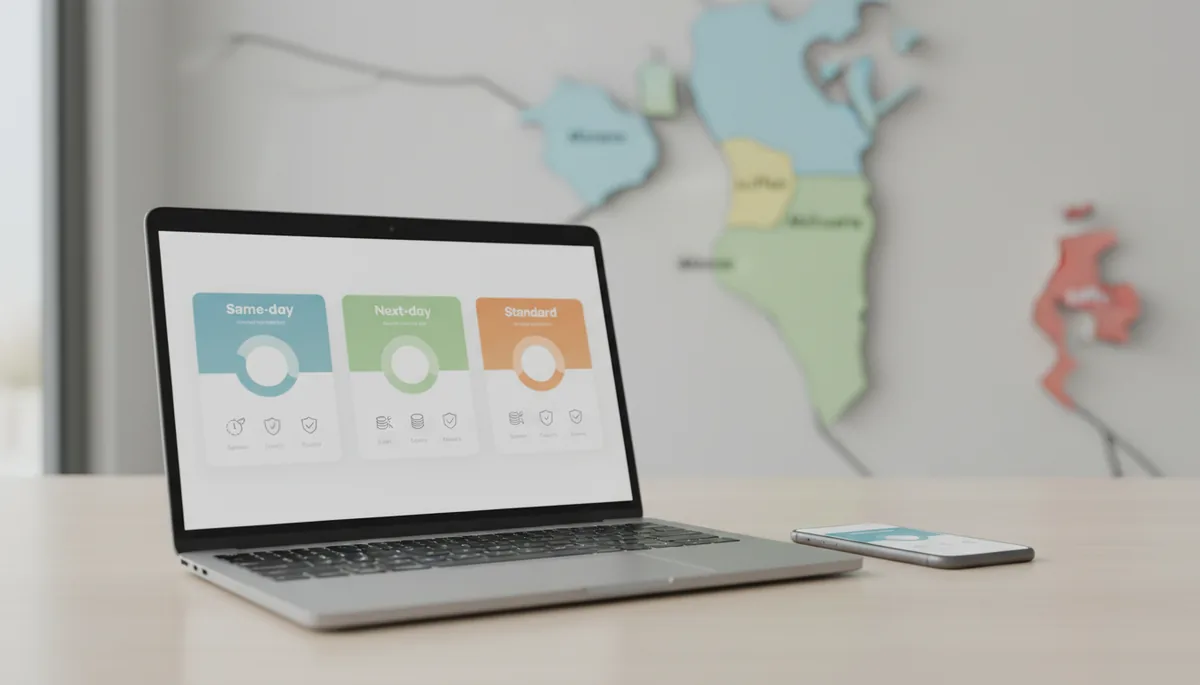
Same-Day, Next-Day, or Standard? A Bahrain Vape Delivery Guide for Speed, Cost, and Reliability
If you vape in Bahrain, the difference between a smooth delivery and a frustrating wait often comes down to one choice: which delivery tier you pick—and which shop you trust. In Manama, Juffair, Muharraq, and Riffa, plenty of vendors advertise “same-day <a href="https://vapeshop.bh/best-disposable-vapes-available-for-juffair-same-day-delivery-top-picks-and-flavor-guide-for-adults/” rel=”nofollow noopener noreferrer”>across Bahrain.” Some truly deliver within hours; others quietly roll late orders to the next-day batch or add a zone surcharge that wipes out your promo code savings. The goal isn’t to gamble; it’s to match your need—speed, price, or certainty—to the right service. ⏱️ 7-min read
This guide breaks down how same-day, next-day, and standard delivery actually work in Bahrain’s vape market, where the hidden costs hide, what reliability signals matter, and how area coverage changes your options. You’ll also find neighborhood-specific insights, product fit advice (disposables vs. salt-nic vs. advanced devices), safety and legal considerations, a practical decision checklist, and a quick look at popular Bahrain shops and what to confirm before you order.
Delivery tiers explained: same-day, next-day, and standard
Delivery labels can be deceptively simple. In Bahrain, same-day generally means your order lands the same calendar day, often within a 2–6 hour window after dispatch. Shops set several dispatch “batches,” and drivers move orders zone by zone. A common cadence is a late morning batch (closing roughly 11:00–13:00), an afternoon batch (15:00–17:00), and a final same-day cutoff that can stretch to 20:00 when a vendor runs extended or 24/7 services. If a shop lists a 14:00 same-day cutoff, an order at 13:50 rides that batch; an order at 14:10 shifts to the next window—often next-day by default.
Next-day promises arrival on the following business day, typically by end of day. This tier is the workhorse for orders outside central zones or containing products that need careful prep (mods, batteries, uncommon coils). Couriers usually plan next-day by area route—central Manama and Juffair first, outer zones later. It’s more predictable than same-day when you order past the afternoon cutoff and usually cheaper than express runs.
Standard is the economy choice. Expect 2–5 business days depending on the seller’s carrier, volume, and whether the route passes through a hub. Standard is practical if you’re building a bigger order to hit free-delivery thresholds or hunting for specialist inventory that isn’t shelved locally. It can also be the fallback option during public holidays, when same-day capacity tightens and cutoffs move earlier.
Each tier has trade-offs. Same-day is fast but can come with an express surcharge, a narrower flavor/device selection for immediate dispatch, and a higher failure risk if stock isn’t updated in real time. Next-day balances speed, price, and inventory breadth. Standard saves money but at the cost of urgency and precise ETAs. The smart play is to match the tier to your need window: do you truly need that disposable in three hours, or will “tomorrow before evening” work—and save you fees?
Cost breakdown: fees, minimums, and hidden charges
The delivered price of a vape order in Bahrain is more than the item total. Vendors display a base delivery charge at checkout—often a flat fee for handling and local courier costs—but several less visible factors may nudge your bill up or down. Many shops use delivery zones, where trips inside central Manama or Juffair cost less than runs to Riffa or parts of Muharraq. If you see a “Delivery Zones & Times” page, check your exact area; it’s common for outlying zones to include a modest surcharge or to be eligible for next-day only.
Mind the minimum-order policy. Some vendors waive the delivery fee once you cross a spend threshold; fall short, and a small “minimum order” top-up can appear. Cash-on-delivery (COD) sometimes carries a separate fee. Other line items to watch for: packaging or handling fees (particularly for liquid-heavy orders or battery shipments), fuel surcharges that fluctuate with fuel prices, and return/restocking fees if you change your mind or if a wrong flavor slips past your order check.
Tips may be optional but can improve service on repeat orders. Age verification itself shouldn’t be a surcharge, but some vendors fold the admin time into handling. Always request the full price breakdown before you confirm payment: product total + delivery fee + zone surcharge (if any) + COD or card fee + packaging/handling + any discounts. Now make the math practical:
- Example A (one disposable, urgent): Disposable at 6.0 BHD + express same-day 2.0 BHD + COD 0.5 BHD = 8.5 BHD. The single-item delivery premium is 41.7% over product price—worth it if you need it now, but poor value if you can wait.
- Example B (e-liquids, standard): Three bottles at 5.5 BHD each = 16.5 BHD. Standard delivery 1.2 BHD, no COD, 10% promo (-1.65 BHD). Total 16.05 BHD. Effective per bottle: 5.35 BHD. Grouping and a promo code trimmed the per-item price below shelf.
- Example C (mod + batteries, next-day): Mod 35 BHD + two cells 8 BHD + handling 0.8 BHD (battery packaging line item) + next-day 1.5 BHD. If the seller waives delivery over 40 BHD, that 1.5 BHD drops off; your “free delivery” wasn’t free—you earned it by bundling intelligently.
To consistently pay less, combine orders, hit free-delivery thresholds, or align with low-traffic windows when some shops drop express surcharges. If you only need one disposable, compare a late same-day fee against an early next-day arrival; the difference is often a single evening without your favorite flavor, not days of delay.
Reliability metrics to check before ordering
Speed only counts if it happens on time—and without leaks, dings, or missing items. Bahrain vape shoppers can uncover a vendor’s real delivery performance by weighing three categories of signals: objective data, public feedback, and operational details.
Start with the numbers. A posted on-time percentage (“95% on-time”) is more credible than a generic “fast delivery” claim. Next, confirm whether orders come with a working tracking link. You’re looking for timestamped checkpoints—received, packed, out for delivery, delivered—rather than a static “pending” screen. Frequent status updates signal the shop and courier are in sync. Finally, ask how the shop defines its windows: is “same-day” a 2–6 hour window after dispatch, or “by end of day”? Precision here prevents mismatched expectations later.
Then check recent customer experiences. Scan reviews from the past 30–90 days, and tally themes: how many mention on-time drops, late handoffs, missing flavors, or damaged bottles? One-off complaints happen; patterns tell the story. If you see the shop replying quickly and constructively to public feedback, that’s a sign of a responsive operation—which becomes crucial if your same-day order misses a slot.
Finally, weigh operational indicators. Shops that run in-house couriers often outperform aggregators on flexibility and local knowledge (finding your building quickly, rescheduling within the evening). Third-party networks can scale coverage but may be less precise during peak hours. Ask whether the shop caps rider loads per route, how it handles stock accuracy (live inventory vs. manual updates), and what happens after a failed delivery attempt. A clear returns/refund policy—with named windows for DOA checks, leak claims, or flavor errors—shows the seller has a plan for when things go wrong.
For same-day in particular, reliability is the difference between “within four hours” and “tomorrow morning.” Treat tracking, on-time rate, and stock accuracy as non-negotiables. If a seller can’t commit to those, step down to next-day or choose a shop with stronger delivery ops.
Area coverage and practical differences by neighborhood
“Same-day across Bahrain” often means “fastest in central zones.” Delivery speed and cost shift subtly across Manama, Juffair, Muharraq, and Riffa based on courier density, traffic, and how shops batch routes. Understanding the local map helps you set realistic expectations—and avoid surprise fees.
In central Manama and Juffair, courier availability is high and routes are short. Many shops schedule multiple runs per day here, making 2–6 hour windows genuinely attainable. You’ll also see more flexibility on late orders—if a rider finishes early, your 19:30 checkout might still slide onto a last run. During peak times (post-work rush, weekend evenings), traffic can add 15–45 minutes; still, redundancy in drivers keeps delays manageable.
Muharraq typically enjoys solid service, but bridge traffic and route planning can add variability. Some shops route through a hub before crossing, creating predictable—but slightly longer—windows. Others dispatch directly, which can be faster when traffic is light but less consistent overall. Expect a small zone surcharge in some cases, and
Frequently Asked Questions
VapeShop.Reliability depends on the shop's operating hours and order volume.
VapeShop.bh offers express 1-hour delivery at no extra charge mentioned for standard orders. Some international sellers charge flat fees like 55 AED or 79 AED for shipments to Bahrain taking 3-5 days.
VapeShop.Shops like Bahrain Vapor emphasize customer service alongside fast options, while tracking features help monitor reliability in others. Contact VapeShop.bh via WhatsApp at +973 66324432 for order status.
VapeShop.bh delivers express within 1 hour, faster than same-day, covering Manama and all Bahrain areas during 9 AM to midnight hours. Payments via COD, BenefitPay, or card ensure smooth process. This speed beats typical 3-5 day international shipments to Bahrain.
Local shops like VapeShop.Competitors may offer same-day in key areas or 3-4 working days for regional shipments. Choose based on your location and urgency for best results.
VapeShop.bh accepts Cash on Delivery, BenefitPay, and credit/debit cards for express 1-hour delivery. Many local shops support similar convenient options without extra fees. WhatsApp +973 66324432 handles any payment queries quickly.