

How to Store Vape Batteries at Home Safely


If you keep spare vape batteries at home, store them in a plastic case, indoors, at about 15–25 °C, and at 30%–60% charge. That is the short answer.
In Bahrain, this matters even more because summer heat can go past 45 °C. Heat, metal contact, torn wraps, and damp spots all add risk. If a lithium-ion cell shorts, overheats, or fails, it can vent, rupture, or start a fire.
Here’s what I’d focus on straight away:
- Check the battery first: no torn wrap, dents, swelling, leaks, or corrosion
- Store at 30%–60% charge: not full, not flat
- Take cells out of unused mods: this helps avoid drain and accidental firing
- Keep them cool and dry: indoors only, away from sun, steam, and humidity
- Use a non-conductive case: never loose in a drawer, bag, or pocket
- Keep them away from children: high shelf, locked box, or locked cupboard
- Follow vape safety tips and inspect them every few months: stop using any damaged cell at once
- Recycle damaged or spent cells properly: never put them in household rubbish
Quick view:
| What to do | Safe choice | What to avoid |
|---|---|---|
| Charge level | 30%–60% | Fully charged or fully drained |
| Storage place | Air-conditioned indoor room | Car, balcony, windowsill, kitchen |
| Temperature | 15–25 °C | 45 °C+ heat |
| Container | Plastic case or silicone sleeve | Loose in pocket or drawer |
| Moisture | Dry cupboard or drawer | Bathroom, laundry room, damp areas |
If I had to sum up the whole guide in one line, it would be this: keep vape batteries cool, dry, covered, and away from metal.
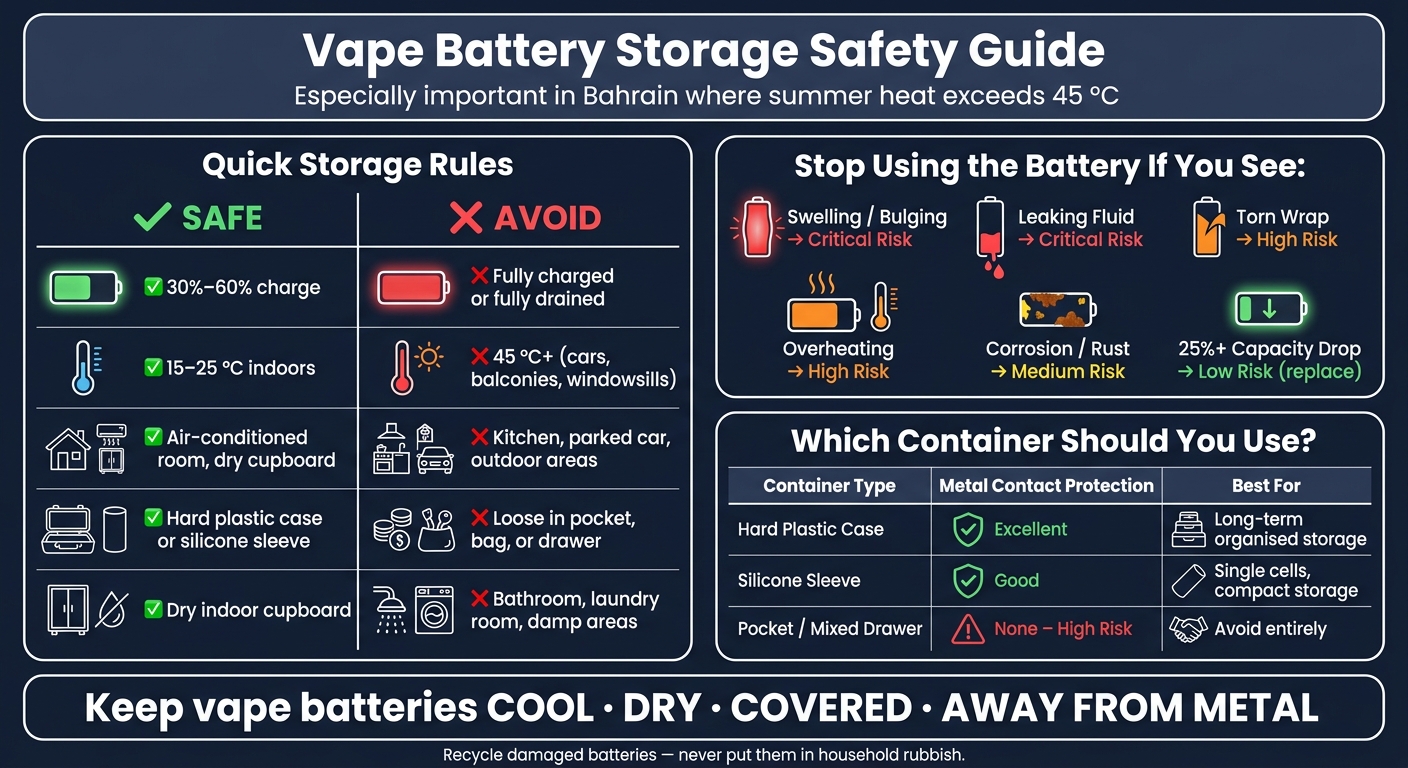
Vape Battery Storage: Safe vs. Unsafe Choices at a Glance
How to Store Lithium Batteries Safely: Avoid These Potential Dangers Now!
sbb-itb-837e7ad
Prepare batteries before storage
Give each battery a quick check before you put it away. A minute here can save you a lot of trouble later.
Check for torn wraps, dents, swelling, and leaks
Look over the wrap for nicks, tears, or peeling. If any metal is exposed, rewrap the cell or replace it.
Then check the battery body itself. Watch for dents, warping, bloating, or any sign of swelling. A swollen cell is a sign of internal failure, so it should not go back into use.
Take a look at the terminals too. If you spot corrosion or residue, treat that as a warning sign. Any damaged cell should be kept on its own in a non-conductive container and sent for recycling straight away.
Store batteries at 30% to 60% charge
For storage, keep spare batteries at about 30% to 60% charge instead of fully charged or fully drained.
If a battery is full, use it until it drops into that range. If it is running low, charge it to storage level with the charger made for that battery or vape mod.
Remove cells from devices you are not using
If you will not be using a mod for several days or longer, remove the external batteries first. This helps prevent slow parasitic drain and lowers the chance of accidental firing.
Turn the mod off before taking the cells out. After that, store the loose cells in a dedicated plastic case. No case on hand? Cover both terminals with electrical tape until you can store the cell the right way.
Once the cells are checked, set to storage charge, and removed from the mod, place them in a cool, dry storage spot.
Choose the right storage spot at home
Once your batteries are checked and set to the right charge level, where you keep them matters just as much. In Bahrain, spare batteries should stay indoors all year as part of your essential vape maintenance. After that, pick a spot that stays cool, dry, and away from metal.
Keep batteries in a cool, dry room at 15–25 °C
For lithium-ion cells, the safest storage range is about 15–25 °C, and an air-conditioned room is your best bet. In Bahrain, that matters a lot. Heat can build up fast in places that seem harmless at first.
So skip spots like:
- Parked cars
- Kitchens
- Windowsills
- Anywhere in direct sun
Those areas can get too hot, too fast.
Avoid humidity, condensation, and outdoor exposure
Moisture is another thing you don’t want near stored batteries. That means bathrooms, laundry rooms, balconies, and other damp areas are out.
A better option is a dry cupboard or drawer inside an air-conditioned room, kept away from windows, steam, and damp air. Think of it this way: if the space feels muggy or gets condensation, it’s not the place for a battery.
Safe vs risky battery storage spots: a quick comparison
Use this simple rule: steady temperature and dryness matter more than convenience.
| Factor | Safe | Avoid |
|---|---|---|
| Temperature | Stable 15–25 °C in an air-conditioned room | Above 45 °C outdoors or in parked cars |
| Humidity | Dry interior cupboard or drawer | Bathrooms, balconies, laundry rooms, or other damp areas |
| Light | Dark, shaded storage spot | Windowsills or direct sunlight |
| Location | Bedroom or living room storage | Kitchen near heat sources, or a parked car |
Prevent metal contact and use proper battery cases
Once you’ve picked a cool, dry place, the next step is simple: keep each loose battery away from metal.
How coins, keys, and tools can cause a short circuit
A loose battery can short out if a coin, key, or screw connects its terminals. When that happens, the battery may discharge fast, overheat, vent, or catch fire.
This is why pockets, bags, and mixed drawers are risky. Loose batteries can shift around and end up touching metal items. A damaged wrap makes things worse, because it exposes the metal body and increases the chance of a short. That’s one more reason to inspect wraps before putting batteries into storage.
"It isn’t safe to keep old batteries loose in a drawer because they can short-circuit if they touch other metal objects." – VapeShop.bh
The easiest fix? Use a proper non-conductive case.
Store each battery in a non-conductive case or sleeve
Keep each spare cell in its own hard plastic case or silicone sleeve. These cases help insulate loose 18650 and 21700 batteries and keep them apart from metal objects.
That matters even more when batteries are stored loose at home, where they can easily end up in the wrong place.
Battery cases, sleeves, and improvised containers: pros and cons
| Container Type | Protection from Metal Contact | Ease of Use | Suitability for Home Storage |
|---|---|---|---|
| Hard Plastic Case | Excellent – keeps cells separated and protected | High; holds batteries securely | Best for organised, long-term storage |
| Silicone Sleeve | Good – non-conductive and compact | High; slim and easy to store | Good for individual cells |
| Pocket / Mixed Drawer | None – high risk from coins, keys, and tools | – | Avoid entirely |
A hard plastic case gives the most protection. If you want something slimmer, a silicone sleeve works well for single cells.
Store batteries safely and know when to stop using them
Once batteries are in cases and kept in a cool, dry place, there’s one more part that matters: keep them out of reach and check on them from time to time.
Keep batteries in a high, locked, child-safe spot
After you’ve put batteries in cases, store them in a locked cabinet or box well out of children’s reach. That cuts down the chance of accidental access and damage.
If you have loose cells and no case yet, cover both terminals with electrical tape until you can store them the right way.
Check stored batteries every few months
Don’t store batteries and then ignore them. Have a look every few months for torn wraps, rust on the contacts, swelling, or any sign of moisture. Even a small tear in the wrap is a safety risk, so rewrap the battery or recycle it at once.
A cell should also be replaced when it no longer holds charge well or has lost about 25% of its capacity.
Final checklist: isolate damaged cells and recycle them properly
If a stored cell shows damage, stop treating it like a normal stored battery and move it straight into disposal steps.
If a battery is swollen, leaking, or overheating, stop using it at once. Put it in a non-combustible container, such as a glass jar, and take it to an authorised battery recycling point straight away.
In Bahrain, batteries should never be thrown into household rubbish. Bin lorries use hydraulic compactors, and those can crush cells and start fires. For intact but spent cells, tape the terminals before transport. Authorised drop-off points include the Zain Bahrain headquarters in Seef and Battery Bins in major supermarkets across Manama and Riffa.
| Battery Issue | Risk Level | Correct Action |
|---|---|---|
| Swelling / Bulging | Critical | Stop use; place in a glass jar; do not tape terminals; recycle |
| Leaking Fluid | Critical | Isolate in a non-combustible container; take to an authorised recycling point |
| Torn Wrap | High | Stop use; replace the wrap or recycle immediately |
| Overheating | High | Stop use; move to a non-combustible surface such as tile |
| Corrosion / Rust | Medium | Clean contacts; if persistent, recycle |
| 25%+ Capacity Drop | Low | Replace the battery and arrange proper recycling |
FAQs
How long can I store vape batteries at home?
You can store vape batteries at home for long periods, but how you store them matters.
If you won’t use a rechargeable device for several weeks, leave the battery at about 50% charge. That helps reduce chemical stress and lowers the risk of deep discharge.
Keep batteries in a cool, dry place, ideally between 15°C and 25°C. Store them away from direct sunlight and heat.
And one more thing: never leave loose batteries in a drawer. Put them in a plastic battery case and tape the terminals.
Can I store vape batteries in the fridge?
No. Lithium-ion batteries are best stored at a steady room temperature of about 25°C.
Cold conditions can reduce performance, and they can also lead to problems once the device warms back up to room temperature. Store batteries in a cool, dry place, away from direct sunlight and high heat. If you can, keep them in a dedicated plastic battery case.
What should I do with a battery that gets hot?
If your vape battery gets unusually hot, stop using it immediately.
Don’t charge it. Don’t tape the terminals. And if it’s plugged in, unplug it only if you can do that safely and without touching it directly.
Set the battery or device on a non-flammable surface, like a tile floor, and keep it well away from anything that could catch fire. Treat it as a serious hazard, then contact a professional waste management service or the SCE for advice on safe disposal.
Related Blog Posts
- Guide to 18650 Batteries for Vapes
- Guide to Lithium Vape Battery Recycling
- Vape Battery Storage Guide: Heat, Charge, Cases
- Vape Charging Safety: 8 Rules to Follow
{“@context”:”https://schema.org”,”@type”:”FAQPage”,”mainEntity”:[{“@type”:”Question”,”name”:”How long can I store vape batteries at home?”,”acceptedAnswer”:{“@type”:”Answer”,”text”:”You can store vape batteries at home for long periods, but how you store them matters. If you won’t use a rechargeable device for several weeks, leave the battery at about 50% charge. That helps reduce chemical stress and lowers the risk of deep discharge. Keep batteries in a cool, dry place, ideally between 15°C and 25°C. Store them away from direct sunlight and heat. And one more thing: never leave loose batteries in a drawer. Put them in a plastic battery case and tape the terminals.”}},{“@type”:”Question”,”name”:”Can I store vape batteries in the fridge?”,”acceptedAnswer”:{“@type”:”Answer”,”text”:”No. Lithium-ion batteries are best stored at a steady room temperature of about 25°C. Cold conditions can reduce performance, and they can also lead to problems once the device warms back up to room temperature. Store batteries in a cool, dry place, away from direct sunlight and high heat. If you can, keep them in a dedicated plastic battery case.”}},{“@type”:”Question”,”name”:”What should I do with a battery that gets hot?”,”acceptedAnswer”:{“@type”:”Answer”,”text”:”If your vape battery gets unusually hot, stop using it immediately. Don’t charge it. Don’t tape the terminals. And if it’s plugged in, unplug it only if you can do that safely and without touching it directly. Set the battery or device on a non-flammable surface, like a tile floor, and keep it well away from anything that could catch fire. Treat it as a serious hazard, then contact a professional waste management service or the SCE for advice on safe disposal.”}}]}
Frequently Asked Questions
Keep spare vape batteries indoors at about 15–25 °C, in a cool, dry place away from sunlight, steam, humidity, and heat. Use a non-conductive plastic case or silicone sleeve rather than leaving cells loose in a drawer, bag, or pocket.
Store vape batteries at 30%–60% charge instead of fully charged or completely drained. This range is suitable for keeping unused cells at home between uses.
Remove cells from unused mods before storing them. This helps prevent accidental firing and unnecessary battery drain while the device is not being used.
A non-conductive plastic case or silicone sleeve helps protect vape batteries from metal contact and accidental short circuits. Never carry or store loose cells with keys, coins, or other metal objects.
Inspect each cell for a torn wrap, dents, swelling, leaks, or corrosion before storing or using it. Stop using any battery that shows damage, because a faulty lithium-ion cell can overheat, vent, rupture, or start a fire.
Keep them in an air-conditioned indoor room at about 15–25 °C, away from cars, balconies, windowsills, kitchens, and direct sunlight. Bahrain summer temperatures can exceed 45 °C, so outdoor or vehicle storage is unsafe.
No, damaged or spent vape batteries should never go into household rubbish or mixed recycling. Store them separately in a non-conductive container and use proper battery recycling or e-waste disposal instead.
Do not place damaged or spent cells in household rubbish, where crushing or metal contact can create a fire risk. Keep them separate in a non-conductive container and take them to an appropriate battery recycling or e-waste collection point.