
Comparing Authentic vs Generic Vape Coils for Bahraini Vapers Shopping Online

Authentic vs Generic Vape Coils in Bahrain: A Safety‑First Buyer’s Guide to Real Value
Buying vape coils online in Bahrain should feel simple: pick the right part, pay a fair price, and enjoy consistent flavor. The reality is more nuanced. Between authentic OEM coils and cheaper generics, small differences in materials, construction, and quality control add up to big differences in performance, safety, and long‑term cost. That’s especially true if you rely on same‑day delivery in Manama, need warranty protection on a new device, or order coils in bulk to keep your daily setup running smoothly. ⏱️ 10-min read
This guide cuts through the noise with a practical, safety‑first approach. You’ll see exactly when authentic coils are worth the premium and when quality generics make sense, how to spot genuine OEM packaging, and what to check the moment your order arrives. We focus on what matters for Bahraini vapers—compatibility, warranty, delivery logistics, and calculating true cost per puff—so you can buy confidently whether you’re in Manama, Riffa, or Muharraq.
Decision framework: When to buy authentic vs generic coils
Start with your goal for this purchase: reliability, price, or experimenting with a new style of vape. Authentic coils from brands like SMOK, Vaporesso, and Uwell are built to the manufacturer’s exact spec and tend to deliver steadier resistance, better fit, and predictable flavor. Generics, meanwhile, win on cost, and quality ranges from surprisingly solid to inconsistent. Your device type, risk tolerance, and whether your mod is still under warranty should guide the choice more than any brand loyalty or bargain impulse.
For starter pods and new users, it’s hard to beat the simplicity of authentic parts. Pod systems are sensitive to tiny differences in coil height, O‑ring compression, and airflow alignment—differences that can decide whether a pod leaks or tastes perfect. If your device is new or under warranty, OEM coils from an authorized Bahraini seller (for example, Vapeshop.bh, which advertises authorized stock and same‑day delivery) help preserve coverage and reduce the chance of frustrating misfits.
High‑power sub‑ohm users often push hardware near its limits, where resistance variance and wicking speed matter. If you run 50–100W mesh coils, an authentic head with tight tolerance can prevent protection cutouts and dry hits. Budget buyers and daily vapers, on the other hand, can reasonably explore reputable generics. The trick is to buy a small batch, log coil lifespan for your e‑liquid and wattage, and only then scale up. Wholesale or bulk purchasers can also mix strategies: keep OEM coils for devices you care about most and stock generics for backup tanks or less picky setups.
Quick match by scenario:
- Starter pod user or device under warranty: Choose authentic coils from an authorized Bahraini shop; keep receipts and batch codes.
- High‑power sub‑ohm cloud chaser: Prefer authentic mesh for consistent resistance and safer high‑watt performance.
- Budget daily vaper: Try well‑reviewed generics in small batches; keep notes on lifespan and flavor consistency.
- Bulk buyer or backup setups: Mix OEM for main devices and quality generics for backups and non‑critical tanks.
How coils differ: materials, construction, and performance
The coil’s wire and wick materials directly control flavor, ramp‑up time, and compatibility with different modes. Kanthal (FeCrAl) is common for wattage mode and known for stability and a forgiving power window—ideal for newer users and general MTL setups. Nichrome (Ni80) heats faster than Kanthal, giving a snappier ramp‑up and often brighter top‑notes in flavors; it’s popular in sub‑ohm and mesh designs. Stainless steel (SS316/SS316L) sits in a useful middle ground: it works in both standard wattage and temperature control (TC) modes. Nickel (Ni200) is typically reserved for TC only and requires careful device support; it’s not recommended for beginners.
Wicking also shapes your experience. Organic cotton remains the standard for clean flavor and quick saturation, but it’s sensitive to dry hits if under‑primed. Some coils use ceramic or ceramic‑infused wicks to resist scorching and extend lifespan, though the draw can feel drier and flavor slightly muted to some palates. In the Bahraini climate, where daytime heat can thin e‑liquid in a parked car or warm room, a coil with reliable cotton and secure O‑rings helps prevent flooding and leaks during temperature swings.
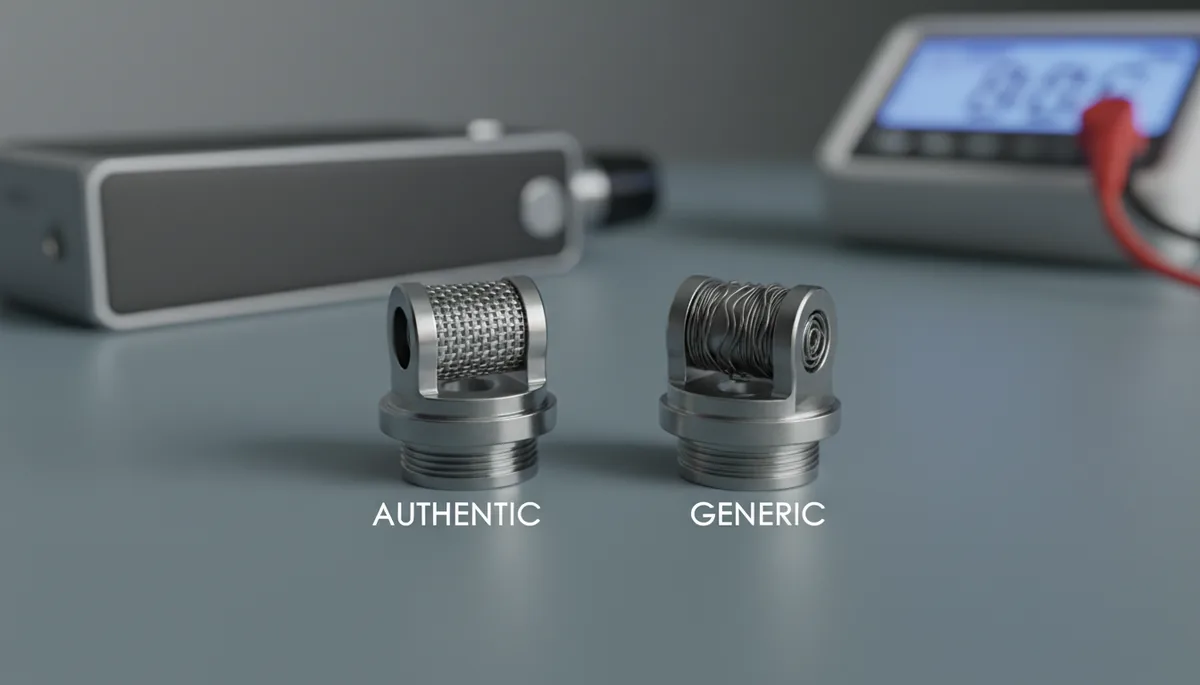
Construction style matters as much as material. Traditional round‑wire coils are simple and affordable, but mesh coils—flat or woven metal strips—offer far greater surface area and more even heat distribution. The result is faster ramp‑up, strong flavor at lower wattages, and fewer hot spots. Multi‑coil heads (dual, triple) increase vapor but demand more power, drink e‑liquid faster, and stress batteries. Authentic coils usually state clear resistance tolerances (for example, ±0.05 Ω), while generics can vary more. That variance affects flavor, ramp‑up, and whether your mod misreads the coil and throws a “short” or “ohms too low” warning.
Performance signals to watch: ramp‑up speed (nichrome and mesh respond quickly), heat distribution (mesh reduces hot legs), and TC reliability (SS tracks temperature more predictably). If you rely on TC to avoid dry hits, stainless steel OEM coils with documented coil material and resistance tolerance are your safest bet. If you’re a wattage‑mode vaper focused on flavor and cloud density, mesh coils—OEM or high‑quality third‑party—will usually give the most satisfying results per watt.
Authentic coils: benefits, drawbacks, and how to spot real OEM parts
Authentic coils earn their price premium by removing uncertainty. OEM heads from brands such as SMOK (e.g., TFV, RPM series), Vaporesso (GT Core, GTX), and Uwell (Caliburn, Crown) conform to published specs and fit their tanks without hassle. When your device manual lists a recommended wattage range, coil material, and compatible e‑liquids, an authentic head will sit inside that envelope with consistency. That means fewer leaks due to misaligned chimneys, fewer gurgles from odd wicking cuts, and a resistance reading on your mod that actually matches the box.
There are practical protections as well. Many manufacturers reference the use of genuine consumables in their warranty terms. If your tank or device is still covered, sticking to authentic coils purchased from an authorized retailer in Bahrain preserves your ability to claim support. Local sellers like Vapeshop.bh advertise authorized stock and same‑day delivery—useful when you want both speed and a paper trail. Authentic coils also come with documented specs: wire type, recommended wattage, and in some cases, notes on e‑liquid viscosity that save you from guesswork.
The downsides are familiar: higher unit cost and fewer aftermarket “tweaks.” An OEM design aims to work well for a wide audience, while some third‑party coils try daring builds for niche tastes (for example, very low resistance mesh for ultra‑smooth, warm draws). If you’re willing to experiment, that may feel like a missed opportunity. Shipping can also be slower if you need to source a particular coil from overseas—though in Bahrain, the better local shops mitigate this with in‑stock pages and fast dispatch across Manama, Riffa, and Muharraq.
How to spot genuine OEM coils:
- Packaging and security. Look for holograms with microtext or color‑shift, intact tamper seals, and sharp printing. Counterfeits often have washed‑out colors, sloppy fonts, or misaligned logos.
- Batch codes and authentication. Most major brands include a batch or lot code and, increasingly, scratch‑and‑check or QR verification on the box. Verify on the manufacturer’s site when in doubt.
- Consistent labeling. The coil’s etched or printed resistance, wattage range, and logo should match the box and the brand’s product page.
- Where you buy. Favor licensed sellers and local shops that publish proof of authorized sourcing. If a deal looks too good, ask for photos of the actual box and batch code before you pay.
Generic coils: when they make sense and how to evaluate quality
Generic coils can be a smart buy if you approach them like a cautious tester, not a gambler. They shine when you want to cut everyday costs on a well‑understood setup, keep a few backup coils “just in case,” or try a new coil style before investing in a pricier OEM option. They’re also invaluable when a manufacturer discontinues a beloved coil head—good generics can keep that favorite tank alive for years. In Bahrain’s online market, you’ll find a wide spread in generic quality, so the seller you choose is as important as the product listing.
Evaluate generics with the same rigor you’d apply to a new mod. Start with the listing details: precise resistance values (0.3 Ω, 0.6 Ω) rather than vague “0.x Ω,” clear wattage ranges, and honest material claims (Kanthal, SS, Ni80). Photos should show the build itself—mesh pattern or wire wraps, wicking port size, and a clean, centered positive pin. Poorly cropped or stock photos that hide the coil interior are a red flag. Read recent user reviews from Bahraini buyers where possible; look for patterns in comments about resistance consistency, lifespan, and leakage.
Returns and policies matter more with generics. Prefer sellers who replace dead‑on‑arrival units and state whether they accept returns for out‑of‑tolerance coils. Local vendors often make this simpler than anonymous international marketplaces. In Bahrain, many shops offer WhatsApp support—use it. Ask for a photo of the exact batch you’ll receive and confirm the return window before you order. If the seller hesitates to answer straightforward questions, move on.
Finally, buy small to start. Order one pack, track coil lifespan with your usual e‑liquid and wattage, and measure resistance on your mod or an ohm reader before installing each head. If a generic gives you a clean two‑week run in a moderate‑wattage setup, holds resistance within ±0.05–0.1 Ω of spec, and doesn’t leak, you’ve likely found a reliable budget option worth buying in bulk.
Compatibility and safety: preventing shorts, leaks, and device damage
Correct fit is the first safety barrier. Even tiny differences in coil height, chimney alignment, or O‑ring thickness can turn a well‑behaved tank into a leaker. Check that the coil’s base pin sits flush and springy, threads engage smoothly without cross‑binding, and O‑rings are intact and seated in their channels. On some tanks, a too‑tall coil will choke the airflow or push the chimney upward, while a shorter one can leave gaps that invite flooding. If the coil doesn’t seat with light, even pressure, don’t force it.
Electrical compatibility is equally important. Your mod expects a resistance within its safe range (commonly 0.1–3.0 Ω) and will deliver power based on that reading. Coils with loose tolerances can read too low and trip “ohms too low” or short protections, or too high and produce weak vapor at normal settings. The coil’s stated wattage range should guide your settings, but remember that e‑liquid composition, ambient temperature, and airflow affect wicking speed. In hot Bahraini afternoons, thinner juice can flood a coil at rest yet vape fine once you start; start at the lower end of the wattage range and step up slowly.
For temperature control fans, material honesty is non‑negotiable. TC mode relies on predictable changes in resistance as the coil heats; stainless steel (SS) is the common choice for TC in prebuilt heads. If a generic claims SS but behaves erratically in TC—jumping temperatures, pulsing—switch to wattage mode immediately and reevaluate. Using Ni200 or titanium requires explicit device support; when in doubt, don’t force TC with unknown materials.
Signs to reject a coil before you fire:
- Physical flaws: torn or flattened O‑rings, frayed cotton, off‑center mesh, loose wire legs, crushed threads.
- Bad electrical read: resistance well outside spec (for example, a 0.2 Ω coil reading 0.06 Ω or 0.35 Ω on a stable mod).
- Intermittent contact: the resistance value jumps when you gently tap the
Frequently Asked Questions
Authentic vape coils feature premium packaging with consistent branding, clear ingredient labeling, CE markings, and safety certifications like QR codes or serial numbers for manufacturer verification. Counterfeit coils often show poor packaging quality, typos, missing verification codes, or suspiciously low prices.
Generic vape coils may use inferior materials leading to overheating, leaks, unstable resistance, and potential battery stress or explosions due to lacking short-circuit and overcharge protection. Authentic coils maintain stable resistance, even heat distribution, and include safety features for consistent performance. Bahrain vapers should prioritize coils with proper certifications to avoid health risks from chemical leaks or harsh hits.
Authentic coils use high-quality alloys, precision mesh, and layered cotton for even heating, rapid saturation, and resistance stability over extended use. Generic versions suffer from irregular mesh patterns, poor cotton wicking, and material degradation causing early flavor loss and dry hits. This difference becomes evident after days of regular vaping.
Look for holographic security features, tamper-evident seals, consistent fonts, and MHRA or CE registration numbers on authentic coil packaging. Generic fakes often have blurry printing, missing seals, or fake codes that fail brand verification scans. Verify barcodes and serial numbers via the manufacturer's portal upon unboxing.
Generic coils with inconsistent cotton and mesh cause uneven heating, rapid flavor degradation, gurgling, or flooding compared to authentic ones with calibrated wicking and stable resistance. This leads to fluctuating vapor temperature and increased device stress over time. Authentic coils ensure predictable airflow and flavor clarity for better overall experience.
Authentic vape coils display CE markings, safety certifications, and digital authentication like QR codes linking to manufacturer sites. They avoid excessive nicotine claims over 20mg/ml per Bahrain regulations and include clear documentation. Absence of these indicates potential counterfeits with safety risks.