

How to Choose a 20,000 Puff Disposable Vape in Bahrain: Flavor, Battery Life, and Value

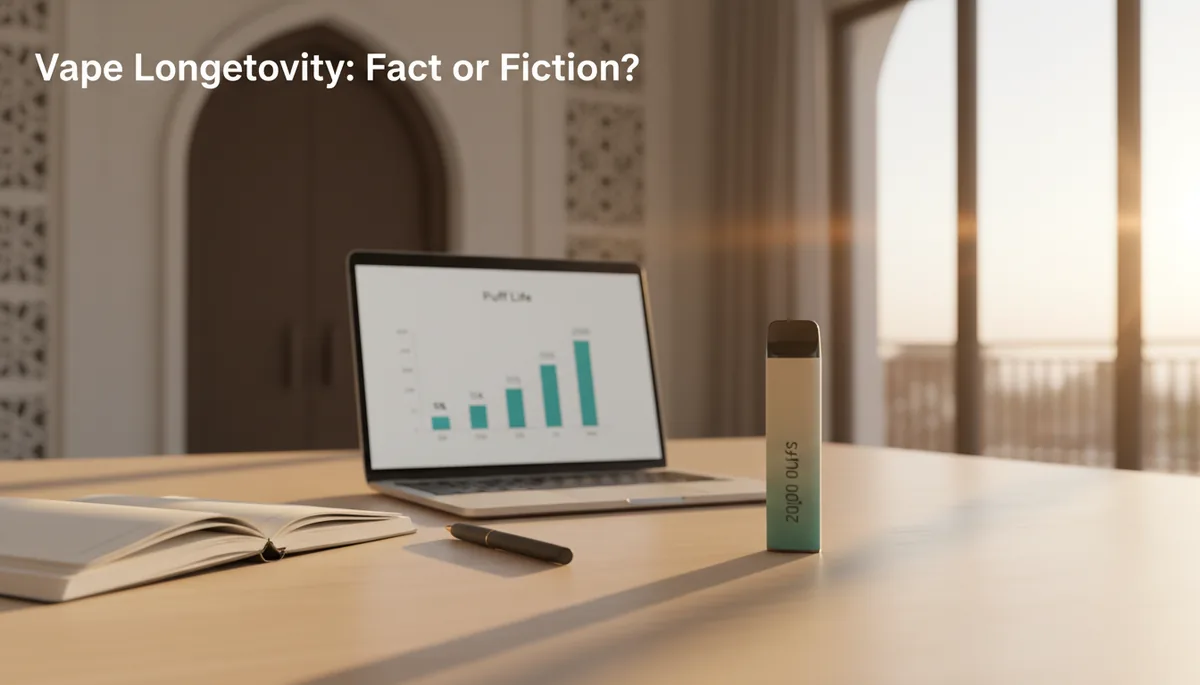
How to Choose a 20,000‑Puff Disposable Vape in Bahrain: Battery Truths, Flavor Fit, and Real Value
Twenty-thousand-puff disposables are everywhere in Bahrain right now—on shelves in Manama, in WhatsApp catalogs, and on local delivery sites promising a sealed device at your door before evening prayer. But those eye‑catching numbers can blur into marketing noise when you’re trying to balance battery life, satisfying flavor, nicotine type, and total spend. This guide is a practical, Bahrain‑focused playbook to cut through the hype, compare options with confidence, and buy from shops that will actually support you if something goes wrong. ⏱️ 5-min read
Below, you’ll learn what “20,000 puffs” really means in daily use, how to read battery specs and spot misleading claims, how to choose salt nic vs freebase for your style, and the simple math that shows whether a high‑puff disposable or a refillable pod system will save you money. We’ll also cover reliable local buying criteria, same‑day delivery zones, and bulk‑order tips specific to Bahrain’s market and climate. If you want the quick version, skip to the in‑store checklist; otherwise, dive in and turn those puff claims into a device that fits your routine—and your budget.
What “20,000 puffs” really means: marketing vs real use
The puff number printed on a disposable’s box is not a stopwatch of your exact experience; it’s a laboratory‑style estimate built on controlled conditions. Most manufacturers standardize a “puff” as a short activation—often 1–3 seconds—at fixed intervals with a specific power output. The test ends when the device can no longer maintain that output or the remaining liquid falls below a threshold. In other words, they assume shallow, consistent draws and cool‑running coils in a room‑temperature environment. Under those assumptions, you can rack up very high counts.
Everyday use is messier. If you take longer inhales, the device runs hotter, vaporizes more liquid per draw, and drains the battery faster. Chain vaping reduces the time a coil has to cool, which accelerates both liquid consumption and cell sag. Ambient temperature matters, too: a device left in a hot car in Muharraq or on a sunlit café table in Riffa will age faster, and some liquid can thin and migrate, making the last portion less usable. Real‑world puff counts typically land below the headline claim, sometimes by 20–50% depending on your style.
So what does that mean in days or weeks? Use a conservative conversion to plan your spend. With light mouth‑to‑lung draws and breaks between puffs, you might achieve roughly 75–85% of the stated count. With moderate use (2–4 second puffs, periodic sessions) expect about 60–75%. Heavy users who take long or direct‑to‑lung draws may only see 50–70%. As a quick guide: light users at 200–300 puffs per day could stretch a “20,000” device to 6–10 weeks; moderate users at 500–700 puffs per day may see 3–4 weeks; heavy users around 1,000+ puffs per day often finish in 10–20 days. If your device starts fading far earlier, it’s worth questioning the specs—or your retailer.
Your draw style shapes the final tally. Mouth‑to‑lung (MTL) puffs—shorter inhales with tighter airflow—are the friendliest to puff counts. Direct‑to‑lung (DTL), with airy pulls and bigger vapor, burns through liquid and wattage more quickly. Some 20,000‑puff devices are tuned for MTL to deliver that headline figure; if you crave roomy airflow and clouds, prepare for fewer total puffs or look for a device that’s explicitly designed for DTL and lists robust battery and liquid specs to match.
Battery capacity and performance: how to judge longevity
The quickest way to sanity‑check a “20,000” claim is by looking at the battery section on the product page or box. Three specs matter most: battery capacity (mAh), the maximum or sustained output (amps or watts), and the battery chemistry (most will be lithium‑ion or lithium‑polymer). Local retailers and same‑day delivery sites in Bahrain often publish at least the mAh; if a listing hides capacity, chemistry, and max output, consider it a red flag. These numbers aren’t perfect predictors, but they give you the contours of what’s plausible.
There’s no universal puff‑per‑mAh equation, but a rule of thumb helps: higher resistance coils and MTL draws yield more puffs per mAh than low‑resistance DTL setups. A rough heuristic: 1 mAh ≈ 10–15 light‑MTL puffs, or 5–8 moderate‑DTL puffs. By that math, a device that truly supports 20,000 puffs typically needs something on the order of 1,300–4,000 mAh, depending on coil design and power regulation. Pair that with realistic e‑liquid volume—many long‑life disposables carry 10–20+ mL—and the story should make sense: a tiny device with a very small cell and modest liquid reservoir is unlikely to sustain twenty thousand satisfying draws without frequent recharging and careful, light puffs.
Output wattage and airflow are the hidden variables that make or break longevity. Higher wattage delivers warmer vapor and fuller clouds but empties a tank faster; tighter airflow boosts perceived hit at lower wattage and stretches both battery and liquid. Pay attention to how a device regulates power: some use constant‑voltage or constant‑wattage boards to keep performance steady, while others sag noticeably as the battery discharges. If a listing mentions regulated output (even a simple “consistent power”), that’s a plus for flavor stability over long use.
Watch for early signs of a weak or overworked battery: voltage sag (each puff feels slightly weaker than the last in a short session), the device getting unusually warm even with gentle use, or rapid flavor fade within the first few hundred puffs. Frequent cutouts or blinking lights after only brief draws
Frequently Asked Questions
The 20,000 puff number is an estimate based on controlled testing, not a guarantee for every user. In real life, heavy vapers who take long, strong puffs will finish the device much faster than someone who takes shorter, less frequent draws. Battery capacity, coil design, and how you inhale all change how close you get to the printed puff count.
Puff count is only one part of the story; liquid capacity, battery life, coil type, and overall build quality all affect how the vape performs over time. A well-designed high-capacity disposable keeps flavor and vapor consistent until the tank is empty, while weaker designs may drop in performance much earlier. Choosing a device that matches your vaping style helps you get real value from those 20,000 puffs.
Long, deep inhales at higher power settings consume e-liquid and battery faster, reducing the total number of usable puffs. Shorter, gentler mouth-to-lung pulls use less liquid per puff and bring you closer to the advertised 20,000 count. Understanding your own habit—whether you take a few strong sessions or many light puffs throughout the day—helps you choose the right capacity.
Higher puff counts generally mean a larger e-liquid reservoir and more overall vaping time, which can improve cost per puff compared with low-capacity disposables. For regular or heavy users, a 20,000 puff device reduces how often you need replacements, even if the upfront price is higher. Light users may find that a smaller puff count still lasts long enough without paying for capacity they never fully use.
Yes, the battery must be strong enough to vaporize all the e-liquid in the device; otherwise the vape can die before you reach 20,000 puffs. Many high-capacity disposables use larger or rechargeable batteries to maintain stable vapor and flavor over extended use. Checking whether the device is rechargeable and designed for long runtime helps you avoid losing remaining liquid to a flat battery.
Salt nicotine is typically smoother at legal strengths and suits tighter mouth-to-lung draws, while freebase feels sharper and is often paired with more open airflow. Matching nicotine type to how you like to inhale—slow, cigarette-like puffs or more open, airy hits—makes a big difference to comfort over thousands of puffs. Always stay within Bahrain’s legal limits and choose the type that feels satisfying without being harsh.
High-puff devices stay with you for weeks, so it is important to buy from a shop that offers reliable customer support via WhatsApp at +973 66324432 if anything goes wrong.Choosing a trusted online store with experience in the local market helps ensure you get the performance and backup you expect.