

How Vaping Affects Lung Health


Vaping is increasingly common in Bahrain, with 18.02% of adults using e-cigarettes, but many overlook its risks to lung health. Vaping aerosols contain harmful chemicals like metals, carbonyls, and nicotine, which can damage the lungs, cause inflammation, and lead to long-term issues like bronchiolitis obliterans, COPD, and even cancer. Immediate effects include coughing, wheezing, and chest tightness, especially for those with asthma.
While often seen as safer than smoking, studies show that vaping weakens the lungs’ natural defences and poses serious health risks. To reduce harm:
- Avoid dual use of cigarettes and e-cigarettes.
- Steer clear of unregulated products and risky practices like modifying devices.
- Use well-ventilated spaces to minimise secondhand exposure.
If you experience persistent symptoms, consult a doctor promptly. Making informed choices about vaping can help protect your lung health.
How Vaping Affects the Lungs
How Aerosols Travel into the Lungs
When you vape, the device's atomiser heats the e‑liquid, turning it into an aerosol. This aerosol is then inhaled, travelling from your mouth through the trachea, into the bronchi, and finally reaching the alveoli deep in your lungs. This is where things get worrisome. Once the particles reach the alveoli, they can enter your bloodstream. Studies reveal that vaping aerosols reduce the ciliary beat frequency by 53% and weaken the airway barrier integrity by up to 77.4% after just 60 sessions. This means your lungs’ natural defences, like mucus clearance and the protective lining, are compromised.
"There is clear evidence that exposure to EC aerosols adversely affects the airway surface through pro-inflammatory changes, oxidative stress, impaired mucociliary clearance, epithelial cell damage, and decreased innate immunity." – Thoracic Society of Australia and New Zealand
Now, let’s break down the chemicals in these aerosols and their impact on your lungs.
Chemicals Found in Vaping Aerosols
Vaping aerosols aren’t just harmless water vapour. Researchers have identified about 250 different chemicals in these aerosols. These include the original ingredients in the e‑liquid and new compounds formed when the liquid is heated. Here’s a closer look at the main chemical categories and their effects on lung health:
| Chemical Category | Examples | Effect on Lung Health |
|---|---|---|
| Humectants | Propylene glycol (PG), vegetable glycerin (VG) | Can cause cytotoxicity, throat irritation, and airway hyperreactivity |
| Flavorings | Diacetyl, cinnamaldehyde, menthol | Linked to bronchiolitis obliterans ("popcorn lung") and inflammation |
| Metals | Nickel, chromium, tin | Associated with pneumonitis, wheezing, and even cancer risks |
| Carbonyls | Formaldehyde, acrolein, acetaldehyde | Contribute to oxidative stress, DNA damage, and increase the risk of COPD |
| Nicotine | Freebase nicotine, nicotine salts | Leads to increased vascular permeability and weakens the lung’s barrier function |
Nicotine salts vs freebase nicotine are often compared for their effects; however, salts used in pod-based devices for a smoother vaping experience are particularly concerning. They trigger a more intense inflammatory response in lung cells compared to standard freebase nicotine. Additionally, flavouring agents like diacetyl – commonly found in buttery or sweet-flavoured e‑liquids – are directly linked to bronchiolitis obliterans, a condition that permanently scars and narrows the airways.
The combination of these harmful chemicals creates both immediate and long-term threats to lung health, leaving the respiratory system vulnerable to serious damage.
sbb-itb-837e7ad
Stop the vape: A health warning – Mayo Clinic Health System

Immediate Effects of Vaping on the Lungs
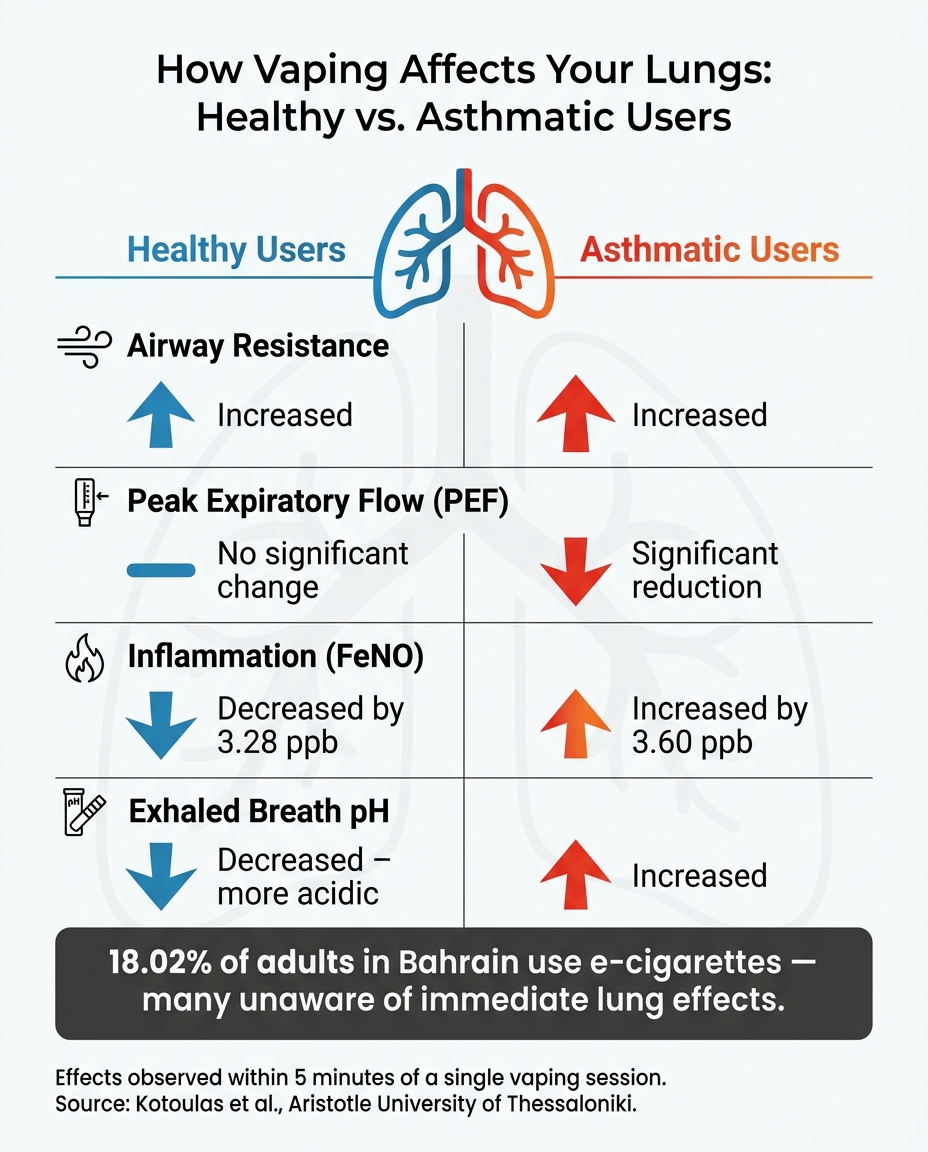
How Vaping Affects Healthy vs. Asthmatic Lungs: Immediate Effects
Short-Term Symptoms to Watch For
Vaping starts affecting your lungs almost immediately. Within just five minutes, studies indicate a noticeable rise in respiratory resistance across various airway frequencies (5Hz, 10Hz, and 20Hz). This happens in both healthy individuals and those with conditions like asthma. Essentially, your airways begin to tighten right away.
For individuals with asthma, the effects are even more pronounced. Research led by Serafeim-Chrysovalantis Kotoulas from the Clinic of Respiratory Failure at Aristotle University of Thessaloniki revealed:
"E-cigarette vaping resulted in acute alteration of both pulmonary function and airway inflammation in stable moderate asthmatic patients."
In asthmatic users, a single vaping session caused an increase in fractional exhaled nitric oxide (FeNO) – a key marker of inflammation – by 3.60 ppb. This was coupled with a significant drop in Peak Expiratory Flow (PEF), which measures how quickly someone can exhale. Even healthy users experienced increased airway resistance and a shift toward a more acidic exhaled breath.
Here’s a quick comparison of how vaping affects healthy and asthmatic users right after a session:
| Physical Change | Healthy Users | Asthmatic Users |
|---|---|---|
| Airway Resistance | Increased | Increased |
| Peak Expiratory Flow (PEF) | No significant change | Significant reduction |
| Inflammation (FeNO) | Decreased by 3.28 ppb | Increased by 3.60 ppb |
| Exhaled Breath pH | Decreased (more acidic) | Increased |
Short-term symptoms to look out for include dry cough, throat irritation, chest tightness, and mild wheezing. These aren’t just minor inconveniences. They’re your body’s way of reacting to the chemicals in the aerosol – like propylene glycol, nicotine strength, flavouring agents, and metallic particles released from the heating coils. These symptoms can feel worse in enclosed spaces.
Vaping Indoors in Bahrain
The risks of vaping become even greater when done indoors, as harmful aerosols tend to accumulate in confined spaces. These aerosols are packed with ultrafine particles, reactive aldehydes, and heavy metals such as nickel and chromium. In enclosed, air-conditioned spaces, these particles can quickly build up, creating a more hazardous environment.
This is especially relevant in Bahrain, where social gatherings often take place in majlis settings or tightly air-conditioned rooms. A study published in Discover Public Health highlighted that 60.3% of male vapers in Bahrain believe vaping indoors is safe, compared to only 14% of females. This gap in perception poses a significant risk to bystanders, who may unknowingly inhale secondhand aerosol.
The European Respiratory Society has strongly cautioned against this, stating:
"Nicotine-containing e-cigarette vapour increases pulmonary endothelial permeability, induces inflammation and causes airway and parenchymal alterations."
If you vape, choosing well-ventilated, open spaces can help minimise exposure to harmful particles for both yourself and those around you.
Long-Term Lung Risks from Vaping
Chronic Respiratory Conditions
Prolonged exposure to vaping aerosols can lead to serious lung health issues. The chemicals found in vaping products – such as carbonyls, metals, and flavouring agents – cause ongoing inflammation that worsens over time. Studies have shown that this chronic inflammation increases levels of pro-inflammatory cytokines, which can eventually reduce the FEV1/FVC ratio, a key measure of lung function. Animal research supports these findings, showing that long-term exposure to nicotine vapour expanded lung airspace by 17.5% compared to controls, resembling early signs of emphysema. Additionally, flavouring agents like diacetyl and 2,3-pentanedione have been linked to bronchiolitis obliterans, or "popcorn lung", a condition that scars and partially blocks small airways.
But it’s not just chronic inflammation – vaping can also result in sudden and severe lung injuries.
Serious Lung Injuries
EVALI (E-cigarette or Vaping Product Use-Associated Lung Injury) is a recognised condition that has caused over 2,800 hospitalisations and 68 deaths. Among those affected, 76% required supplemental oxygen, and 26% needed intubation with mechanical ventilation.
The main culprit behind EVALI is vitamin E acetate, a substance used in some THC cartridges. When heated, it breaks down into ketene, a toxic compound that damages the alveolar–capillary membrane, impairing the lungs’ ability to exchange gases. Riskier practices like "dabbing" or "dripping" – where e-liquid is applied directly to a heating coil – expose users to even denser, more harmful aerosols. Interestingly, about 15% of EVALI cases have involved products containing only nicotine.
"EVALI is a clinical diagnosis that requires the use of an e‐cigarette in the 90 days preceding the appearance of initial symptoms; pulmonary infiltrates on a plain chest radiograph or chest CT, and the absence of any other possible etiology." – StatPearls
While these injuries are alarming, the risks don’t stop there. Long-term exposure could also increase the likelihood of cancer and chronic obstructive pulmonary disease (COPD).
Cancer and COPD: What the Evidence Shows
A study from South Korea involving 23,262 COPD patients revealed that switching from traditional cigarettes to e-cigarettes did not significantly lower the risk of lung cancer (aHR 0.94) or reduce COPD exacerbations (aHR 0.98) over a 5.1-year period.
"The lack of significant risk reduction for these outcomes among e‑cigarette switchers underscores the unclear long-term safety of these products." – Respiratory Research
On the topic of cancer, vaping aerosols contain carcinogens like nickel and chromium. Additionally, there is evidence of DNA damage in the epithelial cells of the oral and nasal mucosa in vapers, which could be an early indicator of cancer development. Although research is still developing, the current findings strongly suggest that long-term vaping carries serious risks for respiratory health.
Steps to Lower Your Vaping Risks
Reducing the potential harm from vaping starts with adjusting your habits and being mindful of the products you use.
High-Risk Vaping Behaviours to Avoid
Certain habits can significantly increase the risks associated with vaping. For example, using both cigarettes and e-cigarettes together (dual use) exposes your body to more toxins than either habit alone. Other risky behaviours include modifying your device, using substances like THC or vitamin E acetate that aren’t approved for vaping, chain vaping, or increasing the voltage or using high-strength cartridges. These actions can lead to higher toxin levels and increase the risk of EVALI (e-cigarette or vaping-associated lung injury).
"These cases [EVALI] appear to predominantly affect people who modify their vaping devices or use black market modified e-liquids." – Michael Blaha, M.D., M.P.H., Director of Clinical Research at the Johns Hopkins Ciccarone Center
Another crucial safety tip: always use the charger that comes with your device. Using the wrong charger can lead to battery explosions. Lastly, ensure you’re purchasing from reputable sources that prioritize safety and transparency.
Choosing Reputable Vaping Products
Avoiding high-risk behaviours is just one part of the equation. Choosing reliable products is equally important. Transparency about product sources and ingredients is essential. A 2024 study in Bahrain revealed that 98.8% of male vapers and 100% of female vapers purchased their products from street vape shops. This raises concerns about inconsistent labelling and unknown ingredients. Opting for vendors that clearly list nicotine concentrations and additives can help lower the risk of exposure to harmful chemicals.
For those in Bahrain, platforms like VapeShop.bh provide detailed product information for everything they sell, including disposable vapes, e-liquids, salt nicotine devices, and advanced mods. This makes it easier to make informed choices about what you’re buying.
When to See a Doctor
Even with safer habits and product choices, keeping a close eye on your health is vital. If you develop symptoms like a persistent cough, wheezing, shortness of breath, or notice changes in your oral health, don’t delay seeking medical advice.
"Respiratory symptoms, including cough, wheeze, and shortness of breath, are more frequent in EC users. These symptoms may improve after cessation of EC." – Henry Marshall, Department of Thoracic Medicine, The Prince Charles Hospital
If cutting back or quitting feels challenging, consider professional help. Many clinicians recommend structured cessation programs, such as the "Ask Advise Help" (AAH) model, to manage nicotine dependence effectively.
Conclusion: Making Informed Choices for Your Lung Health
The risks of vaping are undeniable. The aerosols it produces carry harmful substances that can damage lung function. Studies indicate that 48 to 72 hours of complete abstinence are required for the cilia in your lungs to start recovering and for the lung’s natural barriers to regain some integrity.
This information highlights the importance of making conscious health decisions. As the CDC warns, "No tobacco products, including e-cigarettes, are safe". Despite this, many in Bahrain still mistakenly believe that e-cigarettes are a safer alternative to traditional tobacco. These misconceptions make it even more critical to focus on prevention and education.
Protecting your lungs doesn’t have to be complicated. Key steps include avoiding dual use of tobacco and vaping products, monitoring for symptoms such as persistent coughing or chest discomfort, and being cautious about the products you choose. If you experience ongoing symptoms or find quitting difficult, seek medical advice without delay.
"The most important thing when planning to quit vaping or smoking cigarettes, is to have a quit plan. In order to help with the quit plan, talk to your doctor who can help develop a quit plan which can include medication and counselling." – Bilal Shahid Bangash, MD, Pulmonologist and Critical Care Physician
For those who continue vaping, opting for verified and regulated products – such as those offered on VapeShop.bh – can help reduce risks. Ultimately, staying informed is your best defense. Knowing what your device contains, understanding its effects on your body, and setting clear boundaries can help you make smarter, safer choices to protect your lung health.
FAQs
Can my lungs recover if I stop vaping?
When you stop vaping, your lungs can start to heal, at least to a certain degree. Many people notice better lung function and fewer symptoms within a few weeks or months. However, how much your lungs recover depends on how long and how severely they were damaged. In cases of significant harm, some effects may be irreversible.
Is vaping without nicotine still harmful to lungs?
Vaping without nicotine can still impact lung health. Even in the absence of nicotine, users are exposed to volatile organic compounds and other chemicals that could harm lung tissue. These substances may also weaken the natural defences of the airways, increasing potential risks to respiratory health.
What warning signs mean I should see a doctor?
If you notice symptoms such as shortness of breath, a persistent cough, chest pain, fever, chills, nausea, vomiting, abdominal pain, a rapid heartbeat, or shallow breathing, it’s important to consult a doctor. These symptoms are particularly worrying if they appear after vaping or using e-cigarettes. Acting quickly can help address any potential health concerns effectively.
Related Blog Posts
- USA considers implementing ban on disposable vape imports
- Philippines proposes raising legal vape age limit to 25
- Nicotine Levels in Vapes vs. Cigarettes
- Why Build Quality Matters in Vaping
Frequently Asked Questions
Vaping sends tiny aerosol particles deep into the alveoli, where they can enter the bloodstream and irritate lung tissue. Over time, this irritation and inflammation are linked with chronic problems such as bronchiolitis obliterans, COPD, and an increased risk of cancer. Vaping also weakens the lungs’ natural defences, making it harder for your airways to clear irritants and germs. Even if it feels smooth to inhale, the long-term impact on lung health can be serious.
E-cigarettes are often seen as a safer option, but the aerosol still carries harmful chemicals like nicotine, metals, and carbonyl compounds that can damage the lungs. Studies show vaping reduces ciliary beat frequency and weakens the airway barrier, so your lungs clear mucus and particles less effectively. While risk profiles differ from traditional cigarettes, vaping still poses meaningful lung health risks. The safest option for your lungs is to avoid both smoking and vaping.
When you vape, the atomiser heats e-liquid into an aerosol containing nicotine, metals, and carbonyls such as formaldehyde and acrolein. These substances can irritate and inflame the airways, trigger coughing or wheezing, and contribute to long-term issues like COPD and cancer. Some flavour-related chemicals are also linked to conditions such as bronchiolitis obliterans, which can scar small airways. This is why unregulated or modified products are especially risky for lung tissue.
EVALI stands for e-cigarette or vaping-associated lung injury, a serious inflammatory reaction in the lungs linked to certain vaping products. It can cause shortness of breath, chest pain, coughing, and low blood oxygen, and in severe cases can lead to respiratory failure. Many EVALI cases have been tied to risky additives and unregulated liquids. Anyone who vapes and notices persistent breathing issues should seek medical care quickly.
Secondhand aerosol is not just “steam”; it can contain nicotine, ultrafine particles, and other chemicals that other people nearby can inhale. This may irritate the lungs of bystanders, especially children, people with asthma, or those with existing lung conditions. Using vapes only in well‑ventilated spaces reduces, but does not completely remove, this exposure. Being mindful of secondhand aerosol is an important part of protecting family and friends.
Nicotine salts allow higher nicotine delivery with a smoother throat hit, which can encourage more frequent or deeper inhalation. While the basic lung risks still come from the aerosol chemicals and particles, increased nicotine intake can worsen dependence and make it harder to cut down or quit. Heavy, long-term use keeps your lungs exposed to inflammation and irritation. In Bahrain, it is important to stay within legal nicotine limits and monitor any breathing symptoms.
Bronchiolitis obliterans, often called popcorn lung, is a scarring and narrowing of the small airways that leads to coughing, wheezing, and breathlessness. It has been strongly linked to inhaling diacetyl, a flavouring chemical that has been found in some e-liquids. While not every vape contains this compound, repeated exposure to harmful flavour chemicals can increase the risk. Once established, bronchiolitis obliterans is usually permanent and can seriously limit lung capacity.
Vaping aerosols can inflame and irritate the airways, and over time this ongoing damage is associated with a higher risk of COPD-type changes. People who both smoke and vape (dual use) are exposed to even more harmful chemicals, raising their chances of chronic bronchitis and airflow limitation. Even without a cigarette history, regular vaping has been linked to more cough, wheeze, and reduced lung function measures. If you notice persistent chest tightness or breathlessness, a check-up with a doctor in Manama is a good idea.