

5 Steps to Lower Nicotine Strength Safely


Lowering nicotine strength in vaping is a gradual, structured process that helps reduce dependency while minimizing withdrawal symptoms. Here’s a quick summary of the steps:
- Understand Your Current Use: Check the nicotine strength of your e-liquids or pods (e.g., 20 mg/ml = 2%) and log your daily vaping habits, including triggers and usage patterns.
- Create a Reduction Plan: Choose a gradual tapering approach, reducing nicotine by about 10% every 1–2 weeks. Set clear dates and milestones to track progress.
- Adjust Your Device and E-Liquids: Modify device settings (e.g., wattage, airflow) and consider blending e-liquids to create intermediate strengths for smoother transitions. Understanding the difference between nicotine salts and freebase e-liquids can also help you choose the right texture for your new strength.
- Manage Cravings and Withdrawal: Use coping strategies like deep breathing, staying active, and adjusting your routine to handle symptoms like irritability or restlessness.
- Maintain Progress: Avoid vaping more frequently as nicotine strength decreases. Set boundaries, track progress, and celebrate milestones to stay motivated.
For vapers in Bahrain, local shops like VapeShop.bh offer a range of nicotine strengths and same-day delivery, making it easier to follow your plan. Remember, gradual reduction increases your chances of success and helps avoid setbacks.
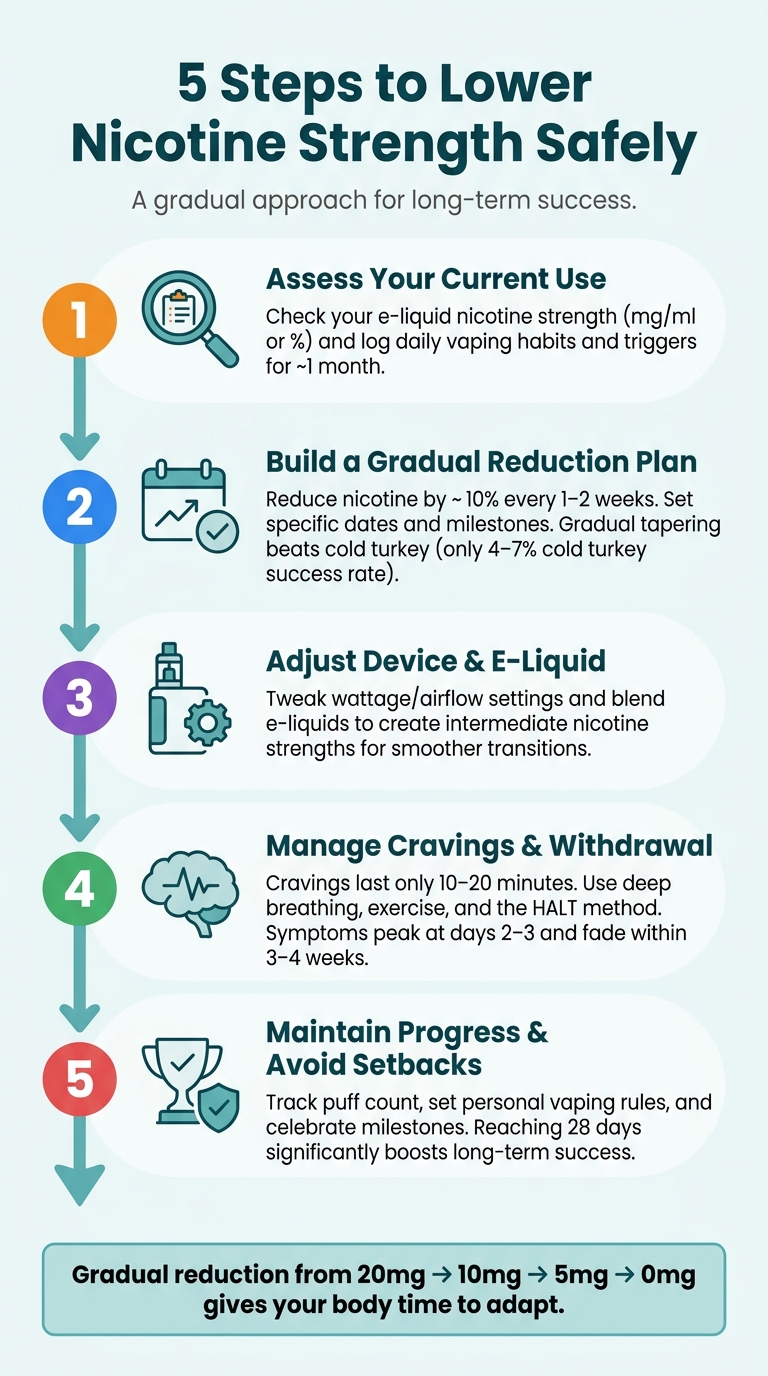
5 Steps to Lower Nicotine Strength Safely
Step 1: Assess Your Current Nicotine Use
Understanding your nicotine consumption is the first step to creating a personalised plan to cut back.
Find Your Current Nicotine Strength
Start by checking the nicotine strength on your vape bottles or pods. These are usually labelled in mg/ml or as a percentage (%). Both formats mean the same thing, and you can easily convert between them: just multiply or divide by 10. For instance, 2% nicotine equals 20 mg/ml, while 0.6% equals 6 mg/ml.
The type of device you use also affects how nicotine is absorbed. Devices like disposable vapes and pod systems often use nicotine salts (nic salts), which provide a smoother experience even at higher strengths and are absorbed quickly. On the other hand, sub-ohm mods generally use freebase nicotine, which can feel harsher at higher levels and works better with lower strengths like 3 mg/ml or 6 mg/ml. This difference is crucial because 20 mg/ml nic salts feel very different from 20 mg/ml freebase nicotine in terms of throat hit and how quickly it’s absorbed.
| Device Type | Nicotine Type | Typical Strength Range |
|---|---|---|
| Disposable Vapes | Nic Salt | 20 mg/ml (2%) |
| Pod Systems | Nic Salt or Freebase | 10–20 mg/ml |
| Vape Pens | Freebase | 6–12 mg/ml |
| Sub-Ohm Mods | Freebase | 3–6 mg/ml |
Once you’ve identified your nicotine strength and device type, the next step is to track how much you use daily.
Log Your Daily Vaping Habits
Now that you know your nicotine strength, take some time to observe your vaping habits. Keep a log for about a month, noting when you start vaping each day, how often you vape, and what triggers your usage. Common triggers might include your morning coffee, meals, or stressful moments at work.
"Most people who struggle to quit aren’t lacking willpower – they’re lacking clarity about how much nicotine they’re actually taking in." – Hilary Dubin, Co-Founder, Jones
This tracking will give you a better understanding of your dependency. For example, if you vape within 30 minutes of waking up, it’s a clear sign of stronger nicotine dependence. In such cases, reducing your intake gradually might be the best approach. Also, pay attention to physical symptoms like headaches, dizziness, or nausea after vaping – these could mean your nicotine strength is too high.
When to Talk to a Doctor First
If you’re generally healthy, you can usually reduce nicotine on your own. However, it’s important to consult a doctor if you’re pregnant, breastfeeding, or have health conditions like heart disease, high blood pressure, or lung issues.
"Most people can benefit from NRT or medicines to treat nicotine dependence, but it’s important to talk to your doctor before taking any medicines." – healthdirect
A doctor can evaluate your nicotine use and recommend the safest way to cut back, especially if you’re combining your plan with nicotine replacement therapies. Their guidance ensures a smoother, safer transition to lower nicotine levels.
sbb-itb-837e7ad
Step 2: Build a Gradual Reduction Plan
Now that you’ve analysed your usage patterns in Step 1, it’s time to turn those insights into a structured, step-by-step plan. A plan with specific dates and targets is far more effective than simply deciding to "cut back when it feels right."
Pick a Reduction Method
If you are new to the process, it helps to understand the basics of nicotine strength before choosing a method.
There are a few different approaches to reducing nicotine intake: gradual tapering, fast step-down, or cold turkey. Among these, gradual tapering is often the most effective and safer route. Studies show that only 4%–7% of people successfully quit nicotine for the long term through the cold turkey method. Tapering, on the other hand, allows your brain and body to adjust gradually, helping to ease withdrawal symptoms such as irritability and sleep disturbances.
| Method | How It Works | Best For |
|---|---|---|
| Gradual Tapering | Decrease nicotine intake by around 10% per week until you reach zero | Ideal for most individuals, especially those who are sensitive to withdrawal |
| Fast Step-Down | Cut your nicotine usage by half before a specific quit or reduction date | Suitable for those who can handle cravings well and prefer a faster transition |
| Cold Turkey | Stop all nicotine use abruptly without any reduction phase | Not recommended; has the lowest success rates |
For most people, reducing nicotine strength by 10% each week is a realistic and manageable pace. Once you’ve chosen your method, set clear milestones and dates to track your progress effectively.
Set Dates and Milestones
A vague plan to "reduce soon" is unlikely to succeed. Instead, pick a start date and map out your milestones using the dd/mm/yyyy format. For instance, if you begin on 23/05/2026, your first reduction step could be on 06/06/2026, followed by another on 20/06/2026. This gives you about two weeks at each level, depending on your chosen pace.
"Quitting and disengaging from tobacco use is a journey, not a single event." – American Lung Association
It’s also a good idea to plan for the 48–72 hours after each reduction step, as this is when cravings tend to peak. During these times, schedule lighter commitments or seek additional support to help you stay on track.
Stock Up on Lower-Strength Products in Advance
Before each reduction date, make sure you have the next lower-strength e-liquid or pod ready. Running out of the appropriate strength mid-plan is a common reason why people revert to higher nicotine levels.
"If you find yourself vaping more, it may be a sign that you’ve reduced your nicotine level too quickly." – NHS
For convenience, VapeShop.bh offers a wide range of e-liquids and pods in nicotine strengths from 20 mg/ml down to 0 mg/ml, with same-day delivery across Bahrain. You can even place an order through WhatsApp for a quick restock. Always double-check the nicotine strength on the label to ensure it matches your planned reduction step.
Step 3: Adjust Your Device and E-Liquid for a Smoother Switch
Now that you’ve got your reduction plan in place, it’s time to fine-tune your device and e-liquid. These adjustments can help make the transition to lower nicotine levels more manageable. Without the right setup, a lower nicotine strength might leave you feeling unsatisfied, but with a few tweaks, you can stay on track.
Adjust Device Settings
Your device’s wattage and airflow play a big role in vapour production – not the nicotine strength of your e-liquid. By tweaking these settings, you can compensate for lower nicotine levels. For example:
- Low-power pod systems or MTL (mouth-to-lung) devices typically work well with higher nicotine levels (10–20 mg/ml).
- High-power sub-ohm mods are better suited for lower nicotine strengths (around 3–6 mg/ml).
If you notice yourself vaping more often after reducing nicotine, try adjusting the wattage or airflow instead of increasing the nicotine level again. These small adjustments can make a big difference and prepare you for blending e-liquids to find the perfect balance.
Blend E-Liquids to Create Intermediate Strengths
Sometimes, the jump between nicotine strengths can feel too sharp. To bridge the gap, mix two e-liquids with the same VG/PG ratio in equal parts. This creates a customised nicotine level that fits your needs. Don’t forget to shake the mixture well and let it sit to ensure even distribution.
If you’re combining flavours, stick to profiles that pair well together. For example, fruit and menthol or tobacco and caramel can create a balanced and enjoyable taste.
Choose the Right E-Liquid Type
Once you’ve got your blend, think about the type of nicotine formulation that suits your setup. Here’s a quick breakdown:
- Nicotine salts: Smoother at higher nicotine levels and absorbed faster, making them ideal for curbing cravings. Best used with low-power pod devices at 10–20 mg/ml.
- Freebase nicotine: Can feel harsh above 12 mg/ml but works well at lower strengths (3–6 mg/ml) with high-power sub-ohm mods.
As you reduce nicotine levels to between 3–12 mg/ml, you may also notice an improvement in flavour. Higher nicotine concentrations often mask the subtler notes of your e-liquid.
For all your vaping needs, VapeShop.bh offers a wide range of nic salt and freebase e-liquids in various strengths. Plus, they provide same-day delivery across Bahrain, making it easy to keep your supplies stocked while working toward your nicotine reduction goals.
Step 4: Handle Cravings and Withdrawal Symptoms
Cutting back on nicotine can bring on withdrawal symptoms, and managing these effectively is key to staying on track. Understanding what’s coming can help you prepare and cope better.
Know What Symptoms to Expect
When you lower your nicotine intake, your body reacts. You might feel irritable, restless, have trouble focusing, experience headaches, fatigue, increased appetite, or struggle to sleep. These symptoms usually start within 4 to 24 hours, peak around days 2 or 3, and taper off over 3 to 4 weeks.
It’s important to remind yourself that these symptoms are temporary. As the Cleveland Clinic explains:
"Nicotine withdrawal isn’t harmful to your health. It fades over time as long as you stay nicotine-free."
Early signs of withdrawal can include struggling to concentrate or feeling tension in your neck and shoulders shortly after your last vape session.
Use Proven Coping Methods
Cravings can feel intense, but they’re short-lived. Most last only 10 to 20 minutes. To get through them, try techniques like deep breathing, taking a quick walk, or keeping your hands busy with a puzzle or stress ball.
If the urge to vape feels tied to oral habits, you can replace it with alternatives like sugar-free gum, crunchy veggies, or sipping cold water. Choosing the best e-liquids for beginners with appropriate nicotine levels can also make the transition smoother. Cutting back on caffeine can also help, as nicotine affects how your body processes it. Without nicotine, your regular cup of coffee or tea might feel stronger and could increase anxiety.
For sleep troubles, avoid screens at least an hour before bed and consider going to bed earlier. Insomnia caused by nicotine withdrawal usually lasts about a week.
Stick with these strategies, and adjust as needed to find what works best for you.
Monitor Progress and Slow Down If Needed
Pay close attention to how you’re responding to the changes. If you find yourself vaping more frequently, it might mean you’re reducing nicotine too quickly. In that case, stay at your current level a bit longer.
A good approach is to stick with each nicotine strength for at least 1 to 2 weeks before stepping down. Also, use the HALT method to check in with yourself: Are you Hungry, Angry, Lonely, or Tired? These states can sometimes mimic nicotine cravings. If things feel overwhelming, reach out to a healthcare professional to explore options like nicotine replacement therapy. Adjust your pace to balance progress with comfort.
Step 5: Keep Your Progress Going and Avoid Setbacks
Once you’ve reduced your nicotine strength, the next hurdle is maintaining that progress. By sticking to your reduction plan and using effective coping strategies, you can build consistency and avoid setbacks.
Avoid Vaping More Frequently
A common pitfall after lowering nicotine levels is unintentionally increasing how often you vape. This can undo all the hard work you’ve put into reducing your intake. Keep an eye on your puff count – many vape mods have built-in counters, or you can jot it down manually. This simple habit helps ensure you’re not compensating by vaping more often. As the NHS advises:
"If you find yourself vaping more, it may be a sign that you’ve reduced your nicotine level too quickly."
If this happens, stay at your current nicotine level for an extra week before attempting to reduce further. You can also experiment with a high-PG e-liquid or switch to a stronger flavour like menthol or tobacco. These options provide a sharper throat hit, making lower-nicotine liquids feel more satisfying without increasing your nicotine intake.
The next step? Establish clear rules for when and where you vape.
Create Personal Vaping Rules
Setting clear boundaries can make a big difference. Instead of vaping whenever a craving hits, decide in advance how and when you’ll allow yourself to vape. For instance, you could limit vaping to outdoor spaces or extend the time between sessions – for example, waiting 40 minutes instead of your usual 20. These small changes help you take control rather than simply reacting to cravings.
It can also help to involve the people around you. Let your friends and family know about your plan so they can support you and minimise social triggers. Breaking old habits is key, too. For example, brushing your teeth right after a meal instead of reaching for your vape can interrupt automatic behaviours.
Once these boundaries are in place, focus on tracking your progress and planning your next steps.
Celebrate Progress and Plan Ahead
Use the "Three Things" rule to track your progress: each week, write down three positive changes you’ve noticed, like improved breathing during workouts, better taste sensitivity, or fewer headaches. These small wins will remind you why you started and keep you motivated.
Celebrate milestones in meaningful ways unrelated to vaping. Research shows that hitting a 28-day milestone significantly boosts your chances of staying on track long-term. For bigger milestones, like 90 days, do something special – whether it’s a nice dinner or a weekend getaway. As Quitine highlights:
"Celebrating [at day 90] helps lock in that positive momentum before life throws new challenges your way."
Looking ahead, aim to transition to a 0mg e-liquid while keeping a low-strength option (like 3mg) on hand for stressful moments. This approach ensures you’re prepared for challenges while continuing to make progress.
Conclusion: How to Stay on Track With Nicotine Reduction
Lowering your nicotine strength is a step-by-step process that builds on consistent effort. By breaking it into manageable actions, you can make gradual progress without feeling overwhelmed. Start by evaluating your current habits and then create a clear reduction plan with achievable milestones. Next, adjust your vaping device and e-liquid to match your new goals, address cravings as they come, and stay consistent by following your plan and setting personal guidelines.
Patience is your biggest ally. As Tablites explains:
"Gradually reducing nicotine allows your body and brain to adjust, increasing your chances of success without relapsing to smoking."
A gradual reduction – like moving from 20mg to 10mg, then to 5mg, and eventually to 0mg – gives your body time to adapt. Trying to rush this process often leads to setbacks.
Having the right tools is just as important as having a solid plan. VapeShop.bh offers e-liquids in a range of nicotine strengths, from salt nicotine for higher levels to freebase options in lower increments like 3mg and 6mg. With same-day delivery across Bahrain and 24/7 WhatsApp support, you can easily restock when you’re ready to take the next step. This level of convenience and support makes it easier to stay committed to your goals.
Progress may not always be straightforward, but with determination and a structured approach, long-term success is well within reach.
FAQs
How do I know if I’m reducing nicotine too fast?
If you find yourself experiencing stronger cravings, vaping more often, feeling irritable, or getting less satisfaction from vaping, it might mean you’re cutting back on nicotine too quickly. These are clear signs that your body is having a hard time adapting to the change.
To make the transition easier, stick with each nicotine level for the recommended period – typically 2–4 weeks at 5% – and pay attention to how your body reacts. If withdrawal symptoms continue, consider slowing down the reduction process for a more comfortable adjustment.
Should I switch from nic salts to freebase when stepping down?
Switching from nicotine salts to freebase nicotine can be a practical step when aiming to lower your nicotine intake. Nicotine salts are known for their smoother hit, which makes them ideal for higher nicotine levels. On the other hand, freebase nicotine delivers a harsher throat hit, making it more suitable for lower nicotine strengths.
To reduce your nicotine intake effectively, consider gradually lowering the strength over a few weeks. This approach gives your body time to adapt, minimising withdrawal symptoms. Transitioning to freebase nicotine can also make the process easier, especially when paired with devices designed for mouth-to-lung vaping, which often complement lower nicotine levels.
How can I stop vaping more often after lowering my nicotine?
It’s common to find yourself vaping more often after lowering your nicotine intake. This happens as your body gets used to the change and usually lasts for about one to two weeks. To handle this period effectively, try keeping track of how often you vape and stick to your new nicotine level. Give yourself some time – your body will adjust, and the frequent urges should ease as part of this natural process.
Related Blog Posts
- أسئلة شائعة عن السولت نيكوتين وإجاباتها
- 5 Tips for Choosing Nicotine Strength as a Beginner
- Freebase vs Salt Nic: Device Compatibility Guide
- Nicotine Levels in Vapes vs. Cigarettes
Frequently Asked Questions
This guide explains how to lower nicotine strength in stages by first assessing your current e-liquid or pod strength and daily usage, then reducing your nicotine level by about 10% every 1–2 weeks. It also shows how to tweak device settings and blend e-liquids to create intermediate strengths so each step down feels smoother and cravings stay manageable.
Tapering nicotine here means gradually cutting your nicotine level over time instead of stopping suddenly, which helps reduce withdrawal symptoms. The plan suggests setting clear dates and milestones and dropping your strength in small steps so your body can adjust at each stage before you move down again.
Yes, the 5-step method is designed to help reduce vaping nicotine by combining a measured drop in strength with tracking your triggers and daily habits. It also encourages setting limits on when you vape so your usage does not increase while you move to lower strengths.
The description highlights that understanding the difference between nicotine salts and freebase e-liquids helps you choose the right texture and feel when you change strength. It suggests using this knowledge to match your preferred smoothness or throat hit while you adjust nicotine levels step by step.
Yes, it specifically mentions coping strategies for nicotine withdrawal, such as deep breathing, staying active, and changing parts of your daily routine. These steps aim to ease irritability, restlessness and other common symptoms while you move through each reduction stage.
The product lays out a structured vaping reduction plan that starts with logging your current nicotine strength and usage, then reducing by around 10% every 1–2 weeks with clear milestones. It also covers adjusting device settings, managing cravings, and setting boundaries so you do not compensate by vaping more often.
bh during 9 AM–midnight hours. You can pair the step-down schedule with convenient local payments like Cash on Delivery, BenefitPay, or card, and reach support via WhatsApp at +973 66324432 if you need help choosing suitable strengths.