
Case Study: Same Day Vape Delivery That Works

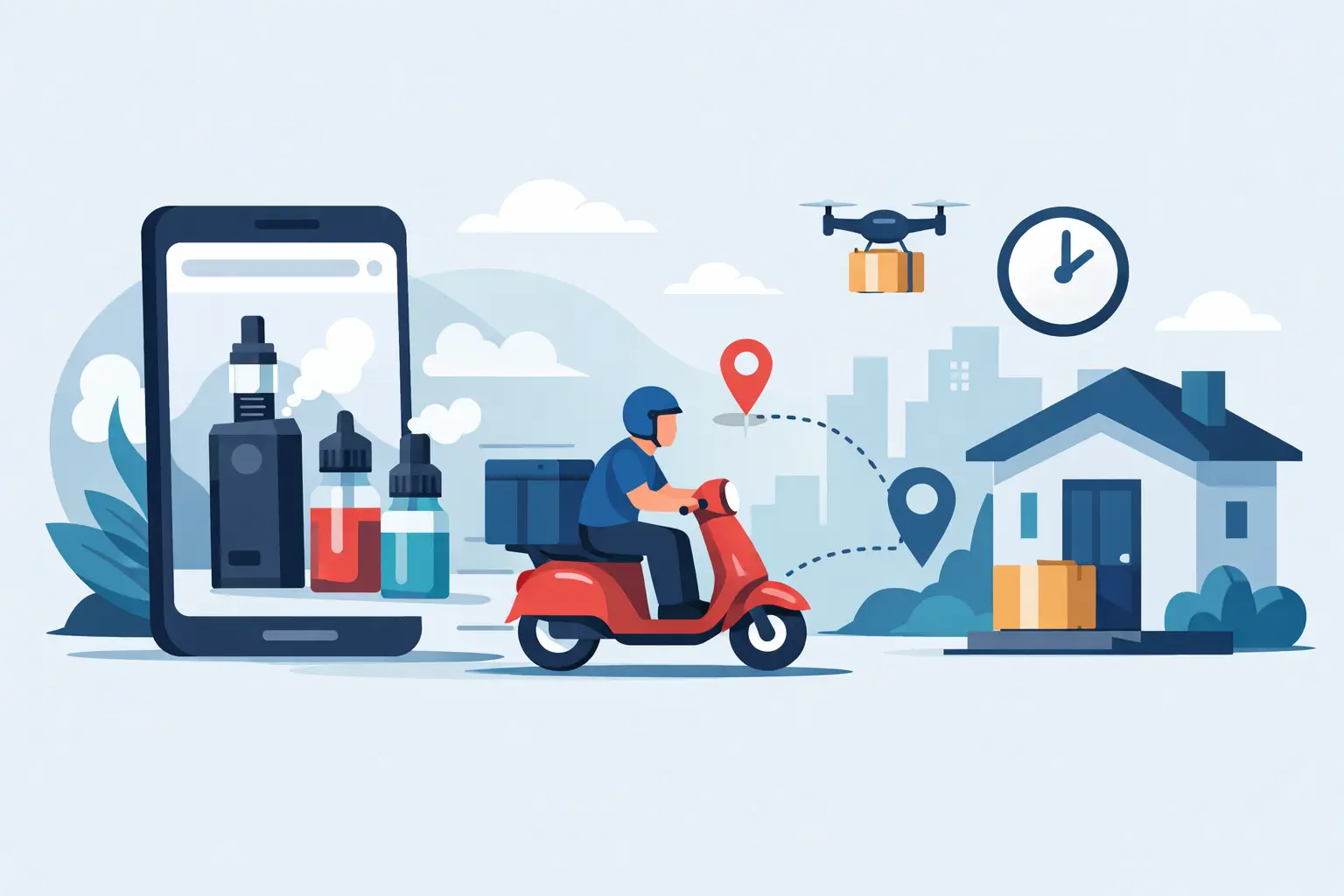
At 9:40 p.m., a customer messages for replacement pods after realizing they are down to their last one. They do not want a long checkout, a support ticket, or a delivery window that slips into tomorrow. They want a clear answer, a fast confirmation, and the order at their door the same day. That is exactly why a case study same day vape delivery matters. For adult customers, speed is not a bonus feature. It is often the reason they choose one shop over another.
This topic works best as a practical case study because fast delivery is easy to promise and harder to execute well. The real value is in showing what makes the service reliable, where friction usually happens, and why some retailers turn urgency into repeat business while others create more customer service problems than sales.
What this case study same day vape delivery shows
The clearest lesson from this case study same day vape delivery is that fast fulfillment depends less on flashy technology and more on disciplined operations. Customers usually judge the experience on four points: product availability, response time, order accuracy, and whether the promised arrival time is real.
If one of those breaks, the whole service feels unreliable. A wide catalog does not help if the item is out of stock. A fast reply does not help if the wrong coil arrives. A 24/7 promise does not mean much if late-night orders sit unconfirmed. Same-day delivery works when the store makes every step simple enough to handle quickly without creating confusion.
For an adult vape customer, the buying pattern is also different from many other retail categories. A large share of purchases are not leisurely browsing sessions. They are refill, replacement, or convenience orders. Someone needs pods, a disposable, e-liquid, or accessories now, not after a few days. That urgency changes how the business should be run.
The customer problem behind fast delivery
In this case study, the customer problem is straightforward. People run out unexpectedly, they remember late, or they simply do not want to spend time driving across the city for a small purchase. That is especially true for professionals, late-shift workers, and experienced users who know exactly what they need.
A same-day model serves those moments well, but only if the ordering method reduces effort. Long forms, account creation, and delayed responses work against the point of the service. A direct ordering channel such as WhatsApp makes sense because it matches how customers already communicate. It also lets the store answer quick product questions without pushing the customer through a slow process.
That said, convenience can create its own trade-off. The simpler the ordering flow, the more important internal accuracy becomes. If staff are handling multiple conversations at once, inventory checks, item confirmation, and delivery dispatch all need structure. Otherwise, speed on the front end becomes mistakes on the back end.
How the delivery model succeeds in practice
The strongest same-day delivery operations are usually built around a few practical choices. First, they stock the products customers reorder most often and keep those items easy to pick. Second, they keep response times short, especially during evenings when many convenience purchases happen. Third, they define delivery zones and timing honestly rather than overpromising.
In a market like Bahrain, where customers often expect rapid service and direct communication, those choices matter even more. A retailer such as VapeShop.bh benefits from aligning product range, support, and fulfillment around one clear promise: when customers need vaping products quickly, they can place an order without unnecessary delays.
The case study angle becomes useful here because it highlights process, not hype. The best-performing stores do not treat same-day delivery as a marketing slogan. They treat it as an operating standard. That means tracking which products move fastest, which areas generate the most urgent orders, and what times of day create the biggest delivery load.
Where same-day vape delivery usually breaks down
Most failures in same-day vape delivery are predictable. Stock visibility is one. If the customer orders an item that appears available but is actually out, the order slows down immediately. Then support has to suggest alternatives, wait for approval, and update the driver. A ten-minute order can become a forty-minute problem.
Another weak point is vague communication. Customers do not need complicated logistics updates. They need direct confirmation that the order is accepted, prepared, and on the way. If there is a delay, they want that said clearly. Fast service builds trust when the expectations are managed well.
Delivery routing is another issue that does not get enough attention. Same-day service is not just about dispatching quickly. It is about dispatching intelligently. If a retailer sends drivers out with poorly grouped orders or without clear cutoffs by area, delivery times stretch and costs rise. Customers may still get the order that day, but the experience feels less dependable.
Then there is product knowledge. This matters more than many retailers assume. When a new customer asks for an easy-to-use device, or an experienced user wants the correct replacement pod, a quick and accurate answer prevents returns, confusion, and repeated messages. Speed is valuable, but speed plus guidance is what creates loyalty.
What customers actually remember
Customers rarely remember the internal effort it took to fulfill an order. They remember whether the process felt easy. In this case study same day vape delivery, that simple truth drives most of the outcome.
If the customer sends one message, gets a prompt reply, confirms the order, and receives the correct item within the promised time, the service feels trustworthy. They are likely to order again because the store saved them time and removed uncertainty.
If the order requires repeated follow-up, substitutions, or unclear delivery timing, the customer starts comparing other options. Even if the product eventually arrives, the store loses the main advantage of same-day service, which is peace of mind.
This is where ratings and reviews often reflect reality. Customers reward consistency more than one-off speed. A business can have a very fast night once, but if the next three orders are uneven, trust drops. Reliable same-day service is a reputation system as much as a delivery system.
Why 24/7 availability changes the equation
A 24/7 model raises customer expectations, but it also creates a real competitive edge when it is managed well. Many urgent orders happen outside normal retail hours. Someone finishes work late, realizes they are out, and wants a solution immediately. If a shop can answer and fulfill that order at night, it captures demand that slower competitors miss.
But there is an operational reality here. Round-the-clock availability only works if staffing, inventory, and dispatch stay coordinated. It is not enough to accept orders all night. The response still has to be quick, and the delivery promise still has to be credible.
That is why the best version of 24/7 service is usually selective and disciplined. The store knows which products can move fastest, which delivery windows are realistic, and how to keep communication clear at all hours. That creates confidence instead of confusion.
The business impact beyond the first order
The short-term win in same-day vape delivery is obvious: more completed orders. The longer-term value is customer retention. When a store becomes the reliable answer for urgent needs, customers return even when the purchase is not urgent.
That is a powerful shift. A same-day order might start as a convenience purchase, but it often turns into a habit. The customer already knows the ordering process, trusts the response time, and feels confident that the product will arrive correctly. That lowers friction for every future order.
There is also a margin trade-off worth acknowledging. Same-day delivery can cost more to run than standard delivery. Staffing, routing, and faster handling all add pressure. But if the service is focused on repeat demand, order accuracy, and customer lifetime value, the economics can still work well. The mistake is offering same-day service broadly without the systems to support it.
The practical takeaway for adult vape customers
For customers, the lesson is simple: the best same-day service is not just fast, it is dependable. Look for a retailer that answers directly, confirms stock clearly, offers products people actually reorder, and gives realistic delivery timing. Those details usually tell you more than any promotional claim.
For retailers, this case study same day vape delivery makes one point clear. Speed alone does not build trust. Speed backed by clear communication, accurate fulfillment, and responsive support does. When those pieces work together, same-day delivery stops being a rush service and becomes the standard customers count on.
The shops that get this right do not make the process feel dramatic. They make it feel easy, and that is exactly why customers come back.
Frequently Asked Questions
A reliable same day vape delivery service starts with clear stock, fast confirmation, and a delivery promise that can be met. In Bahrain, the fastest shops keep checkout simple so an adult customer can place an order and get a quick update without waiting until tomorrow. WhatsApp: +973 66324432 can be used for fast order confirmation.
Reliable urgent delivery depends on four things: product availability, response time, order accuracy, and whether the arrival time is real. If a shop confirms quickly and the item is actually in stock, the experience feels smooth instead of risky. In Manama, that matters even more when the customer needs replacement pods or another small item fast.
Yes, fast replacement pod delivery is possible when the shop has the item ready and the checkout is not slow. The key is avoiding delays from stock issues or unclear communication. For adult customers in Bahrain, a simple order process is usually what turns a quick need into a completed delivery.
Before choosing quick delivery, check whether the product is available, the response time is fast, and the promised arrival window is realistic. A broad catalog does not help if the exact item is out of stock. The best service is usually the one that confirms the order clearly and avoids confusion.
Speed often matters because customers need a clear answer, not a long checkout or a support ticket.
Late-night orders can work when the store keeps its process simple and confirms quickly. The main issue is not the hour itself, but whether the order can still be handled accurately without slipping into the next day. For support or order questions, WhatsApp: +973 66324432 is the fastest contact option.
The most common failure is friction in the process, such as missing stock, slow replies, or order mistakes. If one step breaks, the customer no longer trusts the promise. That is why reliable delivery depends more on disciplined operations than on flashy technology.