

Can I Travel With Disposable Vapes?

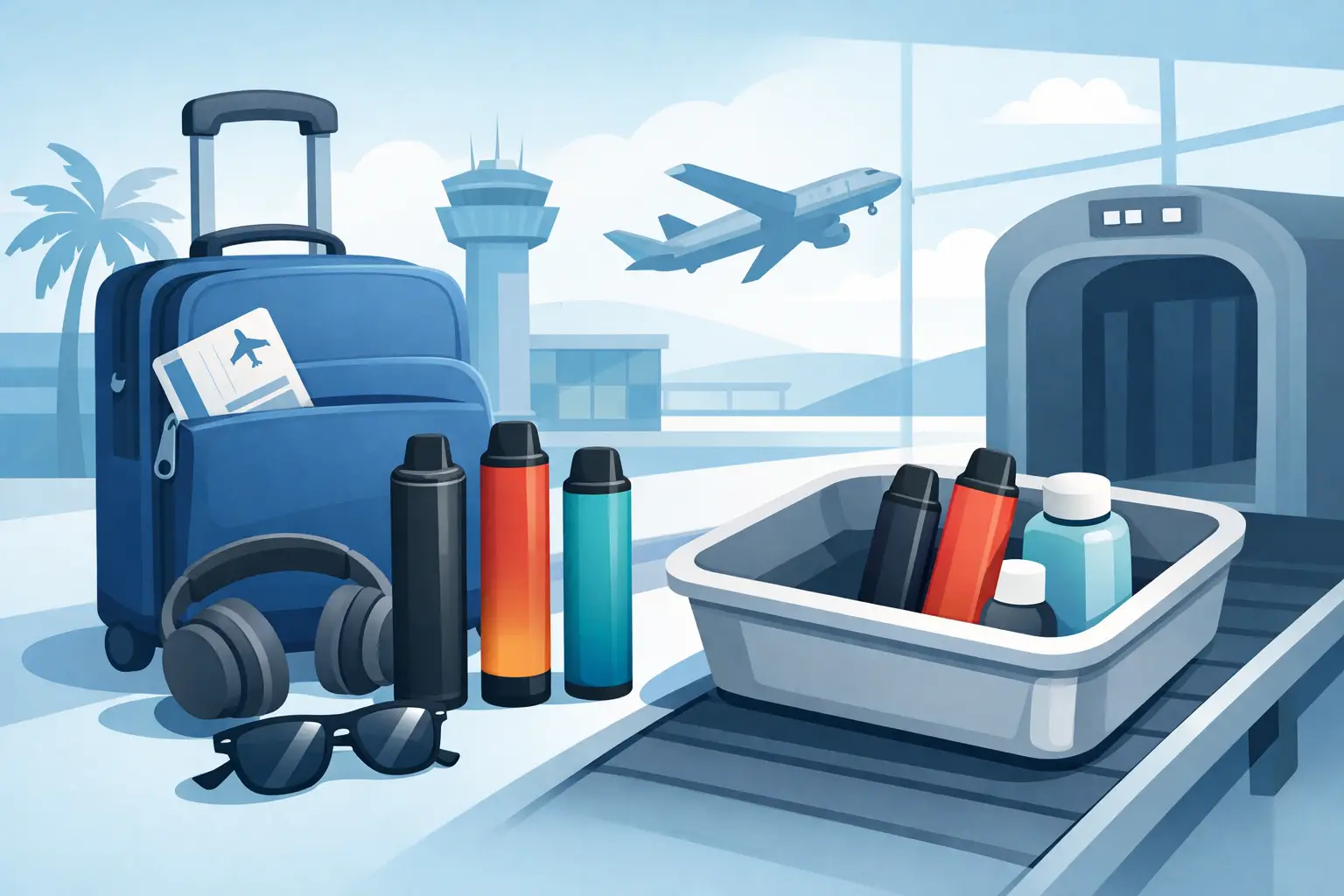
You are at the airport, your bag is zipped, and then the question hits: can I travel with disposable vapes, or am I about to lose them at security? The short answer is yes, often you can – but only if you pack them correctly and check the rules for both the airline and your destination.
This is one of those travel questions where the details matter. A disposable vape is small and convenient, which makes it easy to bring along, but it also contains a lithium battery. That battery changes everything. Most travel restrictions are not really about the vape itself. They are about battery safety, airport security rules, and local laws where you are going.
Can I travel with disposable vapes on a plane?
In many cases, yes. If you are flying, disposable vapes generally need to go in your carry-on bag, not your checked luggage. That is because airlines and airport authorities typically restrict lithium battery devices in checked bags due to fire risk.
This is the part travelers get wrong most often. They assume a disposable vape is too small to matter, toss it into a suitcase, and only find out there is a problem after check-in or screening. If your device has an internal battery, treat it like other battery-powered electronics. Keep it with you in the cabin unless your airline says otherwise.
The other issue is use. Bringing a disposable vape on a plane is very different from using one on a plane. Airlines do not allow vaping during the flight, and trying to do it discreetly is a fast way to create a much bigger problem than a confiscated device.
What TSA and airport security usually care about
If you are flying from or through a US airport, security officers are mainly focused on safety and screening, not on making product choices for you. Their main concerns are whether the device is packed properly, whether it contains a battery, and whether anything in your bag needs extra inspection.
A disposable vape usually passes through security without drama when it is stored in a carry-on and easy to identify if asked. You do not need to make it more complicated than that. Keep it in a pocket of your bag where you can reach it if security wants a closer look.
If you are carrying e-liquid separately, liquid limits can also apply. That matters more for refill bottles than for sealed disposable devices, but it is still smart to pack cleanly and avoid leaking items. Cabin pressure can cause some vapes to leak, especially if they have already been used.
Carry-on or checked bag?
Carry-on is the safer answer in most situations. Checked luggage is where many travelers run into trouble because battery-powered vape devices are commonly restricted there.
If you want the simple rule, use this: disposable vapes go in your carry-on, chargers go in your carry-on, and loose batteries should never be tossed into checked baggage. Even when a specific airport seems relaxed, airline policy can still be stricter.
That does not mean every airport employee will stop you if you pack it wrong. It means you are taking an avoidable risk. The best travel plan is the one that gets you through screening without a debate.
How many disposable vapes can you bring?
This is where the answer becomes less universal. A couple of devices for personal use may not raise questions. A large number can look commercial, even if you say they are for a long trip. Security staff and customs officers may interpret quantity differently depending on the country, airport, and your overall luggage.
If you are traveling with more than a few, be ready for scrutiny. Not necessarily because the products are banned, but because volume changes how your bag looks at screening and how your intent appears at the border. Personal use is one thing. Anything that resembles resale is another.
For most adult travelers, bringing only what you realistically need is the smarter move. It reduces attention, takes up less space, and lowers the chance of loss or confiscation.
International travel changes the answer
A lot of people ask, can I travel with disposable vapes, when what they really mean is, can I bring them into another country? That is a different question, and sometimes the answer is no.
Airline rules and security rules are only part of the picture. Your destination may have its own laws on vape products, nicotine products, product labeling, import limits, or public possession. A device that is fine to carry through departure security may still be restricted when you land.
This is where travelers get caught off guard. They check airline policy, but not local law. Or they assume a product sold openly at home will be treated the same way abroad. That assumption can get expensive.
Before you fly internationally, check three things: your airline policy, the transit airport rules if you have a layover, and the laws at your final destination. If any one of those is restrictive, your trip can get complicated quickly.
A few packing habits that prevent problems
Traveling with disposable vapes is usually straightforward when you keep things tidy. Store devices so they cannot activate by accident. If the device has any protective cap or plug, keep it on. Place it where it will not be crushed by a laptop, toiletries, or a power bank.
It also helps to separate vaping products from clutter. Security delays often happen because bags are messy, not because the item itself is prohibited. If an agent needs to inspect your bag, making the device easy to see tends to keep the interaction short.
Temperature matters too. Leaving a disposable vape in a hot car before heading to the airport is not ideal, and neither is exposing it to rough handling in overpacked luggage. These devices are convenient, but they are not indestructible.
Can you use a disposable vape in the airport?
Usually only in designated smoking or vaping areas, if the airport has them. Many airports ban vaping indoors entirely, and some ban it across most of the property except in marked spaces.
That means you should not assume you can take a quick puff in a restroom, at the gate, or in a quiet corner of the terminal. Airports are heavily monitored, and penalties can go beyond a warning. If you are not sure, ask airport staff or check posted signs.
The practical takeaway is simple: carrying a vape through the airport is often allowed, using it almost always has stricter limits.
Road trips, ferries, and public transportation
Flying gets most of the attention, but travel rules matter in other settings too. On buses, trains, ferries, and rideshares, the issue is usually use rather than possession. You can often carry a disposable vape without issue, but using it may be prohibited by the operator or by local clean air rules.
For road trips, storage matters less from a legal standpoint and more from a product standpoint. Heat can damage a disposable vape, and leaks are more likely when devices are left in direct sun. If you are driving long distance, keep it in a cool, stable place rather than the dashboard or glove box.
What if you are stopped or asked about it?
Keep the interaction simple. Be honest, keep the device accessible, and follow instructions. Most problems grow when travelers act evasive over something that could have been routine.
If an officer or airline staff member says an item is not allowed, arguing rarely helps. Policies can vary by carrier, airport, and jurisdiction, and front-line staff usually have broad authority to enforce them. Your goal is not to win a debate at security. Your goal is to keep your trip moving.
The safest way to think about it
If you want the practical answer, here it is: yes, you can often travel with disposable vapes, especially for personal use, if you keep them in your carry-on and check the rules before you leave. The real risk is not the device alone. It is assuming all airports, airlines, and countries treat it the same way.
For adult travelers, the best approach is cautious and boring. Pack light, store devices properly, do not use them where prohibited, and confirm the destination allows what you are bringing. A two-minute check before departure is much easier than dealing with confiscation at the gate or customs when you land.
Travel goes more smoothly when nothing in your bag needs explaining twice.
Frequently Asked Questions
Yes, disposable vapes are generally allowed in your carry-on bag when you fly. They should not go in checked luggage because they contain a lithium battery, which airlines usually restrict in the hold. They also must not be used or charged on the aircraft.
No, checked luggage is usually the wrong place for a disposable vape. Travel guidance from airlines and aviation authorities says battery-powered vape devices should stay in the cabin, not in checked baggage. If you are flying from Bahrain, it is best to confirm the airline’s own rules before you pack it.
Yes, they can usually be carried on a plane as long as they are packed correctly. The key rule is that vaping is not allowed during the flight, and the device should stay switched off and protected from accidental activation. This applies whether you are flying within the region or through Manama as a transit point.
Yes, disposable vapes contain lithium batteries, so they are treated like other battery-powered electronics for flight rules. That is why they are usually kept in carry-on luggage instead of checked bags. Airport screening focuses more on battery safety than the vape shape itself.
No, using a disposable vape on the plane is not allowed. Airline rules also generally prohibit vaping inside the aircraft cabin and during the flight. If you are traveling through Bahrain, it is safer to keep the device packed away until you reach a place where vaping is permitted.
Keep the device in your carry-on and make sure it is protected from accidental activation. A secure pouch or case helps reduce damage while you travel. This is the simplest way to keep it ready without running into airport baggage issues.
Yes, that is the safest approach because airline rules and destination laws can differ. Even when a disposable vape is allowed in your bag, local rules at your destination may still affect possession or use. If you are unsure, check your airline before departure and the rules at your arrival airport.