
Salt nicotine versus freebase vapes in Bahrain choosing the right option for delivery

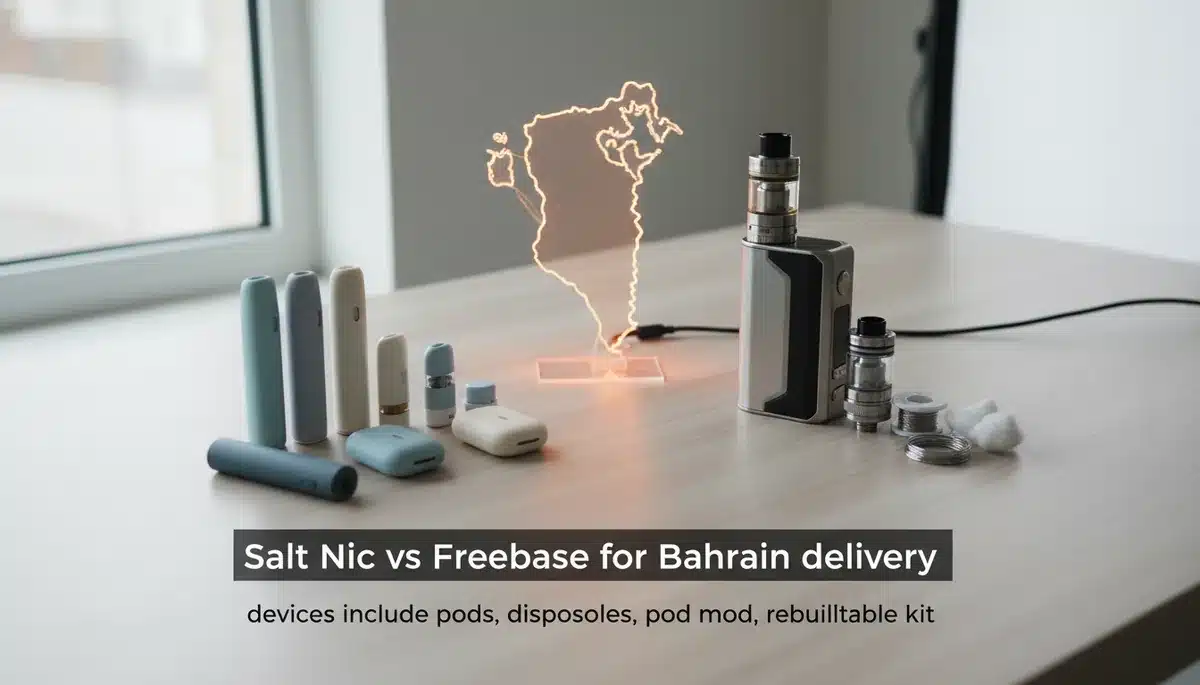
Salt Nicotine vs Freebase in Bahrain: A Smart Buyer’s Guide to Devices, Strengths and Same‑Day Delivery
Choosing between salt nicotine and freebase e-liquids isn’t just a matter of taste — it determines the device you’ll buy, the way you’ll inhale, how quickly cravings fade, and even how much you spend each month. Add the reality of same‑day delivery across Manama, Riffa, Muharraq and Juffair, and it pays to get the decision right the first time. This practical, Bahrain‑focused guide walks you through the chemistry, the feel, the device compatibility, and the ordering steps so you can click “buy” with confidence today. ⏱️ 9-min read
Whether you’re replacing cigarettes with discreet pod hits or dialing in a cloud‑chasing mod, you’ll find clear, real‑world recommendations below — including how to match nicotine type and strength to your habits, which devices pair well with each liquid, how to compare disposable vs refillable costs, and what to check before you accept a same‑day delivery at your door.
How salt nicotine and freebase actually differ
Salt nicotine and freebase are two forms of the same substance, but they behave differently in your device and on your throat. Nicotine salts are nicotine molecules paired with an acid — commonly benzoic or levulinic acid — to create a more stable compound. That pairing lowers the e‑liquid’s pH, smoothing the throat hit and letting you use higher nicotine concentrations without harshness. Because the aerosol is less alkaline, many users report faster craving relief from fewer, shorter puffs.
Freebase is the unaltered form of nicotine used in early and traditional e‑liquids. It has a higher pH, which produces a sharper, more assertive throat hit at the same milligram strength. That “bite” can feel satisfying for some, especially when paired with a direct‑to‑lung (DTL) inhale on a sub‑ohm tank where large vapor volume naturally mellows the sensation. In lower‑power setups, however, freebase at higher strengths can feel rough and may choke flavor clarity.
These differences ripple through your day‑to‑day use. Salts shine in mouth‑to‑lung (MTL) devices and disposables because you get quick satisfaction from short, cigarette‑like puffs — helpful when you’re breaking a smoke habit between meetings. Freebase tends to be slower to satisfy at low power, but it excels when you increase wattage and air, drawing longer inhales that emphasize vapor density and nuanced flavor. Put simply: salts favor quick, discreet hits; freebase suits longer, flavor‑forward sessions.
Strength ranges reflect those roles. You’ll commonly see salts from about 10 to 50 mg/mL, while freebase typically runs from 3 to 18 mg/mL. As a rule of thumb, the same numeric strength will feel stronger and faster in a salt than in freebase, especially in a low‑watt pod. That’s why pairing the right liquid with the right hardware matters so much for comfort, flavor and coil health.
Which nicotine type fits your vaping goal in Bahrain
Your choice starts with your goal. If you’re quitting cigarettes or want a low‑profile way to manage nicotine, salts usually fit best. Because they’re smoother at higher strengths and many users feel faster relief, salts can replace the ritual of a quick cigarette with just a few puffs on a pod or disposable. The draw style is familiar too: tight, MTL inhales that mimic how most people smoked. In Bahrain, that’s why many disposables and compact pod kits ship with salt formulas out of the box.
If you’re after big clouds and layered flavor, freebase is typically the better match. Sub‑ohm tanks and advanced mods move a lot of air and vapor; they pair well with lower nicotine (0–6 mg/mL, sometimes up to 12 mg for tighter draws) to keep harshness in check while letting you taste more of the e‑liquid’s character. On a free afternoon in Juffair or Muharraq, a flavor‑focused session with a freebase liquid in a high‑VG blend will usually outperform a high‑strength salt for both comfort and taste.
For everyday, discreet maintenance — say you want a few reliable puffs during a workday in Manama or on a quick coffee run in Riffa — mid‑strength salts in compact pods are practical. They’re pocketable, charge over USB, and give consistent satisfaction without heavy clouds. If you prefer fewer refills and zero maintenance, a disposable is even simpler: open the box, vape, recycle responsibly when done.
Quick examples: an ex‑smoker in Muharraq might choose a salt‑nic disposable or a refillable pod like a VGOD‑branded device with 20–35 mg salt to calm cravings fast. A hobbyist in Juffair upgrading to denser clouds would go freebase 3–6 mg in a sub‑ohm tank on an advanced mod. If you bounce between both goals, consider a dual‑use approach: a salt pod for errands and the car, plus a freebase mod at home for flavor sessions.
Device compatibility: pods, disposables and advanced mods
Most disposables and simple pod systems are engineered for MTL use at low wattages — typically 8–20 watts — with coils in the 1.0–3.0 Ω range. Their wicking favors 50/50 PG/VG or similarly balanced blends. This design plays perfectly with nicotine salts, which deliver smooth, fast satisfaction even at higher strengths. It’s why Bahrain retailers stock a wide range of salt‑nic disposables and pod refills: the hardware and liquid are meant for each other.
Sub‑ohm tanks and box mods, by contrast, run at 30 to well over 100 watts with coil resistances below 1.0 Ω, often 0.15–0.6 Ω. They thrive on high‑VG freebase e‑liquids (commonly 70/30 VG/PG or thicker) that produce dense vapor and support high airflow without leaking. Because you inhale more vapor per puff, you don’t need — and likely won’t enjoy — high nicotine here. Most users settle at 3–6 mg freebase, sometimes nudging to 9–12 mg with tighter, restricted‑DTL tanks.
Using the wrong liquid undermines flavor and coil life. High‑VG freebase (thick) in a pod can starve the wick and cause dry hits or burnt coils. Thin, high‑PG salts in a high‑watt sub‑ohm can flood the coil, spit, and feel unbearably strong. Sweetened, dark e‑liquids (salt or freebase) will gunk coils faster at high heat. And running salts above moderate strength in a sub‑ohm device is usually both harsh and wasteful because the vapor volume multiplies nicotine delivery.
Delivery realities in Bahrain matter too. Disposables and closed‑pod packs are the easiest to source same‑day across Manama, Riffa, Muharraq and Juffair — they’re often in stock, sealed, and ready to dispatch via bike courier. Refillable pod mods and advanced kits are widely available but sometimes require an extra day to match the exact coil resistance or color you want. If you’re placing an urgent order, ask the shop to confirm the coil included with your kit (ohms), and whether the correct replacement coil pack is in stock for your preferred liquid type.
Choosing nicotine strength and flavours for local products
Strength is about replacing what your body expects, but without overshooting. As a simple starting guide: if you smoked more than a pack per day, begin around 25–35 mg salt in a pod or disposable. A half‑pack to one pack per day often lands well at 15–25 mg salt. For occasional or social use, 10–15 mg salt is usually adequate. With freebase in sub‑ohm gear, most users start at 3–6 mg. Only move to 9–12 mg freebase if you run a tighter, lower‑watt tank and still feel under‑served.
Puff style changes the equation. Short, cigarette‑like puffs amplify the effect of salts; long, deep inhales boost the effect of freebase. If you tend to chain‑vape at your desk or in the car, err slightly lower in salt strength to avoid lightheadedness. If you take five or six long DTL hits and set the device down, 3 mg freebase often feels “just right” for cloud chasing without harshness.
Flavor pairing also helps. Menthol, mint, and classic tobacco blends usually shine with salts because they complement the quick, clean hit and don’t need massive vapor to taste satisfying. Dessert, custard, and layered fruit lines typically perform best with lower‑nicotine freebase in high‑VG mixes; with bigger vapor, you’ll taste more nuance and less throat bite. In Bahrain, popular local product lines to consider include Mazaj and Mega disposables for salt‑nic convenience; VCT e‑liquids for rich, dessert‑leaning freebase options; and VGOD devices and pods for reliable MTL hardware.
If you’re unsure, test lower before you climb. With salts, start one tier below what you expect — for example, if you think you need 25 mg, begin at 15–20 mg and evaluate after a day. With freebase, start at 3 mg in a sub‑ohm tank, then step to 6 mg only if you’re consistently craving more. Remember that Bahrain’s heat can thin e‑liquids; a thinner mix might hit slightly harder. Store your liquids out of direct sun and avoid leaving devices in a hot car, which can also cause leaks or coil flooding.
Cost and convenience: disposables vs refillable systems
Disposables win on simplicity and upfront cost. You pay once, open the box, and vape until it’s empty or the battery dies. For travel, nights out in Juffair, or as a backup in your bag, the convenience is hard to beat. Same‑day couriers can get a sealed unit to your door in Manama or Riffa within hours, and you don’t need to think about coils, bottles or chargers beyond a USB‑C lead if it’s a rechargeable disposable.
Over time, however, refillable systems typically cost less per puff. A refillable pod kit paired with bottled e‑liquid and replacement coils spreads the expense: the device up front, then small, regular top‑ups. If you vape daily, those top‑ups usually undercut the steady stream of disposable purchases. You’ll also enjoy broader flavor choice and the ability to fine‑tune strength — for example, keeping a 20 mg salt for stressful days and a 10 mg for casual mornings.
To compare costs realistically, do a quick calculation. Estimate your daily consumption in milliliters or puffs. Disposables advertise puff counts (for example, “up to 3,000 puffs”), which vary by your draw length. Refillables consume liquid by volume; a typical pod user might use 1–3 mL per day. Ask the shop for bottle size and price (e.g., 30 mL freebase) and coil longevity in your device (often 5–10 days for pods, fewer for very sweet liquids). Divide bottle price by expected days of use, then add coil cost per day. Even rough math quickly shows where your money goes.
Consider the environmental angle too
Frequently Asked Questions
Salt nicotine provides a smoother throat hit and faster nicotine absorption compared to freebase, which delivers a stronger, more intense hit ideal for sub-ohm devices. Freebase typically comes in lower concentrations like 3mg or 6mg, while salt nicotine allows higher strengths without harshness. In Bahrain, nicotine is limited to 20mg/ml maximum by law.
Beginners often prefer salt nicotine for its gentle throat hit and quick satisfaction, making the switch from smoking easier. Freebase offers a bolder hit but can feel harsh at higher levels for new vapers. Choose based on your device—pods suit salts, while tanks work for freebase.
Salt nicotine pairs best with low-wattage pod systems for mouth-to-lung vaping, delivering smooth hits efficiently. Freebase suits higher-powered sub-ohm devices for direct-lung inhales and bigger clouds. VapeShop.
Salt nicotine excels for quitting smoking due to faster absorption and less frequent vaping needed for satisfaction. Freebase provides a slower nicotine hit, better for those who enjoy flavor and clouds over quick cravings relief. Both are available up to Bahrain's 20mg/ml limit.
Salt nicotine offers a smoother, less irritating throat hit even at higher strengths, thanks to benzoic acid lowering pH. Freebase delivers a pronounced, harsher hit preferred by ex-smokers craving intensity. Select salts for comfort or freebase for that classic kick.
VapeShop.Pay via COD, BenefitPay, or card for convenience. Contact WhatsApp +973 66324432 for stock checks.
Freebase has less impact on flavor, letting subtle tastes shine in cloud-chasing setups. Salt nicotine maintains consistent flavor delivery even at stronger levels without overpowering. Bahrain vapers can find both types legally up to 20mg/ml.