

A parent’s guide to verifying age for safe same day vape delivery across Bahrain

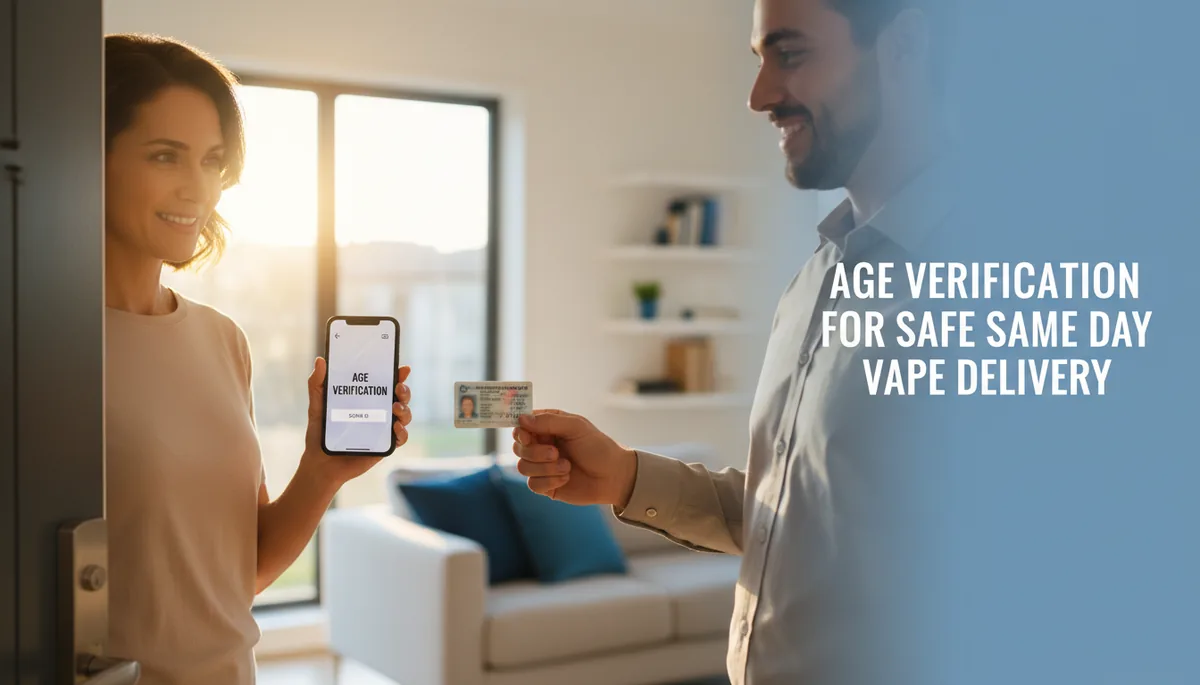
A Parent’s Checklist for Safe, Same‑Day Vape Delivery in Bahrain: How to Verify Age and Prevent Underage Access
Same‑day delivery has changed how quickly anything can arrive at your door in Bahrain—from Manama to Riffa, Muharraq, Juffair and beyond. That speed is a convenience for adults, but it can also create a gap in safeguards when the product is age‑restricted, like vapes and e‑liquids. If you’re a parent or caregiver, you don’t need to become a compliance expert to keep your household safe. You just need a clear, practical routine for checking how a shop verifies age at checkout and at the door—and what you can do at home to close easy workarounds. ⏱️ 9-min read
This guide offers a safety‑first checklist designed for Bahrain’s delivery reality: WhatsApp orders, local couriers, mobile wallets, and cash‑on‑delivery (COD). You’ll learn what responsible retailers and couriers should do, how to spot red flags, and how to act quickly if a minor receives a package. Along the way, you’ll find local context and concrete steps you can use today—without confrontation or guesswork.
Why age verification matters in Bahrain
Age checks are not just a box to tick. They’re a public‑health safeguard that helps protect adolescents from nicotine exposure at the very moment their brains are still wiring attention, learning, and mood regulation. Research summarized by reputable health organizations indicates that nicotine can disrupt memory and attention in teens, and early use raises the risk of long‑term addiction. When a retailer enforces age checks at both the digital checkout and the physical handover, they cut off two common access points for minors: impulsive online ordering and unverified delivery.
There’s also a clear legal dimension. Bahrain law sets a minimum purchase age for tobacco and nicotine products (including <a href="https://vapeshop.bh/top-disposable-vape-brands-available-for-same-day-delivery-in-bahrain/” rel=”nofollow noopener noreferrer”>disposable vapes, refillable devices, and e‑liquids). Selling or supplying to someone under the legal age is prohibited. Because rules evolve, parents should confirm the current minimum age and any changes in enforcement via the Bahrain Ministry of Health or the Bahrain eGovernment portal. Treat that confirmation as your baseline—your decisions about retailers and delivery policies should align with official guidance.
Same‑day services raise the stakes. Many local vendors advertise rapid or 24/7 delivery and enable ordering through WhatsApp as well as online checkouts. The convenience is real, but so is the risk: the faster and more contactless the flow, the easier it is for a minor to slip through a weak gate. Robust, layered verification—strong identity checks at purchase plus an ID match at the door—closes that gap without slowing down legitimate adult orders.
Finally, effective age verification is community protection. It reduces the spread of underage use within peer groups by limiting supply at the source. Shops that take this seriously train drivers, document refusals, and prefer secure payment methods. Those that don’t make it easy for harmful patterns to take root. As a parent, your choices—who you buy from, what questions you ask—signal to the local market that safety matters.
How same‑day vape delivery works across Bahrain (zones, ordering channels, timelines)
Most same‑day vape purchases in Bahrain follow a straightforward path: you find a product on a website or social channel, place an order (often via WhatsApp or an online cart), select a payment method (card, mobile wallet, or COD), and the shop hands your parcel to a courier for city‑wide delivery. Vendors often publish their delivery zones and hours—central Manama may see one‑to‑three‑hour windows, while Riffa, Muharraq, and Juffair may be grouped into afternoon/evening slots, with outer areas scheduled later the same day. Some retailers use in‑house riders; others partner with local courier companies.
Ordering channels matter for age control. Web checkouts can enforce stronger verification, such as forcing account creation, ID upload, and 3‑D Secure card authentication. WhatsApp ordering can be legitimate, but the identity checks must still happen either before dispatch (e.g., secure link to upload ID) or at the door. If a vendor only takes a product list and address over chat, with no mention of age verification, consider that a red flag.
Payment type also affects verification rigor. Card payments through PCI‑compliant gateways with 3‑D Secure (OTP to your phone) tie the transaction to an adult cardholder. Mobile wallets common in Bahrain, such as BenefitPay, can add another layer if the merchant configures age‑restricted flows and if the account is owned by an adult. COD is the riskiest mode because it bypasses cardholder checks; responsible vendors that allow COD should still require full ID at delivery and refuse handover if an adult is not present.
Time pressure is the last variable to watch. Ultra‑fast windows encourage “drop and go” habits unless the shop has a no‑exceptions policy for ID checks. Ask vendors how they balance speed with compliance: Do riders have time to verify ID? Are there documented refusal protocols? Do they ever “porch‑drop” age‑restricted items? The answers will tell you whether convenience is outpacing safety.
Online age‑verification checks to look for before ordering
You can spot a serious verification process long before you pay. Start on the storefront: does the site run on HTTPS, display a clear business name and physical address in Bahrain, and provide working contact lines (phone, email, WhatsApp)? Next, review the age policy. A perfunctory “I’m over 18/21” checkbox or a pop‑up date field is not enough. Reputable sites spell out two steps: validation at checkout and mandatory ID at delivery. They’ll also publish a refusal policy and note that orders will be canceled or returned if age cannot be confirmed.
In checkout flows, look for two‑factor identity checks. Best practice involves an official government photo ID (passport, national ID, or driver’s license) plus a live selfie or a third‑party verification service that compares the ID photo to the person’s face and flags forged documents. Common providers include Jumio, Onfido, Yoti, and IDnow. If a site claims to “verify ID” but only asks you to upload a picture with no real‑time check, assume it’s weak.
Payment security is another tell. Well‑run retailers route payments through PCI‑compliant gateways and require 3‑D Secure. They’ll display recognized payment options (Visa, Mastercard, local bank gateways, BenefitPay) and explain that age‑restricted goods require adult confirmation. Account systems should require accurate birthdates and, ideally, verified adult accounts before products can be added to the cart. Some Bahrain‑based vendors that promote “fastest delivery” or WhatsApp ordering can be fully legitimate—but they should still funnel you into this kind of secure, identity‑aware checkout or follow up with verified ID collection before dispatch.
Finally, read the privacy and data‑retention policy attached to ID checks. Strong vendors tell you how they store verification data, who can access it, and for how long. You should be able to ask them to mask ID numbers (e.g., only last digits), confirm secure transmission of files, and delete stored copies within a reasonable period. If policies are vague or missing, treat that as a serious warning sign.
- Clear age‑verification language: ID required at checkout and delivery; refusal policy explained up front.
- Third‑party verification or two‑factor checks: government ID plus live selfie/biometric match.
- Secure payments: HTTPS, PCI‑compliant gateway, 3‑D Secure OTP, recognized local options like BenefitPay.
- Verified adult accounts: account creation with validated birthdate and documented ID review before purchase.
- Privacy clarity: how ID data is encrypted, who sees it, and when it’s deleted.
What responsible delivery partners should do at handover
The handover is the non‑negotiable second gate. A responsible courier will ask to see a valid government photo ID and will verify that the name and birthdate match the order (or the verified account holder’s name). They should decline to deliver if a minor answers the door or if an adult cannot produce ID. Look for vendors that advertise “no porch drops” for age‑restricted items—meaning the driver must meet an adult in person and collect a signature. That in‑person step is where many underage attempts fail, which is exactly the point.
Expect a clean, repeatable process. The driver confirms the address, requests ID before showing the parcel, checks that the recipient name matches the order details, and collects an adult signature (digital or ink). If the purchase is COD, the driver should perform the ID check before taking payment. If the name on the ID doesn’t match, a responsible courier will call the vendor for instructions or initiate a refusal and return. None of this should be ad hoc; trained staff follow a documented script.
Refusals should be routine and recorded. Drivers should carry a simple refusal form in their app or manifest that notes the reason (no ID, underage recipient, incorrect name), the time, and a photo of the sealed package. Professional teams also avoid delegating age‑restricted handovers to subcontractors without training, and they won’t allow third‑party pickup “on behalf of” the buyer unless that adult’s ID was added to the order in advance and verified by the seller.
You can help by setting expectations at checkout. If there’s a notes field, add “ID will be presented; adult must sign” and list a contact number. If you won’t be home, reschedule the slot rather than authorizing a neighbor who has not been pre‑verified with the vendor. Clear signals from customers often make drivers more diligent.
Red flags: practices and shops to avoid
Parents don’t have time to conduct investigations. Use this quick filter: if a seller cannot explain exactly how they verify age, walk away. The following patterns are telltale signs of weak or nonexistent checks:
- Cash‑on‑delivery without ID. Any shop that accepts COD for vapes but does not require government ID at the door is taking an unnecessary risk.
- Social‑media sellers with no checkout. Pages that transact entirely through DMs, with no website, no company details, and no posted age policy, should be avoided.
- “Porch drops” or contactless handover for age‑restricted items. Leaving vapes at the door eliminates the only guaranteed ID checkpoint.
- Child‑like branding or youth‑targeted marketing. Cartoonish designs, candy flavors marketed with emojis, or teen‑centric promotions are serious warning signs.
- Vague privacy and verification claims. Phrases like “we verify ages” without naming a process or a provider (e.g., third‑
Frequently Asked Questions
The legal age to purchase vapes and smoking-related products in Bahrain is 18. Parents should ensure anyone ordering is at least 18 to comply with local laws. Falsifying age is illegal and can lead to penalties.
VapeShop.bh requires delivery representatives to check ID at the door to confirm the recipient is 18 or older. If age cannot be verified, delivery is denied to prevent underage access. This follows standard practices for age-restricted products across Bahrain.
A valid government-issued photo ID like a passport or national ID card is required to prove age 18+ during delivery in Manama. The delivery person will compare the photo, check expiration, and confirm birth date. Unacceptable IDs include student cards or photocopies.
Discuss the risks openly and monitor deliveries at home, ensuring only adults over 18 sign for packages. Reputable shops like VapeShop.bh deny delivery without proper ID verification. Bahrain law prohibits sales to minors, with delivery checks enforcing this.
Experts in Bahrain suggest raising the legal age for vapes from 18 to 21 to reduce youth nicotine use. Parents have raised concerns about easy access for kids. Current law remains 18, with strict ID checks at delivery.
If the recipient cannot prove they are 18+, the delivery is refused and returned. This protects against underage access as required by Bahrain regulations. Contact WhatsApp +973 66324432 for order status.