
Pyrex vs. Acrylic: Vape Tank Glass Comparison


Pyrex and acrylic are the two most common materials for vape tanks, each offering distinct benefits. Pyrex, a type of borosilicate glass, is heat-resistant, chemically stable, and ideal for high-wattage vaping or e-liquids with acidic ingredients. These setups often pair best with freebase e-liquids for optimal flavor. Acrylic, on the other hand, is lightweight, impact-resistant, and more affordable, making it a practical choice for portability and durability. However, acrylic has lower heat tolerance and may degrade with certain e-liquids.
Quick Comparison
| Feature | Pyrex Glass | Acrylic (PMMA) |
|---|---|---|
| Weight | Heavier | 50% lighter |
| Impact Resistance | Moderate; prone to cracks | High; absorbs shocks |
| Heat Resistance | Excellent; up to 500°C | Limited; may warp/melt |
| Chemical Stability | Handles acidic e-liquids | May degrade or cloud |
| Cost | Higher | More affordable |
| Flavour Retention | Pure, no residue | May alter with heat |
For Bahrain’s climate, Pyrex is better for high-power devices and intense heat, while acrylic suits low-power setups and active lifestyles. Local stores like VapeShop.bh offer both options with same-day delivery. Choose based on your vaping style and needs.
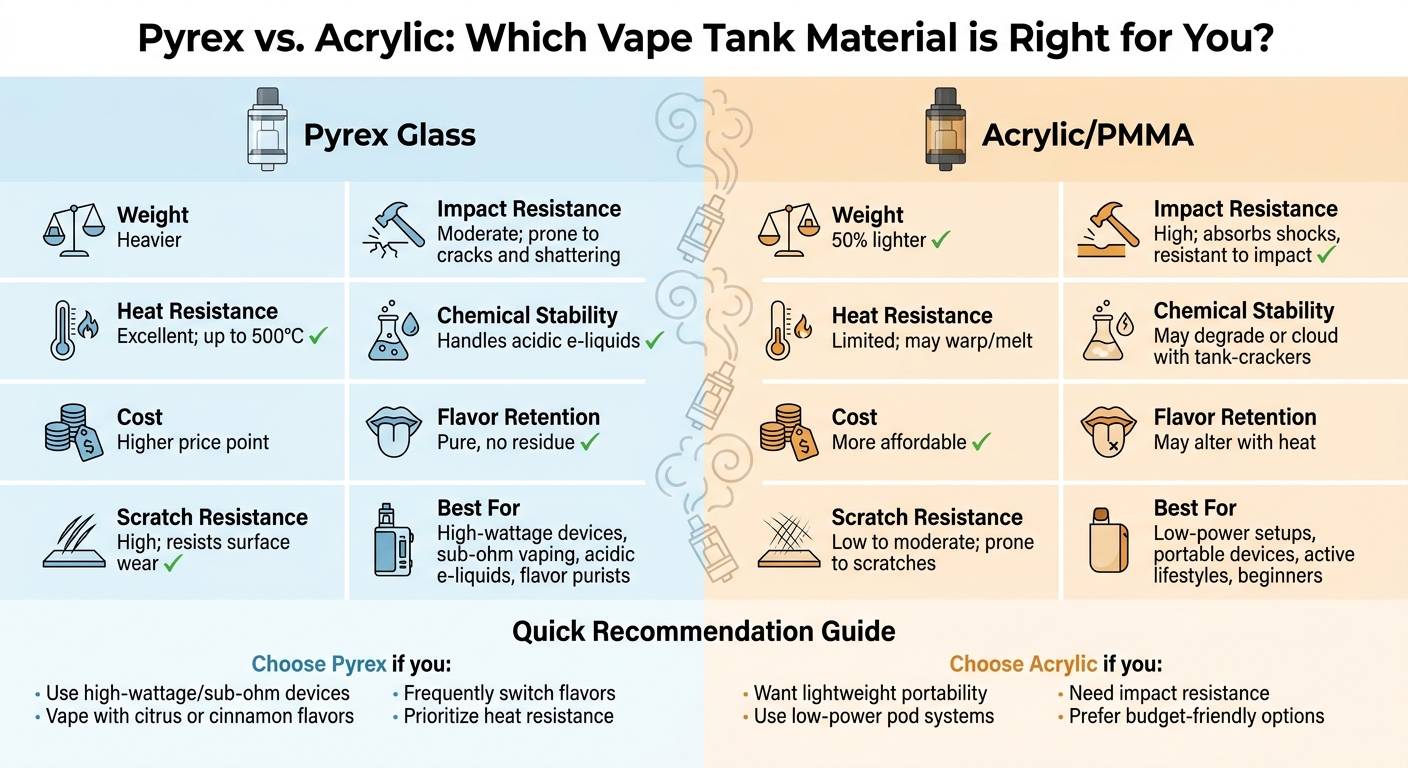
Pyrex vs Acrylic Vape Tank Comparison Chart
Pyrex Glass: Features and Benefits
What Is Pyrex Glass?
Pyrex is a type of borosilicate glass, primarily made from silica (SiO₂) and boron trioxide (B₂O₃). Thanks to this combination, it boasts impressive thermal stability. The boron content significantly lowers its thermal expansion rate – around 3 × 10⁻⁶ K⁻¹ at 20°C – which means it barely expands or contracts with temperature changes. This makes Pyrex a reliable choice in applications where heat resistance is crucial, such as vape tanks.
Why Pyrex Works Well in Vape Tanks
Pyrex’s unique properties make it an excellent material for vape tanks, especially in high-wattage vaping setups. It can handle extreme temperatures – up to 500°C – and withstands rapid temperature changes without cracking. In contrast, standard soda-lime glass only tolerates about a 40°C temperature change before it risks breaking.
Another advantage is its resistance to "tank-cracker" e-liquids. These are juices with ingredients like citrus, cinnamon, or acidic compounds that can degrade plastic tanks. Pyrex remains unaffected, maintaining its clarity and durability even with frequent flavour changes or cleanings. If it does break, Pyrex shatters into small, less sharp pieces, reducing the risk of injury. This combination of durability, safety, and resistance makes Pyrex a trusted choice for vapers.
sbb-itb-837e7ad
Acrylic: Features and Benefits
What Is Acrylic?
Acrylic, also known as PMMA, is a lightweight plastic commonly used in vape tanks. Its weight – 50% lighter than alternatives like glass – makes it an excellent choice for portability in daily use. Modern polymers such as PCTG and PETG have further improved chemical resistance while maintaining the core advantages of acrylic.
One standout feature of acrylic is its optical clarity, which rivals that of Pyrex. This transparency ensures you can easily monitor e-liquid levels. At the Dubai World Vape Show in June 2025, nearly half of SMOORE‘s showcased products featured visible e-liquid tank designs. These qualities highlight why acrylic is a practical and popular material for vape tanks.
Why Acrylic Works Well in Vape Tanks
Acrylic’s durability is one of its key strengths. Unlike Pyrex, which can shatter under stress, acrylic deforms gradually, offering higher impact resistance. Joe Martin explains:
The plastic is a lighter material which is cheaper than the glass and Pyrex models.
In addition to being durable, acrylic offers unmatched design flexibility. Unlike Pyrex, which is known for its polished, premium feel, acrylic allows for a variety of colours, transparency levels, and even crystal-like effects. This makes it possible to create vape tanks with unique visual appeal. Manufacturers can experiment with intricate window shapes and decorative shell finishes, giving users more customisation options. The lower production costs of acrylic also contribute to its affordability, with entry-level tanks starting at BHD 1.90 and standard models ranging from BHD 7.50 to BHD 15.
However, acrylic does have its limitations. It isn’t as heat-resistant as Pyrex and may warp or discolour when exposed to prolonged high temperatures, making it better suited for low-to-mid wattage setups. This makes acrylic a common material for devices like the Vaporesso Osmall Pod, which prioritizes portability and ease of use. Additionally, certain e-liquids – often referred to as "tank-crackers" – that contain acidic ingredients like citrus or cinnamon can cause acrylic tanks to cloud or crack over time. To maintain the clarity and durability of an acrylic tank, it’s best to use mainstream e-liquid formulations.
Durability: Pyrex vs. Acrylic
Strength and Impact Resistance
When it comes to durability, Pyrex and acrylic have distinct characteristics that set them apart, especially in vape tank applications.
Pyrex, while sturdy in normal conditions, is prone to cracking or shattering if dropped, bumped, or subjected to pressure in a bag or pocket. If a Pyrex tank breaks, it typically shatters into small squares, which helps minimise the risk of injury. However, its susceptibility to impact damage can be a drawback for those who frequently carry their device in less-than-ideal conditions.
On the other hand, acrylic and modern plastics like PCTG are much better at handling impacts. These materials are flexible enough to absorb shocks that would usually cause a glass tank to break. This makes acrylic a practical choice for users with an active lifestyle or those who often carry their vape in a pocket or bag. However, while Pyrex boasts excellent scratch resistance and chemical stability, acrylic is more prone to minor scratches or clouding over time.
For those who prefer Pyrex but worry about its fragility, silicone sleeves or vape bands can be used to provide extra protection against shocks.
Durability Comparison Table
| Feature | Pyrex Glass | Acrylic (PMMA) / Plastic |
|---|---|---|
| Shatter Resistance | Low to moderate; prone to cracking on impact | High; resistant to impact and shattering |
| Scratch Resistance | High; resists surface wear | Low to moderate; may develop cosmetic scratches/clouding |
| Lifespan (Regular Use) | Indefinite if not dropped; does not degrade | Long, but subject to eventual chemical/heat degradation |
| Failure Mode | Shatters into small squares | Rarely fails suddenly; may warp or discolour |
Heat Resistance: Pyrex vs. Acrylic
Performance at High Temperatures
Pyrex, or borosilicate glass, is designed to handle high temperatures, making it a go-to material for high-wattage vaping devices. It holds up under intense heat, even during extended vaping sessions or when used with sub-ohm setups. Its durability against thermal stress ensures it maintains its shape and functionality without breaking down.
On the other hand, acrylic (PMMA) struggles with heat. It can warp, discolour, or even melt when exposed to high temperatures, which limits its use to low-power vaping setups. Acrylic’s lower resistance to heat makes it less reliable for users who vape at higher wattages, as it can deform when exposed to intense heat.
The contrast between the two materials becomes even more apparent during chain vaping at high wattages. Pyrex not only resists rapid temperature changes (thermal shock) but also remains chemically stable, ensuring e-liquid flavour profiles stay consistent. Acrylic, however, may slightly alter the flavour after prolonged exposure to heat and is more prone to deformation.
"Pyrex and Quartz have excellent heat resistance, making them ideal for higher-wattage devices. These types of materials can handle the heat generated during longer vaping sessions without cracking." – VDC
For vapers using high-wattage setups, Pyrex or Quartz glass is the safer and more reliable choice, as these materials prevent tank warping or cracking under thermal stress. In contrast, using acrylic tanks with high-power sub-ohm devices could lead to issues with both shape and safety. The table below highlights the key differences between Pyrex and acrylic in terms of heat resistance.
Heat Resistance Comparison Table
| Feature | Pyrex Glass | Acrylic (PMMA) |
|---|---|---|
| Heat Resistance | Excellent; handles high temperatures | Limited; prone to warping/melting |
| Thermal Shock Resistance | High; withstands rapid heating and cooling | Low; susceptible to heat deformation |
| High-Wattage Suitability | Ideal for sub-ohm and high-power vaping | Better for low-power or casual vaping |
| Flavour Purity at High Heat | Remains neutral and untainted | May slightly alter flavour under prolonged heat |
| Long-Term Heat Effects | Remains clear and inert | May exhibit discolouration, clouding, or warping |
Which Material Should You Choose?
Matching Material to Your Vaping Style
When deciding between Pyrex and acrylic for your vape tank, it all comes down to your vaping preferences. If you’re someone who values pure flavour and durability under heat, Pyrex is the way to go. It’s chemically inert, meaning it won’t react with your e-liquid or hold onto previous flavours. This is a big advantage for vapers who enjoy switching between different flavour profiles or use "tank cracker" e-liquids that can damage acrylic tanks.
For those using high-wattage sub-ohm setups, Pyrex is ideal. It can handle the intense heat from long vaping sessions without warping, discolouring, or affecting the taste of your e-liquid. On the other hand, if portability and impact resistance are more important to you, acrylic is a solid option. Lightweight and durable, acrylic works well with pod systems and compact mods. However, it’s better suited for lower-power devices due to its lower heat tolerance.
Cleaning is another factor to consider. Pyrex can be safely cleaned with warm water or alcohol, while acrylic requires a gentler touch to avoid scratches. These practical differences highlight Pyrex’s excellent heat resistance and acrylic’s durability against impact. In Bahrain, Pyrex tanks like the Ehpro Billow V2 Nano are priced around BHD 0.010, with acrylic options being even more affordable.
Once you’ve determined the best material for your vaping style, you can start your journey by finding a reliable source for replacement tanks.
Where to Buy Vape Tank Replacements in Bahrain
For vapers in Bahrain, VapeShop.bh is a trusted destination for replacement tanks. They stock both Pyrex and acrylic options, ensuring you can find the right fit for your device. With same-day delivery across the kingdom, it’s easy to get what you need quickly. Whether you’re after a heat-resistant Pyrex tube for your high-power mod or a durable acrylic tank for your portable pod system, you can place your order directly through WhatsApp.
In addition to tanks, VapeShop.bh offers a wide selection of pods, coils, and accessories. Payment is hassle-free, with options like BenefitPay, credit card, and cash on delivery available.
Conclusion
Choosing between Pyrex and acrylic tanks ultimately depends on your vaping habits. Both materials have distinct advantages, and understanding these can help you make the right decision for your needs.
Pyrex glass stands out for its excellent heat resistance and ability to maintain flavour purity. This makes it ideal for high-wattage sub-ohm setups or for vapers who prefer acidic or citrus-based e-liquids. Its non-reactive nature ensures no unwanted chemical reactions or lingering flavours. However, it’s worth noting that Pyrex is heavier and prone to cracking if dropped.
On the other hand, acrylic tanks are about 50% lighter than glass, making them a great option for those who prioritise portability and durability against drops. They’re particularly suited for active users or beginners. That said, acrylic has a lower heat tolerance and may cloud or degrade when exposed to certain e-liquids, especially those containing strong citrus or cinnamon flavours.
To maintain your tank’s performance, keep these tips in mind: inspect Pyrex tanks regularly for cracks and check acrylic ones for signs of clouding or wear.
For vapers in Bahrain, convenience and quality are just a click away. VapeShop.bh offers a range of Pyrex and acrylic tanks, with same-day delivery across the country. You can even place your order via WhatsApp for quick and easy service.
FAQs
Will my e-liquid crack an acrylic tank?
Certain e-liquids can indeed damage an acrylic tank, particularly those that include ingredients like malic acid, citric acid, or cinnamon-based flavours. These components can interact with plastic materials, increasing the likelihood of cracking or other damage to acrylic tanks. If you’re using e-liquids with such reactive ingredients, opting for a glass tank, such as Pyrex, is a safer choice. Glass is far more resistant to both chemical reactions and heat, offering better durability in these situations.
How do I know if my device runs too hot for acrylic?
Acrylic tanks need to stay below 75°C (167°F) to avoid damage. If the tank feels hot or you notice unusually warm vapour, it’s a sign your device might be overheating. To keep things safe, avoid using high wattages for extended periods and ensure the device operates within temperatures suitable for acrylic materials.
Can I replace just the tank tube without changing the whole vape?
Yes, you can swap out the tank tube without needing to replace your entire vape device. Just make sure the new tube is compatible with your tank’s base and fittings. Many modern vape tanks, whether made of Pyrex or acrylic, are built for simple tube replacements. Be sure the replacement tube matches the size and connection type of your existing tank to ensure a proper fit and safe use.
Related Blog Posts
- الفيب المستعمل مقابل الفيب الجديد: أيهما أفضل؟
- 5 طرق لإطالة عمر كويلات الفيب
- حل مشكلة الطعم المحروق في الفيب
- قائمة فحص قبل شراء جهاز فيب جديد
Frequently Asked Questions
Pyrex, a type of borosilicate glass, offers excellent heat resistance up to 500°C and chemical stability, making it ideal for high-wattage vaping or acidic e-liquids. Acrylic is 50% lighter, more impact-resistant, and affordable but has lower heat tolerance and may degrade with certain e-liquids. Choose based on whether you prioritize heat durability or portability.
Pyrex provides superior heat resistance and flavor purity without residue, suitable for sub-ohm setups and freebase e-liquids. Acrylic excels in impact resistance, absorbing shocks without shattering, though it risks warping under high heat. Pyrex suits high-power use while acrylic fits casual, portable vaping.
Borosilicate glass like Pyrex handles thermal shock well and remains chemically inert, preventing flavor alteration. Acrylic offers high drop resistance and lightness but may cloud or discolor from acidic ingredients or prolonged heat. Pyrex is better for flavor purity in demanding setups.
Acrylic tanks are highly impact-resistant, deforming gradually instead of shattering like Pyrex under drops or pressure. They are lightweight and more affordable, ideal for everyday carry. However, they have limited heat resistance and can degrade with tank-cracker e-liquids.
Pyrex glass withstands up to 500°C and rapid heating/cooling without cracking, perfect for high-wattage devices. Acrylic has limited heat tolerance, prone to warping or melting in intense sessions. Use Pyrex for sub-ohm vaping to maintain safety and performance.
Pyrex tanks shatter into safe squares if broken and offer excellent chemical stability for acidic e-liquids. Acrylic provides better shock absorption and lower cost for frequent replacements. Match your choice to your setup: Pyrex for heat-heavy use, acrylic for durability on the go.
Acrylic outperforms in impact resistance, surviving drops that crack Pyrex, and is 50% lighter for portability. Pyrex excels in heat and chemical resistance but is prone to shattering under physical stress. Acrylic suits rough handling while Pyrex ensures long-term flavor integrity.