Freebase vs Salt Nic: Device Compatibility Guide


Choosing the right e-liquid and device combination is essential for a safe and satisfying vaping experience. Here’s the key takeaway:
- Freebase nicotine delivers a strong throat hit, works best with high-wattage sub-ohm devices, and pairs well with low nicotine strengths (3–6 mg).
- Salt nicotine provides a smoother hit, absorbs faster, and is ideal for low-wattage pod systems with higher nicotine strengths (20–50 mg).
Quick Overview:
- Freebase Nicotine: Best for Direct-to-Lung (DTL) vaping, large vapor clouds, and gradual nicotine release. Use high-VG e-liquids in sub-ohm devices.
- Salt Nicotine: Perfect for Mouth-to-Lung (MTL) vaping, quick nicotine satisfaction, and compact devices. Use 50/50 VG/PG e-liquids in pod systems.
Key Tip: Avoid mismatched setups like using salt nicotine in sub-ohm devices or freebase nicotine in pod systems. This can lead to harsh hits, coil damage, or excessive nicotine intake.
Let’s dive into the details to help you make the right choice for your vaping needs.
Freebase Nicotine: Properties and Best Devices
How Freebase Nicotine Works
Freebase nicotine exists in a deprotonated, alkaline state, giving it a higher pH level compared to nicotine salts. This alkalinity is what creates the sharp throat hit, similar to what traditional cigarette smokers experience. However, this intense sensation becomes more pronounced with higher nicotine concentrations and heat, which is why strengths above 12 mg to 18 mg can feel too harsh, especially when used in modern vaping devices . In Bahrain, many vapers prefer lower nicotine concentrations to achieve a smoother balance between flavor, throat hit, and vapor production.
Freebase e-liquids are typically crafted with high Vegetable Glycerin (VG) content, often 70% VG or more . This thicker composition requires devices with larger wicking ports and higher operating temperatures for proper vaporization. Unlike nicotine salts, which absorb quickly into the bloodstream, freebase nicotine offers a slower, more gradual release. This makes it particularly suitable for longer, more relaxed vaping sessions . To handle these properties effectively, devices must be capable of managing higher temperatures and thicker e-liquids.
These features directly influence the type of vaping devices that work best with freebase nicotine.
Best Devices for Freebase Nicotine
Freebase nicotine is most effective when used with sub-ohm tanks, high-powered mods, and Direct-to-Lung (DTL) setups . These devices typically feature coils with a resistance of 0.5Ω or lower and operate at wattages above 40 W. Such setups are ideal for producing the large clouds and rich flavors associated with freebase nicotine. The high-VG e-liquids used with freebase nicotine require devices with larger wicking systems to ensure smooth e-liquid flow and to avoid dry hits. Additionally, higher temperatures help enhance flavor complexity while reducing the harshness of the alkaline throat hit.
"Freebase is generally the better match for high-wattage, high-airflow setups. Using high-strength nic salts in sub-ohm devices can be overwhelming and unpleasant." – Quality Vapes
If you’re browsing VapeShop.bh, consider advanced mods and sub-ohm tanks tailored for DTL vaping. Pair these devices with high-VG freebase e-liquids in nicotine strengths between 3 mg and 6 mg to enjoy dense vapor clouds without excessive harshness. Avoid using high-strength freebase nicotine (12 mg or higher) in low-power pod systems, as the throat hit can become uncomfortably sharp. Additionally, ensure your coil is designed to wick thick, high-VG liquids effectively to prevent dry hits and potential coil damage.
sbb-itb-837e7ad
Salt Nicotine: Properties and Best Devices
How Salt Nicotine Works
Salt nicotine is created by combining pure nicotine with a weak acid, often benzoic acid. This process lowers its pH, resulting in a smoother throat hit even at higher concentrations (20–50 mg). With this lower pH, users can comfortably inhale stronger nicotine levels without harshness.
"Nicotine salts were engineered to offer smokers a more efficient and smoother nicotine experience than cigarettes or traditional vape juices." – Vaporesso
Salt nicotine is absorbed quickly into the bloodstream, mimicking the fast satisfaction of traditional cigarettes. Thanks to its balanced 50/50 VG/PG ratio, it works efficiently in pod systems, with users typically consuming only 2–3 ml daily. This makes it a more economical option for regular use.
These characteristics mean that devices specifically designed for salt nicotine are essential to get the best experience.
Best Devices for Salt Nicotine
Salt nicotine works best in low-wattage pod systems and Mouth-to-Lung (MTL) setups. These devices typically feature coils with resistance at or above 0.8Ω and operate between 10 W and 25 W. This setup ensures a controlled, cigarette-like draw while avoiding excessively high nicotine delivery. Modern pod systems, like the Vaporesso XROS series, come equipped with high-resistance pods and automatic wattage adjustments to prevent overheating.
For vapers in Bahrain, these devices and compatible vape coils are well-suited to local preferences and conditions. On VapeShop.bh, you’ll find options such as the Vaporesso XROS 5 (BHD 13.500), XROS 5 Mini (BHD 9.400), and the budget-friendly ECO One Pro (BHD 7.500). These compact devices provide precise airflow and vapour control, making them ideal for salt nicotine.
For the best experience:
- Use coils with 0.8Ω or 1.2Ω resistance for salt nicotine strengths of 10–20 mg.
- If you prefer a warmer vape, 0.6Ω coils pair well with 6–12 mg strengths.
- Keep wattage settings between 12 W and 16 W for 0.8Ω pods. Exceeding 20 W risks burning out your coils prematurely.
With the right device and settings, you can enjoy a smooth and satisfying salt nicotine experience tailored to your needs.
Nicotine Salts vs. Freebase Nicotine
Device Compatibility Comparison
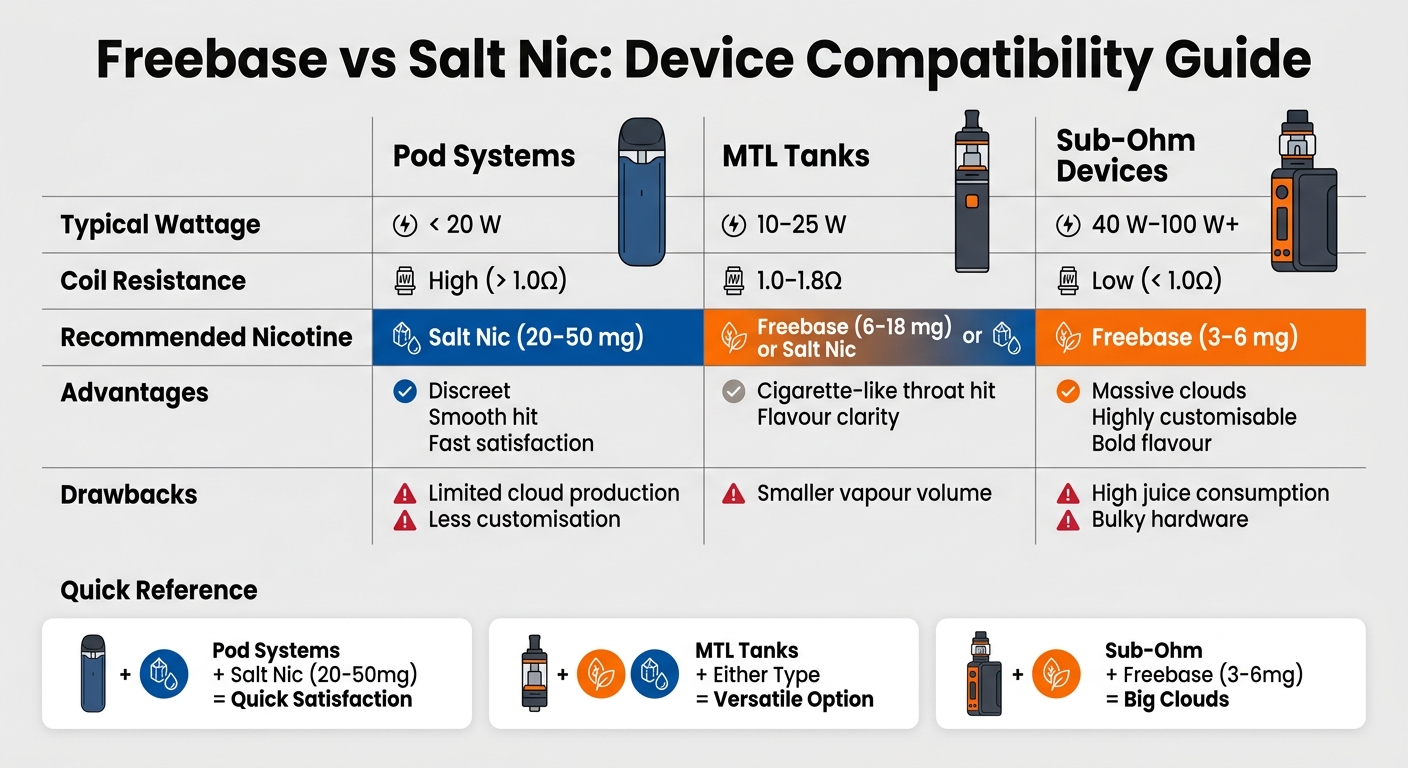
Freebase vs Salt Nicotine Device Compatibility Comparison Chart
When it comes to vaping, finding the right device isn’t just about personal preference – it’s about ensuring safety, satisfaction, and getting the best performance. For instance, high-powered sub-ohm devices can deliver too much salt nicotine, leading to side effects like dizziness or nausea. On the other hand, using low-strength freebase nicotine in pod systems might leave you unsatisfied, causing you to vape more frequently. This balance is especially important for vapers in Bahrain, where local conditions and preferences play a role in device choice.
Device compatibility revolves around three key factors: wattage, coil resistance, and nicotine strength. Pod systems and MTL (mouth-to-lung) tanks generally use higher-resistance coils (over 1.0Ω) and lower wattages, which are perfect for salt nicotine at strengths between 20–50 mg. Sub-ohm devices, however, operate at higher wattages (40 W or more) with low-resistance coils (below 1.0Ω) and are better suited for freebase nicotine, typically in thicker, high-VG blends with strengths of 3–6 mg. These distinctions are critical for matching the right device to your preferred vaping experience.
As Shelby Bockman, Manager at Pink Spot Vapors, explains:
"Salt nic juices are specially designed for low-powered, compact vaping devices… The focus here isn’t on producing giant vapor clouds – it’s on delivering quick, efficient nicotine satisfaction." – Shelby Bockman, Manager, Pink Spot Vapors
For those who want flexibility, MTL tanks are a versatile option. With coil resistances ranging from 1.0Ω to 1.8Ω and wattages between 10 W and 25 W, they can handle both salt nicotine and freebase nicotine (6–18 mg). This makes them ideal for users transitioning between vaping styles or those who enjoy a cigarette-like throat hit without committing to just one type of nicotine.
Here’s a quick comparison of devices and their nicotine compatibility:
Comparison Table: Devices and Nicotine Types
| Device Type | Typical Wattage | Coil Resistance | Recommended Nicotine | Advantages | Drawbacks |
|---|---|---|---|---|---|
| Pod Systems | < 20 W | High (> 1.0Ω) | Salt Nic (20–50 mg) | Discreet, smooth hit, fast satisfaction | Limited cloud production, less customisation |
| MTL Tanks | 10–25 W | 1.0–1.8Ω | Freebase (6–18 mg) or Salt Nic | Cigarette-like throat hit, flavour clarity | Smaller vapour volume |
| Sub-Ohm Devices | 40 W–100 W+ | Low (< 1.0Ω) | Freebase (3–6 mg) | Massive clouds, highly customisable, bold flavour | High juice consumption, bulky hardware |
This breakdown should help you determine which device aligns best with your vaping needs and nicotine preferences.
Risks of Using the Wrong Device
Using the wrong vaping device for your nicotine type isn’t just a minor inconvenience – it can lead to serious health problems and even damage your device. For instance, pairing high-strength salt nicotine with a sub-ohm device is particularly risky. These devices vaporize a larger amount of liquid per puff, which can result in nicotine toxicity. Symptoms include nausea, dizziness, heart palpitations, and elevated blood pressure. To put it into perspective, just one nicotine salt pod can contain as much nicotine as an entire pack of cigarettes.
The risks don’t stop at immediate effects. Over time, using high-powered devices with nicotine salts can increase respiratory issues. These devices produce more particulate matter, and nicotine salts tend to form larger molecules that stay in a particulate state instead of vaporizing completely. This makes it harder for your immune system to clear them, potentially leading to lung inflammation. Additionally, excessive vaping with high-output devices can increase lung fluid levels, which has been linked to pneumonia-related illnesses. Prolonged exposure to high nicotine levels also raises the likelihood of developing a nicotine addiction.
Mid-Range Devices: Using Both Nicotine Types
Mid-range devices offer versatility, but they require careful handling to avoid complications. Devices with 0.6–1.0Ω coils can work with both freebase and salt nicotine, but adjustments are key. For example, when using salt nicotine with a 0.6Ω coil, it’s best to start at the lowest recommended wattage and monitor for signs of nicotine overuse, like lightheadedness. Switching to freebase nicotine in the same device might require increasing the nicotine strength slightly or adjusting your puffing habits, as freebase nicotine absorbs more slowly. Coils in the 0.7–0.8Ω range are often seen as a reliable middle ground for handling both types effectively. Staying hydrated is also important to combat common side effects like dry mouth and fatigue.
Common Mistakes and Their Consequences
Even with the right device, user errors can lead to poor performance and safety risks. For instance, using freebase nicotine in low-powered pod systems often causes problems. Freebase e-liquids typically have higher Vegetable Glycerin (VG) content, making them thicker. These liquids may not wick efficiently in small pod coils, leading to dry hits or burnt coils. Plus, the slower nicotine delivery from freebase liquids might tempt users to take more frequent puffs, which reduces the efficiency of compact pod systems.
Another frequent mistake involves using "Bar Salts" (double-concentrated nicotine salts) in high-wattage devices. This can result in an overwhelming flavour, excessive nicotine intake, and rapid residue buildup on the coils, which shortens their lifespan. To avoid these issues, follow a simple guideline: use low-wattage pod systems (under 15–20 W) for high-strength nicotine salts, and stick to sub-ohm tanks for low-strength freebase nicotine (3–6 mg).
Conclusion
Deciding between freebase nicotine and nicotine salts isn’t just about personal preference – it’s also about achieving the best performance. Freebase nicotine shines in high-wattage sub-ohm tanks and box mods, especially at lower strengths like 3 or 6 mg. On the other hand, nicotine salts are ideal for low-wattage pod systems, offering a smoother throat hit and quicker absorption at higher concentrations (10–20 mg).
"Pods + quick cravings = Nic Salts. Sub‑ohm + flavor/clouds = Freebase" – Quality Vapes
Pairing the right nicotine type with the correct device is key to a great vaping experience. Mismatched combinations can lead to issues like dry hits, coil damage, or even excessive nicotine intake.
For vapers in Bahrain, VapeShop.bh makes the selection process easier. They offer a wide range of nicotine salt devices and advanced freebase mods, with same-day delivery across the country. Whether you’re an ex-smoker looking for a compact pod system like the Uwell Caliburn G3 or a cloud enthusiast after a powerful sub-ohm setup, VapeShop.bh also provides 24/7 WhatsApp support to help you choose the perfect device.
Understanding compatibility is simple once you know the basics: nicotine salts work best in low-power, discreet devices for quick relief, while freebase nicotine is suited for high-output setups that deliver dense vapor and gradual nicotine release. By sticking to these guidelines and seeking advice from experienced retailers, you can avoid common mistakes, extend your device life, and enjoy a safer, more tailored vaping experience. Choose wisely, and vape with confidence.
FAQs
How do I know if my device is MTL or DTL?
To figure out whether your device is designed for MTL (mouth-to-lung) or DTL (direct-to-lung) vaping, pay attention to its airflow and the way you inhale.
- MTL devices: These have a more restricted airflow, mimicking the sensation of smoking a cigarette. They work best with lower power settings and higher nicotine levels.
- DTL devices: These come with open airflow, allowing for larger vapour clouds and are geared toward higher power output.
If your device has adjustable airflow, you can tweak it to suit your preference – tighten it for an MTL experience or open it up for DTL vaping.
What nicotine strength should I use if I vape a lot each day?
For those who vape frequently, opting for higher nicotine strengths can be a practical choice to curb cravings and minimise the hassle of constant refills. Salt nicotine e-liquids, typically containing around 20 mg/mL or more, are particularly suitable for this purpose. They deliver nicotine quickly and offer a smoother inhalation experience. It’s a good idea to begin with a higher strength and then adjust it according to your comfort level to prevent overconsumption.
Can I switch between salt nic and freebase in the same device?
Salt nicotine and freebase nicotine each have their ideal setups. Salt nicotine is best suited for low-wattage, high-resistance devices like pod systems. On the other hand, freebase nicotine works well with sub-ohm tanks and mods that operate at higher wattages.
If you’re considering switching between the two, you might need to adjust your device’s settings or even change your e-liquid. Using the wrong nicotine type for your device can lead to issues like harsh throat hits or underwhelming performance. To get the best experience, always ensure your nicotine type matches your device’s compatibility.
Related Blog Posts
- أفضل 7 نكهات سولت نيكوتين في البحرين 2026
- أسئلة شائعة عن السولت نيكوتين وإجاباتها
- مقارنة بين أجهزة البود والمود المتقدمة
- 5 Tips for Choosing Nicotine Strength as a Beginner
Frequently Asked Questions
Freebase nicotine delivers a strong throat hit and works best with high-wattage sub-ohm devices using low nicotine strengths like 3-6 mg. Nicotine salts provide a smoother hit, absorb faster, and suit low-wattage pod systems with higher strengths up to 20 mg as per Bahrain regulations. Choose based on your device and preferred vaping style for the best experience.
Nicotine salts pair ideally with low-wattage pod systems and MTL setups for a smooth throat hit even at strengths up to 20 mg. These devices use higher resistance coils above 0.8 Ω and operate at 10-25 W. Avoid sub-ohm tanks as salts can feel too harsh there.
Yes, freebase nicotine can be used in pod systems, especially at low strengths of 3-6 mg for a balanced experience. However, it may not deliver as smooth a hit as salts in low-wattage devices. Pod systems handle both types, but match strength to your coil resistance.
Freebase nicotine excels in high-wattage sub-ohm devices with coils at 0.5 Ω or lower, producing big clouds at 40 W and above. Use low strengths like 0-6 mg to avoid harshness. These setups suit DTL vaping for experienced users.
High resistance coils of 1.0 Ω or above pair best with nicotine salts up to 20 mg for smooth MTL vaping. Coils from 0.6-0.9 Ω work with either type at 6-12 mg freebase or 10 mg salts. Low resistance under 0.5 Ω requires freebase only at 0-6 mg.
MTL (mouth-to-lung) suits nicotine salts in pod systems for a cigarette-like draw with higher strengths up to 20 mg. DTL (direct-to-lung) fits freebase in sub-ohm devices for cloud production at low 3-6 mg levels. Pick based on your inhale style and device power.
For pod systems or high-resistance coils, opt for nicotine salts up to 20 mg for quick satisfaction. Sub-ohm or low-resistance setups need freebase at 0-6 mg to prevent harsh hits. Always match strength to your device's wattage and coil type.
Mid-range MTL tanks on small mods (15-30 W, 0.6-1.0 Ω coils) handle both 6-12 mg freebase or 10-15 mg salts flexibly. This hybrid zone offers versatility for different vaping preferences. Test low strengths first to find your ideal setup.