
5 Signs of High-Quality E-Liquids


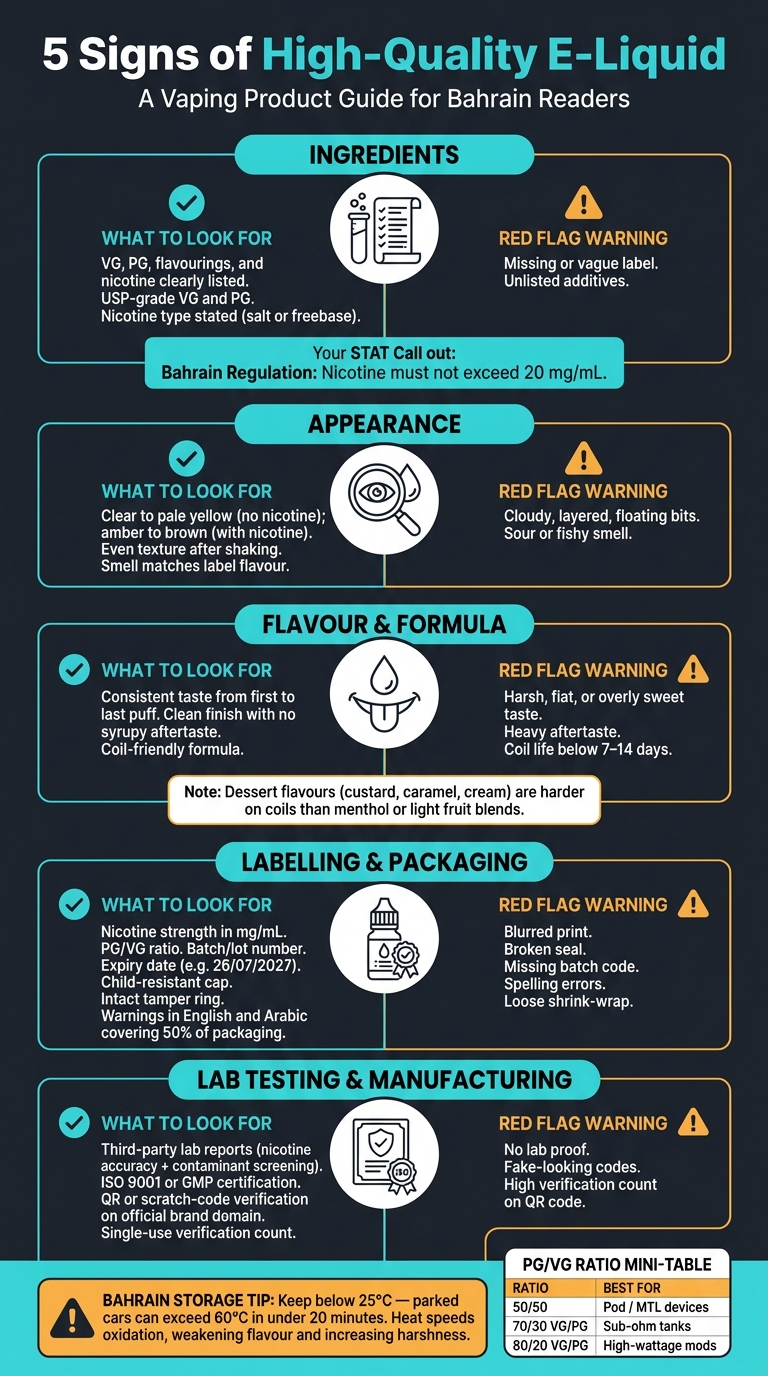
If I want to avoid a bad e-liquid, I check five things first: ingredients, look, flavour, label, and lab proof. In Bahrain, that matters even more because summer heat can go past 45 °C, and nicotine strength must stay at or below 20 mg/mL.
Here’s the short version:
- Check the ingredient list: I want to see VG, PG, flavourings, and nicotine clearly listed.
- Match the PG/VG ratio to the device: 50/50 suits many pod and MTL devices, while 70/30 or 80/20 suits sub-ohm setups.
- Look at the liquid: It should look clean, not cloudy, separated, or full of bits.
- Watch for coil-heavy formulas: Very sweet dessert flavours can wear coils out faster, sometimes well before the usual 7 to 14 days.
- Read the bottle: I check nicotine strength, batch number, expiry date, warning text, seal, and cap.
- Look for lab proof: Third-party test reports, GMP or ISO production, and working QR or scratch-code checks help spot safer picks.
- Store it well: Heat and sunlight can darken the liquid, weaken flavour, and make the vape feel harsher.
5 Signs of High-Quality E-Liquid: Quick Checklist
EVERYTHING You Need to Know About E-Liquid! – Vaping 101
sbb-itb-837e7ad
Quick Comparison
| Check | What I look for | Red flag |
|---|---|---|
| Ingredients | Clear list of VG, PG, flavourings, nicotine | Missing or vague label |
| Ratio | 50/50, 70/30, or 80/20 clearly shown | Ratio not listed |
| Appearance | Clean colour, even texture, normal smell | Flavour |
| Flavour | Clean taste, no heavy syrupy aftertaste | Harsh, flat, overly sweet |
| Packaging | Batch code, expiry date, sealed cap | Broken seal, blurred print |
| Lab proof | Third-party reports, GMP/ISO, code check | No proof or fake-looking code |
If I’m buying in Bahrain, I also make sure the product page matches the bottle and that the nicotine level does not go over 20 mg/mL.
Why E-Liquid Quality Matters Before You Buy
Low-quality e-liquid can ruin the whole experience fast. It can feel harsh on the throat, deliver uneven nicotine strength, and clog coils sooner than expected. That means your coil may wear out well before the usual 7 to 14 days. So the first thing to check is simple: are the ingredients clean, and is the PG/VG ratio clearly listed?
Good e-liquids are consistent. The nicotine strength should match what the label says, and the label itself should be easy to read. If that basic information is missing or vague, that’s a red flag. After that, the next thing to look at is what else is inside the liquid.
Clear ingredient labels and third-party lab tests can help cut your exposure to unwanted additives.
Storage matters too, especially in Bahrain’s heat. If e-liquid has been stored badly, it can oxidise faster and may taste off the moment you open it.
Before you buy, check these points:
- ingredient quality
- appearance
- flavour balance
- packaging
- lab testing
That’s why the next five checks matter.
1. High-Purity Ingredients and Clear PG/VG Ratios
A good bottle tells you what’s inside at a glance: VG, PG, flavourings, and nicotine. If even one of these is missing, that’s a red flag. This is your first clue about purity and whether the liquid will suit your device.
Premium e-liquids use USP-grade VG and PG along with high-purity nicotine. Lower-grade liquids, on the other hand, may contain sweeteners that caramelise over time and clog coils. That usually means more burnt hits, more mess, and more money spent on replacements.
The PG/VG ratio also has a direct effect on how the e-liquid behaves. PG is thinner, carries flavour more strongly, and gives a sharper throat hit. VG is thicker, makes denser vapour, and gives a smoother inhale. If the ratio doesn’t suit your device, things can go south fast: dry hits, leaking, and that harsh burnt taste nobody wants.
Use this table to match the ratio to your setup:
| Ratio | Best for | What to Expect |
|---|---|---|
| 50/50 | Pod systems, MTL devices | Balanced flavour and throat hit |
| 70/30 (VG/PG) | Sub-ohm tanks | Denser vapour, smoother inhale |
| 80/20 (VG/PG) | High-wattage sub-ohm mods | Maximum vapour, mild throat hit |
In Bahrain, the label must stay within the 20 mg/mL (2.0%) nicotine limit and clearly state the nicotine type. It should also say whether the nicotine is nicotine salt or freebase.
Next, check whether the liquid looks clean and stays stable in the bottle.
2. Clean Appearance and Stable Texture
Once the label looks right, check the liquid itself.
Non-nicotine e-liquids should look clear to pale yellow, while liquids with nicotine usually range from amber to brown. If you spot cloudiness, floating bits, or a murky look, treat that as a warning sign.
Some darkening over time is normal. But if a fresh bottle is much darker than that flavour usually is, it may point to heat exposure, poor storage, or batch inconsistency.
Give the bottle a light shake. The liquid should blend back into an even texture. If it stays separated in layers, don’t use it.
The smell matters too. It should match the flavour named on the label. Sour or fishy notes can point to oxidation or low-grade nicotine.
The thickness should also line up with the label. For example, a 70/30 VG/PG blend should feel thicker than a 50/50 blend. If it seems oddly thick or thin for no clear reason, something may be wrong. If the texture doesn’t match the label, move on.
3. Balanced Flavour and Coil-Friendly Formula
Once the bottle looks clean, the next thing to check is how the flavour performs when you actually vape it.
A good e-liquid should taste consistent from the first puff to the last. If the flavour goes flat, turns syrupy, or starts feeling harsh after only a few days, that usually points to an unbalanced formula or a poor match between the liquid, the right vape coils, and the wattage.
The aftertaste tells you a lot too. High-quality liquids leave a clean finish, not a syrupy or chemical taste that hangs around after each puff. If that heavy sweetness sticks to your mouth, that’s often a clear sign the liquid has been over-sweetened. And that matters for more than taste. Sweeteners leave residue on the coil, which can mute flavour over time and wear the coil out faster.
Some flavour types are harder on coils than others. Dessert blends like custard, caramel, and cream tend to be rougher on coils because they often contain more sweetener. By contrast, cleaner menthols, lighter fruit blends, and balanced tobacco flavours usually leave less residue and stay more steady in day-to-day use.
4. Clear Labelling and Proper Packaging
Once you’ve checked the flavour balance, look at the bottle itself. That’s often where quality shows up fast.
A good bottle should clearly show the nicotine strength in mg/mL, the PG/VG ratio, the ingredients, a batch or lot number, and an expiry date in day-month-year format such as 26/07/2027. If any of that is missing, smudged, or hard to read, treat it as a red flag. The batch number should also match the outer box and the expiry date. If the codes don’t line up, or look blurred or incomplete, that’s a bad sign.
In Bahrain, nicotine strength is capped at 20 mg/mL, and labels must include warnings in both English and Arabic. Those health warnings must cover at least 50% of the packaging. Good brands make this easy to spot. The text should be large, clear, and simple to find.
Then check the seal and batch code closely.
Look for:
- A child-resistant push-and-turn cap
- An intact tamper ring
- Clean printing with no blurred fonts or colour bleed
- No spelling mistakes on the label or box
Loose shrink-wrap or packaging that looks re-sealed should put you on alert.
If you’re buying online, the listing should match the bottle, not just the logo or brand style. When ordering through a website or WhatsApp, compare the product page with the bottle photo before you buy.
5. Verified Manufacturing Standards and Lab Testing
If the bottle looks right, the next thing to check is proof of how it was made. A clean-looking bottle helps, sure. But when you want stronger proof of quality, lab reports and production standards matter far more.
Look for ISO/GMP production. These standards point to clean and consistent manufacturing. Premium brands often share third-party lab reports that confirm nicotine accuracy and screen for contaminants. That matters, because counterfeit liquids have been found to contain heavy metals and other contaminants.
If you’re weighing the signals, put third-party lab reports first. Then treat ISO 9001 or GMP as extra support.
Scratch-off codes and QR verification are also worth checking. But don’t stop at seeing a code on the pack. Check the result closely:
- The code should show one verification. If the count is high, that can mean the same code was copied onto counterfeit batches.
- Make sure the verification page opens on the brand’s official domain before you trust the result.
After that, compare those claims with the product page and the bottle details.
What to Check on Product Pages and Bottles in Bahrain
After lab testing, compare the product page with the bottle itself. In Bahrain, nicotine strength in e-liquids must not go above 20 mg/mL. If a listing shows anything higher, that’s a clear red flag.
Start with the main specs. The PG/VG ratio should be easy to find on both the product page and the bottle. Nicotine strength should be shown in mg/mL or as a percentage. And bottle size in mL helps you compare what you’re paying for and when you might need to reorder.
Then look at the bottle more closely. Check for:
- A batch or lot number
- An expiry date in a clear format, such as 26/07/2026
- An intact tamper seal and child-resistant cap
If the cap spins freely or the seal looks disturbed, don’t buy it. Following these beginner’s safety tips ensures you avoid counterfeit or damaged products.
Once those details line up, the next step is proper storage for Bahrain’s climate.
Storage Tips for Bahrain’s Climate
Once a bottle clears the label and packaging checks, storage is what keeps that quality in place. Even a premium bottle can go bad if it’s stored the wrong way.
In Bahrain, heat is the main problem. Summer temperatures often go past 40 °C outdoors, and a parked car can climb to over 60 °C in under 20 minutes.
That kind of heat speeds up oxidation, which breaks down nicotine and flavour. The result? Weaker flavour and a harsher hit. And this isn’t a small shift. Each 10 °C increase sharply speeds degradation, so storing a bottle at 35 °C instead of 25 °C makes a big difference.
Store bottles in a cool, dark cupboard or drawer in an air-conditioned room, ideally below 25 °C. Also keep them away from windowsills, balconies, and cars. Direct sunlight and UV can lead to colour change and flavour loss within days.
Store every bottle upright and tightly sealed. Keeping it upright puts less pressure on the cap seal and lowers the chance of slow leaks. A tight cap also cuts down air contact, which helps slow oxidation and nicotine breakdown.
If the liquid has turned much darker, or the taste has become harsh or off, that’s a sign of heat or light damage and signs of spoilage. In that case, discard it.
Conclusion
Choosing a good e-liquid comes down to five things: high-purity ingredients, clean appearance, balanced flavour, clear labelling, and verified manufacturing standards. When an e-liquid checks all five boxes, it’s much less likely to clog your coils, give you a harsh hit, or leave you guessing about what you’re inhaling.
In Bahrain’s heat, it also pays to check the basics before you buy. Look at the nicotine strength, PG/VG ratio, batch number, and expiry date. Under Bahraini law, nicotine strength must not exceed 20 mg/mL.
One more thing: make sure the product page matches the bottle. Flavour is personal, of course, but clear product details matter more. If the page or label leaves out key information, that’s a solid reason to move on. VapeShop.bh offers detailed product pages and same-day delivery across Bahrain.
Use these five signs as a quick checklist before each purchase.
FAQs
How do I choose the right PG/VG ratio?
Choose a PG/VG ratio that fits both your device and the kind of vape you want. PG is thinner, carries flavour well, and gives a stronger throat hit. That makes it a good match for MTL devices and pod systems. VG is thicker, produces denser vapour, and feels smoother on the inhale, so it’s better suited to high-wattage sub-ohm tanks.
A 50/50 blend works well with many standard tanks and pod kits. Higher VG ratios, such as 70/30 or 80/20, are better if you want bigger clouds, but they also need more powerful hardware.
How can I tell if an e-liquid has been damaged by heat?
Heat-damaged e-liquid usually gives itself away pretty fast. The first clues are often the colour, smell, and taste.
It may shift to a deep brown or orange shade. The smell can turn chemical or just plain off. And when you vape it, the flavour may taste harsh, bitter, peppery, or flat.
You might also spot physical changes in the liquid itself. For example:
- Separation that still doesn’t blend back together after shaking
- Cloudiness or floating debris
- A texture that feels too thick or too watery
If you notice any of these signs, stop using the bottle and replace it.
Why do some e-liquids burn coils faster?
Some e-liquids wear out coils faster because of viscosity, sweetener content, or device settings that don’t suit the liquid.
If the liquid is too thick, the wick may not soak it up fast enough. That can lead to dry hits, which scorch the cotton. Sweeteners can also caramelise on the coil and leave build-up behind.
To help your coil last longer:
- Match the VG/PG ratio to your device
- Give the wick time to saturate
- Lower the wattage if needed
Related Blog Posts
- حل مشكلة الطعم المحروق في الفيب
- Top 5 Factors Driving Vape Sales in Bahrain
- Product Descriptions vs. Reviews: What Helps More?
- Ultimate Guide to Seasonal E-liquid Flavors
Frequently Asked Questions
A good e-liquid should clearly show its ingredients, have a clean look, balanced flavour, clear labelling, and some form of lab proof. In Bahrain, checking the label matters even more because nicotine strength must stay at or below 20 mg/mL. A bottle with vague details, cloudy liquid, or missing test information is a red flag.
The label should clearly list VG, PG, flavourings, and nicotine if it contains nicotine. Clear ingredient details help show that the bottle is properly made and not hiding anything. If the ingredients are missing or too vague, that is usually a bad sign.
The PG/VG ratio helps you match the liquid to your device and vaping style. A 50/50 mix suits many pod and MTL devices, while 70/30 or 80/20 is better for sub-ohm setups. If the ratio is not shown, it is harder to know how the e-liquid will perform.
It should look clean, even, and free from cloudiness, separated layers, or floating bits. A normal smell and smooth texture are also signs of a better-made liquid. If it looks strange before you even open it, it is safer to leave it out.
A proper bottle should show nicotine strength, batch number, expiry date, warning text, seal, and cap details. These label checks help confirm the liquid has been packaged with care. Missing or blurry information can point to poor quality or weak quality control.
Third-party test reports, GMP or ISO production, and working QR or scratch-code checks all help support product safety claims. These details give buyers more confidence that the liquid has been made under proper standards. Without them, it is harder to judge what is really inside the bottle.
E-liquid should be kept away from heat and sunlight because both can darken the liquid and weaken the flavour. Hot storage can also make the vape feel harsher over time. Keeping it in a cool, shaded place helps preserve quality for longer.