
Snus in Bahrain: Law, Risks & Safer Alternatives

Searches for snus in Bahrain have increased as more smokers look for smoke-free options and hear about products from Europe or duty free shops. At the same time, the Kingdom’s tobacco laws are very strict, especially around oral tobacco and nicotine pouch products. Anyone considering snus, “white snus” or tobacco-free pouches needs clear, honest information before making a decision.
This guide explains exactly what snus is, the legal situation in Bahrain and the wider GCC, how nicotine pouches fit into the picture, and which alternatives are actually legal and accessible. The goal is simple: help adult smokers understand the rules, avoid legal trouble, and find safer, compliant options such as regulated vaping and medically approved nicotine replacement therapy.
What is snus and why are people in Bahrain hearing about it?
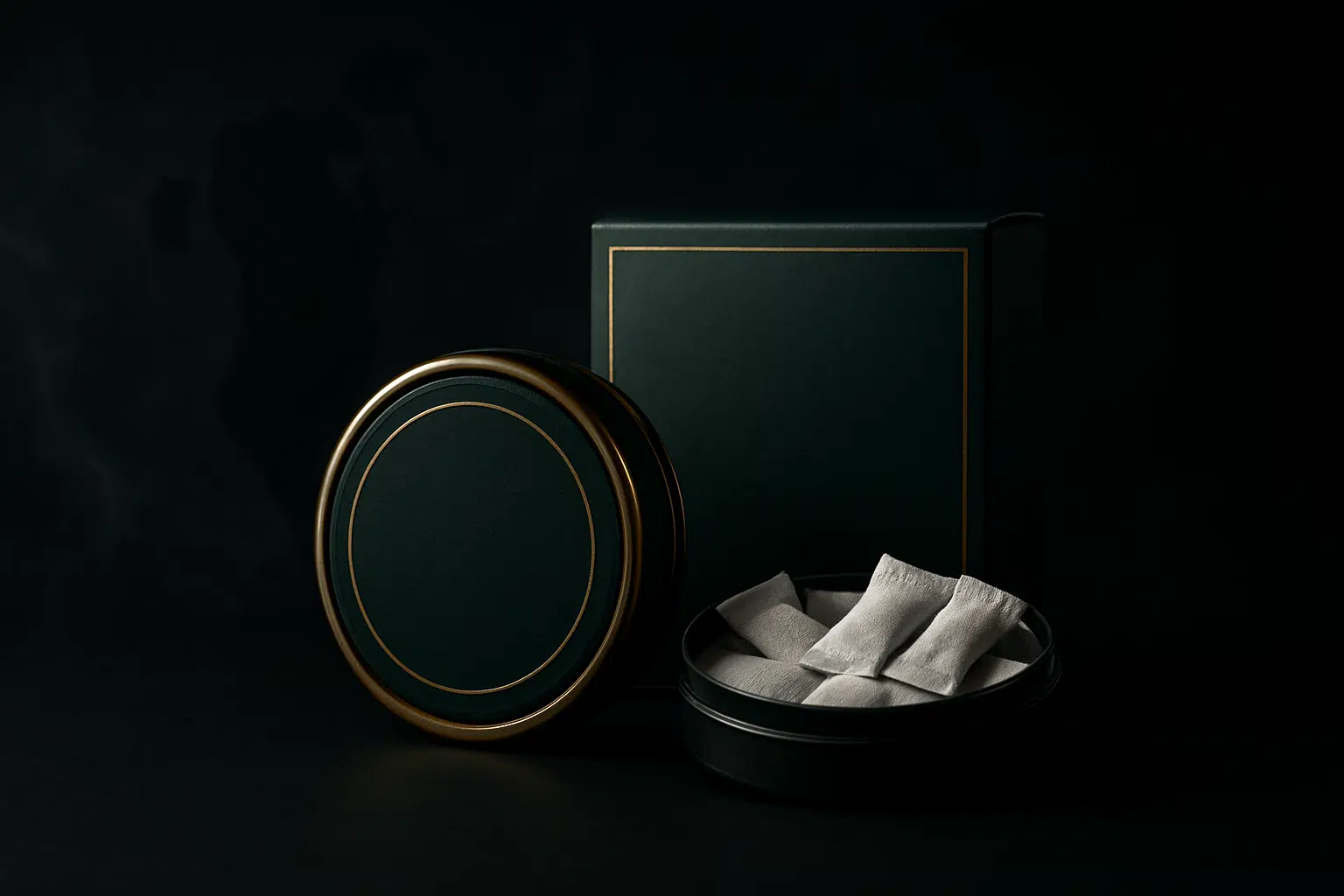
Snus is a type of smokeless tobacco that originated in Sweden. Instead of being smoked like a cigarette, it comes as moist ground tobacco, usually pre-packed in small pouches that are placed under the upper lip for an extended period. The nicotine is absorbed through the gums, so there is no combustion, no ash and no visible smoke. Many users keep a pouch in for 30 minutes or more, sometimes repeatedly throughout the day.
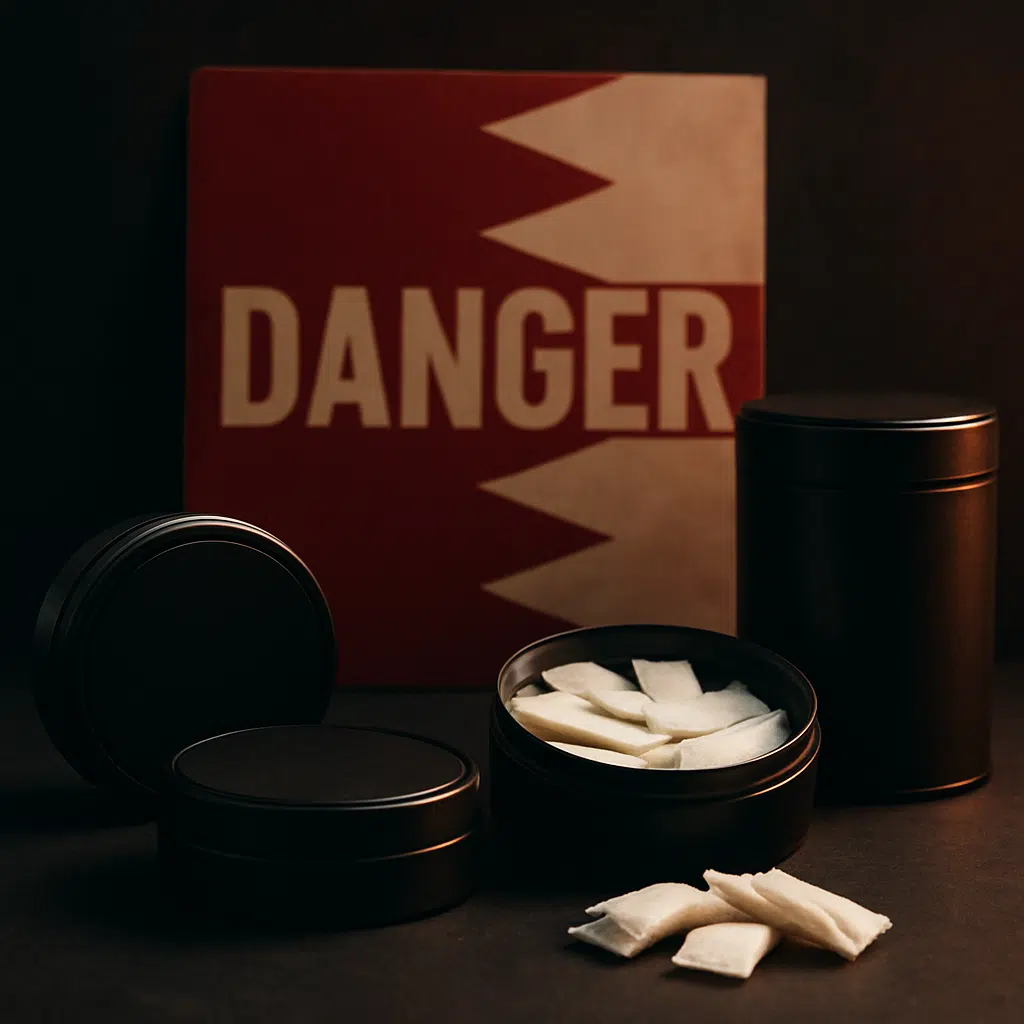
Because it is not inhaled into the lungs, snus is sometimes marketed in other countries as a less harmful alternative to cigarettes. Some smokers abroad feel that it helps them avoid the tar and smoke associated with regular tobacco. However, it is still a tobacco product, still delivers nicotine, and still carries real health risks, especially around oral health and certain cancers. International medical reviews consistently stress that “less harmful than smoking” does not mean “safe” when it comes to snus.
Interest in snus in this region usually comes from three directions. Some people see it in European content on social media and assume it must be available everywhere. Others encounter brands such as General, ONE or similar names during travel, especially in Scandinavian or European airports. A third group uses the word “snus” to refer loosely to modern nicotine pouches that claim to be tobacco-free, even though those are technically a different category. This mix of terms can easily confuse consumers in Bahrain who are trying to follow local law.
To understand what is and is not allowed in the Kingdom, it helps to separate three things clearly. First, traditional snus, which always contains tobacco. Second, tobacco-free nicotine pouches that use plant fibres and flavourings but still deliver nicotine. Third, fully tobacco-free and smoke-free alternatives such as regulated vaping products and medically approved nicotine replacement therapy. Each of these categories is treated differently under Bahraini regulations.
Is snus legal in Bahrain?
In Bahrain, traditional snus is not only restricted; it is banned. The core rule comes from Law 8/2009 on combating smoking and all types of tobacco, together with a follow-up decision by the Ministry of Industry and Commerce. Those measures introduced a full ban on the import and retail sale of oral tobacco products. The wording is broad on purpose and covers tobacco that is chewed, placed under the tongue, placed under the lip, or otherwise consumed without smoking.
This legal framework is reinforced by a specific ministry decision that explicitly includes snus, snuff and other forms of oral tobacco among the prohibited products. The list goes beyond well-known Scandinavian snus brands and reaches many products commonly used across the region, such as chewing mixes and traditional smokeless blends. The message from the regulators is clear: any tobacco product designed to be held in the mouth rather than smoked is treated as illegal in normal retail channels.
The situation is not unique to Bahrain. At GCC level, oral tobacco products, including snus and similar preparations like shamma and tumbak, are banned across member states. This coordinated stance reflects long-standing public health concerns about smokeless tobacco, including links to oral, oesophageal and pancreatic cancers, gum disease and dependence. For that reason, even if a product is legally sold in Sweden or the United States, it does not gain any special status in the Gulf.
Because of these rules, licensed retailers in the Kingdom do not sell snus. A responsible online store or physical shop will not stock any tobacco product designed for oral use, even if foreign websites advertise it heavily. Buying from unlicensed channels or attempting to import snus privately can expose consumers to both customs problems and local enforcement under anti-tobacco laws. For anyone living in Bahrain, it is safest to assume that snus is not a legal or accessible option.
What about nicotine pouches like ZYN – are they allowed?
Nicotine pouches have become very popular internationally under brand names like ZYN, VELO and Nordic Spirit. They look similar to snus pouches, but instead of containing tobacco leaf, they usually contain plant-based fillers, food-grade flavourings and synthetic or purified nicotine. Users place the pouch under the upper lip in the same way, and nicotine is absorbed through the gums without smoke or vapour.
From a legal point of view, however, switching from tobacco leaf to plant fibre does not automatically make these products welcome. In Bahrain, policy makers have treated nicotine pouches with extreme caution. International monitoring reports describe nicotine pouches as banned by law in the Kingdom, including their import, sale, purchase and use. That means they are effectively in the same position as traditional snus for everyday consumers.
At the same time, the Ministry of Industry and Commerce has approved a national technical regulation specifically for nicotine pouch products. This standard, under the ICS 65.160 classification, sets conditions such as a strict minimum age of 18 for any sale or free distribution and assigns enforcement to the Ministry of Health for a trial period. The existence of a technical standard does not mean that products are available on shelves; it simply creates a framework in case they are ever authorised for limited or specialised uses.
Some travellers notice that regional duty free catalogues list products branded as nicotine pouches, including strong mint varieties with detailed nicotine strengths. Duty free sales operate under specific customs regimes and are not the same as normal retail trade within Bahrain’s domestic market. For residents, the practical reality is straightforward: mainstream retail sale of nicotine pouches is not allowed, and reputable vape or tobacco retailers in the Kingdom, including VapeShop.bh, do not offer them.
Can travellers bring snus into Bahrain?
Many smokers and vapers ask whether they can bring a personal stock of snus or nicotine pouches when travelling. Globally, customs rules vary a lot: some countries treat snus as a standard tobacco product with import limits, while others list it alongside fully prohibited goods such as certain smokeless tobacco or unapproved e-cigarette products. Because Bahrain’s domestic law bans oral tobacco for retail sale, travelling with snus involves real risk.
The written rules in the Kingdom focus heavily on banning import and retail of oral tobacco for commercial purposes. They do not always spell out every detail for passengers carrying small personal quantities, but enforcement authorities retain broad powers. In practice, customs officers can seize prohibited tobacco products at the border, especially if quantities look suspicious or if there is any sign of commercial intent. Even when a product is destined for personal use, officers are not obliged to let it through if it is banned under national tobacco laws.
Countries that publish detailed customs guidance often group snus with other prohibited tobacco items like chewing tobacco and snuff, where the only permitted exceptions are for products that have passed a dedicated health risk assessment. Imported snus typically does not fall into that approved category. Travellers who assume “it is only for me” sometimes discover at the airport that smokeless products are treated more strictly than standard cigarettes.
Because of this uncertainty, adult users who travel frequently are strongly advised not to rely on snus or nicotine pouches as their main nicotine source when entering or leaving Bahrain. Fully legal and regulated alternatives such as e-cigarettes that comply with the BH 2:2021 technical standard, or medically regulated nicotine replacement therapy, are much safer options from a customs and legal perspective. These products have a recognised status under Bahraini law, which reduces the risk of surprises at the border.
Snus vs vaping vs nicotine pouches: how do the risks compare?
From a health perspective, all nicotine products carry some level of risk, but not all risks are equal. Combustible cigarettes are clearly at the top of the danger scale, causing thousands of preventable illnesses and representing a significant share of deaths from non-communicable diseases in Bahrain. Government and international data sources estimate that well over one in ten deaths in the Kingdom can be attributed to tobacco use, highlighting why regulators are so active in this area.
Snus eliminates smoke and tar, which reduces many of the risks associated with lung disease and some cancers compared with cigarette smoking. However, it still exposes users to nicotine and tobacco-specific nitrosamines in the mouth and digestive system. Research links heavy snus use to an increased risk of cancers in the oral cavity, oesophagus and pancreas, as well as to gum problems and a higher likelihood of nicotine dependence. Health agencies typically rank snus as less harmful than smoking but more risky than licensed nicotine replacement therapy.
Nicotine pouches remove the tobacco leaf itself and instead deliver nicotine with flavourings in a white sachet. This may reduce exposure to some tobacco-related carcinogens, but long-term data is still limited, and the products can still harm dental health and reinforce addiction. Because of the uncertainty, many regulators treat pouches cautiously, particularly in countries such as Bahrain that already have strong bans on smokeless tobacco. The fact that a product is tobacco-free does not mean it is risk-free or automatically acceptable.
Regulated vaping stands in a different category under Bahraini law. Electronic nicotine products are allowed but are treated as equivalents to traditional tobacco for regulation, under a standard known as BH 2:2021. This standard caps nicotine at 20 mg/ml, limits e-liquid volumes, requires pharmaceutical- or food-grade ingredients, bans a long list of harmful additives and mandates large bilingual health warnings. The aim is to reduce harm compared with smoking while limiting avoidable risks in the e-liquid composition.
Internationally, independent reviews generally agree that vaping is significantly less harmful than smoking when used by adult smokers who switch completely, though not harmless. Because Bahrain has formalised safety requirements for e-liquids and devices, compliant vaping products fall into the group of legal harm-reduction tools, rather than banned smokeless tobacco. For adults who would otherwise continue to smoke, regulated vaping and medically approved NRT are regarded as more appropriate stepping stones than snus or nicotine pouches, which remain outside the legal framework.
Legal alternatives to snus for smokers in Bahrain
For adult smokers who were curious about snus because of health or convenience, the ban can feel frustrating. The good news is that Bahrain offers several legal and more thoroughly studied alternatives. These options give smokers a way to move away from traditional cigarettes without turning to prohibited oral tobacco or grey-area pouch products.
The first category is nicotine replacement therapy, such as patches, gum, lozenges and certain types of mouth spray. In Bahrain, NRT products are authorised and regulated as medicines. They are usually available in pharmacies, and policy reports note that they are included on the country’s essential drugs list. That means the government supports their use for smoking cessation, and in many cases, costs are fully or partially covered. For someone who wants to eventually be nicotine-free, NRT combined with behavioural support is the most clinically proven route.
The second category is regulated vaping. Under BH 2:2021, e-liquids cannot exceed 20 mg/ml of nicotine, and there are limits on bottle and pod sizes. Only high-purity ingredients are permitted, and a range of potentially harmful or misleading additives is banned, including certain sweeteners, diacetyl-like compounds, stimulants such as caffeine, and substances that could suggest health benefits. This creates a more controlled environment than unregulated imports or homemade liquids.
Many former smokers in Bahrain now rely on small pod systems and disposable vapes that comply with these rules. Nicotine salt e-liquids up to 20 mg/ml allow a smoother throat hit than equivalent strengths of freebase nicotine, which helps replicate the feel of cigarettes without needing very high wattages or large devices. For heavy smokers who considered snus for a stronger hit, this style of vaping often provides comparable satisfaction while staying within the legal framework.
For users who would like to keep nicotine low from the start, freebase e-liquids with strengths such as 3 mg or 6 mg per millilitre are widely available. These work well with larger refillable devices designed for direct-lung or restricted direct-lung vaping. The important point is that every legally sold e-liquid in Bahrain must respect the 20 mg/ml cap, regardless of whether it uses freebase or salt nicotine, and must avoid all ingredients prohibited by the national technical standard.
Shisha and معسل remain part of local culture, but they are still combustible tobacco products that create smoke, carbon monoxide and other toxins. Switching from cigarettes to shisha does not count as harm reduction. For anyone thinking about their long-term health, the safer path is to move towards smoke-free options that are legally recognised, rather than bouncing between different forms of smoked tobacco or trying to source banned oral products.
How VapeShop.bh supports legal, smoke‑free alternatives
Within this regulatory landscape, VapeShop.bh focuses strictly on products that are legal and properly registered in Bahrain. That means no snus, no oral tobacco and no nicotine pouches, even if such products are trending internationally. The store concentrates on regulated electronic nicotine products and accessories that fit within the BH 2:2021 framework, from closed pod kits and refillable devices to compliant nic salt and freebase e-liquids.
As the first online vape retailer in the Kingdom, previously known as BhVapers.com, the store has helped more than ten thousand customers navigate the switch from smoking to vaping. Many of those customers started by asking the same questions now being searched online about snus, VELO-style pouches or duty free products. The consistent advice has been to stay within the law and choose options that Bahrain’s regulators have already evaluated, rather than experimenting with banned or unclear categories.Orders can typically be paid using Cash on Delivery, BenefitPay or standard credit and debit cards, giving adults flexible ways to buy without needing to use informal sellers. This helps keep the supply chain transparent and traceable, which is exactly what regulators expect from responsible retailers.
Anyone who is unsure whether a specific product type is permitted in Bahrain can reach customer support on WhatsApp at +973 66324432. Staff can clarify whether an item fits inside the BH 2:2021 rules, suggest appropriate nicotine strengths up to the legal 20 mg/ml maximum, and explain the pros and cons of different device formats. That is especially helpful for smokers who were considering snus only because they did not know that regulated pod systems and compliant nic salt e-liquids now exist as alternatives.
When shopping online, a simple rule of thumb helps: if a retailer based in Bahrain is openly selling a nicotine product that goes in the mouth like a pouch or chewable mix, and it contains tobacco or nicotine, it is almost certainly out of step with the law. Reputable stores stick to e-liquids and devices, not oral tobacco. Choosing vendors that follow those boundaries protects both your health and your legal position.
Key takeaways: snus in Bahrain and your options
Bringing all of this together, the picture for snus in Bahrain is straightforward. Traditional snus is banned under national tobacco legislation that targets all oral tobacco products, and similar restrictions exist across the GCC. Tobacco-free nicotine pouches are also not available in normal retail channels, despite the presence of a technical standard and occasional mentions in duty free listings. Consumers who try to import or buy these products risk running into customs issues or wider enforcement under anti-tobacco rules.
On the other hand, Bahrain has a clear and detailed framework for electronic nicotine products and medically approved nicotine replacement therapy. For smokers who want to move away from cigarettes without breaking the law, those are the two main avenues supported by current policy. Regulated vaping, when it replaces smoking completely, can significantly reduce exposure to the toxins found in cigarette smoke, while NRT remains the most clinically validated route for those aiming to stop nicotine entirely.
Any decision about nicotine should weigh three factors: health risk, legal status and personal goals. Snus may look attractive online because of marketing and anecdotes from other countries, but in the Bahraini context it fails on the legal criterion and carries unresolved health concerns. By contrast, compliant vaping products and NRT are legally accessible and better studied, making them more suitable tools for adults who want to cut down or quit smoking.
If there is still confusion about what is allowed, a quick message on WhatsApp to +973 66324432 can clear up the details before any purchase. Staying informed, respecting the law and choosing regulated options is the safest way to manage nicotine use in Bahrain today.
Frequently Asked Questions
No, snus is banned in Bahrain under Law 8/2009, which prohibits the import, sale and use of oral tobacco products such as snus and similar chewing or under-the-lip tobaccos. This means that ordering snus online, bringing it from duty free, or using it locally can put you at risk of having it confiscated and facing penalties.
Snus is a moist smokeless tobacco, usually packed in small pouches that sit under the upper lip so nicotine is absorbed through the gums instead of being inhaled as smoke. It became popular in Sweden and other parts of Europe, and many people here discover it through travel, friends abroad or duty free, which is why searches for snus have increased even though it is banned locally.
Traditional snus, so-called “white snus” and oral nicotine pouches all fall under Bahrain’s strict oral tobacco and nicotine pouch rules, which currently ban import, sale, purchase and use of these products. Even if a pouch is advertised as tobacco-free, it is still treated as an oral nicotine pouch and is not allowed under current regulations.
Snus does remove smoke and ash because it is not burned, but it still contains tobacco and nicotine and carries health risks such as gum problems and potential long-term effects. Because it is banned locally, health authorities encourage adult smokers to look instead at legal harm reduction options like regulated vaping products and medically approved nicotine replacement therapy, which are easier to access safely.
Law 8/2009 and related regulations ban the import of oral tobacco such as snus, and this applies even when it is for personal use rather than resale. Customs officers are allowed to seize these products at the border, so bringing snus back in luggage from Europe or any duty free shop can still lead to confiscation and possible penalties.
Instead of banned products like snus and nicotine pouches, adult smokers can consider regulated vaping devices with legal-strength e-liquids or medically approved nicotine replacement therapies such as patches, gum or lozenges. These options are allowed under Bahrain law when used by adults, and many people use them as part of a plan to cut down or quit smoking.
For clear guidance on what is allowed, it helps to speak to knowledgeable staff who understand Bahrain’s tobacco laws and the difference between banned oral products and legal regulated vaping or nicotine replacement options. VapeShop.bh support is available on WhatsApp at +973 66324432, where adult customers can ask questions about compliant products and payment methods like COD, BenefitPay and card.