
Vape Battery Safety and Maintenance Tips for Bahrain Vapers

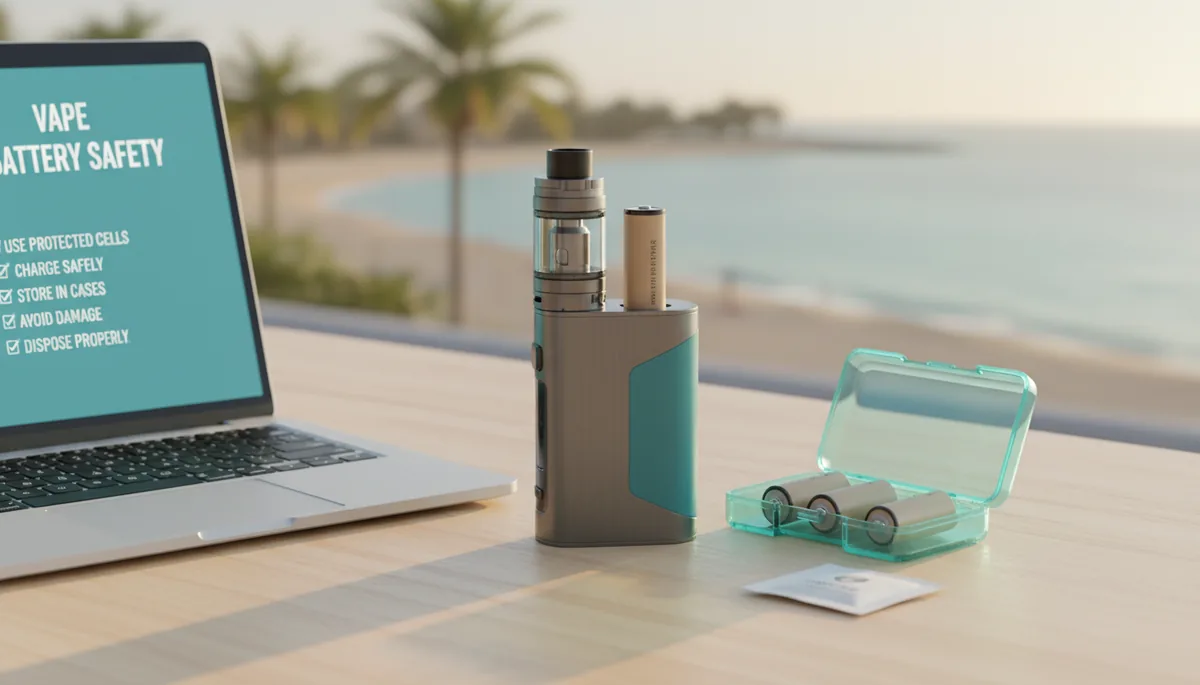
Vape Battery Safety in Bahrain: A Practical Guide to Choosing, Charging, Storing and Maintaining Your Cells
Bahrain’s vaping community is growing fast—from first-time buyers in Manama to hobbyists who order high-wattage mods online. What many users share, however, is a battery that quietly does the heavy lifting. In our climate, that battery faces tougher conditions than you might expect. Heat, humidity and daily transport can all push a lithium cell beyond its comfort zone. A little know‑how goes a long way toward staying safe, extending battery life and shopping with confidence—locally or online. ⏱️ 12-min read
This guide brings together the battery basics every Bahrain vaper should know, with details tailored to the Kingdom: what to buy, where to charge, how to store cells when cars and balconies turn into ovens, and how to spot the difference between a reliable, branded cell and a counterfeit. Whether you’re using a compact pod with a built‑in pack or a dual‑18650 mod, you’ll find step‑by‑step advice you can apply immediately.
Why battery safety matters in Bahrain’s climate and retail scene
Modern vape batteries are compact and powerful. They’re also chemical systems that prefer calm conditions. The biggest risks—thermal runaway, fires and swelling—typically begin with heat and electrical stress. In Bahrain, that risk is amplified. Summer temperatures routinely push past 40°C. Parked cars can trap heat well beyond that. Prolonged exposure accelerates chemical breakdown inside lithium cells, raising internal pressure and weakening separators. Humid, salty air near the coast can also creep under torn wraps and corrode contacts, undermining the very layers designed to prevent short circuits.
Same‑day delivery, while convenient across Manama, Riffa and Muharraq, adds a wrinkle: batteries may spend hours in hot vans or on sun‑baked doorsteps before you bring them inside. That doesn’t make delivery unsafe, but it puts a premium on selecting well‑made cells and examining condition as soon as you receive a package. A reputable seller will store and ship batteries more carefully and will stand behind what they sell if something’s off on arrival.
Not every battery on the market is equal. Branded cells from manufacturers like Samsung, Sony/Murata, LG and Panasonic/Sanyo publish consistent specifications, undergo transport and safety testing, and have traceable batch codes. Counterfeits often mimic logos but cut corners on the chemistry and quality control that stop small issues becoming dangerous ones. In Bahrain’s mixed retail scene—licensed vape shops, general electronics stores, marketplace apps and overseas sites—verify the label, check the seller’s license and skim recent reviews. If a high‑drain cell is priced suspiciously low, treat that as a warning, not a bargain.
Two simple habits protect you in this environment: keep batteries in a cool, dry place (never in a hot car or direct sun), and buy from licensed shops or known online stores that can tell you exactly what you’re getting. The moment you reduce heat exposure and uncertainty around the product itself, your risk falls dramatically.
How to choose the right battery for your device
Start with your device type. Some devices use removable cells; others have integrated battery packs. If your mod takes removable cells, you’ll usually see sizes like 18650, 20700 or 21700 printed in the manual or battery sled. If the device is sealed, you have an integrated pack—and you should only replace it with the exact OEM pack specified by the manufacturer to preserve the built‑in protection circuit and warranty. For pods and compact AIOs, this often means buying an identical replacement device from a reputable shop when the battery no longer holds charge.
For removable cells, match the battery to your power needs. Two numbers matter most: capacity (mAh) and continuous discharge rating (CDR, in amps). Capacity tells you how long the device may run between charges; CDR tells you how much current the battery can safely deliver continuously. Use a simple rule of thumb to estimate current draw: amps ≈ watts ÷ 3.7 V (the nominal voltage of a lithium‑ion cell). If you vape at 80 W, the cell sees roughly 80 ÷ 3.7 ≈ 21.6 A. Choose a battery whose CDR comfortably exceeds that—ideally with some headroom—rather than chasing the highest mAh.
Physical size also plays a role. Many users upgrade to a 21700 mod for longer runtime because 21700 cells often deliver more mAh than 18650s at similar or higher CDRs. But the reverse is dangerous: using a high‑capacity, low‑drain cell in a high‑wattage mod can overheat the battery quickly. Check your device’s manual for recommended cell types and follow those limits. If your device supports dual‑battery configurations, use a married pair—two cells of the same model, bought at the same time and rotated together—to ensure they age evenly.
In Bahrain, minimize guesswork by buying branded cells and starter kits from licensed vendors. Look for clear labeling, consistent shrink‑wrap and product pages that reference datasheets or certifications (UN 38.3, IEC 62133). Shops in Manama’s busier districts and established online retailers serving Manama, Riffa and Muharraq often stock genuine Samsung 25R/30Q, Sony/Murata VTC series, LG HG2 and Panasonic/Sanyo lines. When in doubt, bring your device to a shop and ask for a battery that matches your wattage and coil resistance. A five‑minute conversation can prevent weeks of frustration—and potential hazards.
Safe charging habits and recommended chargers
Charging is when most battery incidents occur, yet a few simple habits cut risk to near zero. First, use the charger your device maker recommends. If you have a pod or integrated‑battery device with USB‑C, stick to the cable and power brick specified by the manufacturer. Avoid overpowered phone chargers and unknown adapters unless the device documentation explicitly allows them. If the USB port or cable is loose, frayed or bent, replace the cable before you charge again.
For removable cells, a dedicated external charger is the safer, smarter option. Quality models from Nitecore (such as the D4) and Xtar (like the VC4S or VC2S) manage each bay independently, include overcharge protection and automatic cutoff, and display per‑bay voltage so you can spot a weak or inconsistent cell. That bay‑level monitoring means one bad battery won’t influence its neighbor during charging, a common limitation in cheaper chargers. In Bahrain, these chargers are often available via local vape shops and specialty online stores offering same‑day delivery in Manama, Riffa and Muharraq.
Set up a safe charging station at home. Place the charger on a non‑flammable, flat surface—ceramic countertop, metal rack or stone. Keep it away from curtains, sofas and bedding, and never leave a charging battery in a hot car or in direct sun. Charge while you are awake and nearby; avoid overnight charging and don’t leave devices unattended. If your charger supports setting the charge current, use the manufacturer’s recommended rate (often 0.5 A to 1.0 A for 18650s unless the datasheet says otherwise). Slower charging generates less heat and typically extends cycle life.
Finally, listen to what your batteries tell you. If a cell becomes unusually warm during charging, remove it and let it cool on a non‑flammable surface. Inspect wraps and terminals for damage. If you repeatedly see one cell finishing much earlier or later than another from the same pair, retire the outlier. Bahrain’s heat speeds up wear; acting on early signs keeps small issues from escalating.
Daily checks and simple maintenance to extend battery life
A 30‑second check before you head out can add months to your battery’s usable life. Start with a visual inspection. Look for dents on the battery can, nicks or tears in the shrink‑wrap, a missing top insulator ring, or any swelling. If you spot exposed metal on the sides or top, stop using the battery immediately. Set it aside in a non‑conductive case and plan for proper disposal or return to your retailer. These are not cosmetic issues—damaged insulation is a leading cause of shorts.
Keep your device’s electrical path clean and tight. Wipe 510 contacts and battery terminals with a dry, lint‑free cloth. If residue remains, use a small amount of 90%+ isopropyl alcohol on a cotton swab, then let everything dry completely. Loose tank connections, gunked‑up contacts and wobbling battery doors force the battery to work harder and can cause misfires or hot spots. Make a habit of checking that the tank, coil and battery cap are snug but not overtightened.
Rotate and recharge sensibly. Don’t run cells to empty every time. Recharging when you’re around 30%–40% helps avoid deep‑cycle stress and keeps heat down during the charge phase. If your device uses two cells, mark them as a pair and swap their positions each time (left/right or A/B) so they age together. When internal resistance rises—often felt as quicker drain and warmer operation—retire the pair together rather than mixing an old cell with a new one.
If you need rescue parts, Bahrain’s licensed vape shops usually stock coil heads, insulators and wrap kits, and many online sellers ship simple parts same‑day to Manama, Riffa and Muharraq. Rewrapping a scuffed 18650 is a straightforward fix when done correctly. If you’re unsure, ask a shop to demonstrate once; you’ll save money and keep otherwise healthy cells in rotation safely.
Storage, transport and travel rules inside Bahrain and beyond
Storing and carrying lithium cells safely comes down to temperature control and preventing shorts. At home, keep batteries in a cool, dry cupboard away from direct sun and away from bathrooms and kitchens where humidity and spills are common. Aim for room temperature if you can. Bahrain’s coastal salt air can be hard on exposed metal, so sealed plastic cases help minimize corrosion around terminals. If you plan to store batteries you won’t use for weeks, set them to around 40% charge. Storing fully charged or fully depleted cells accelerates degradation over time.
When you’re on the move, never carry loose batteries in a pocket or bag where they can contact keys, coins or other metal objects. Use hard plastic cases with individual slots for each cell. These cases are inexpensive, fit easily in a backpack or glove box, and are available at most vape or electronics shops. Keep spares out of parked cars. Vehicle interiors in Bahrain heat up rapidly; even 20–30 minutes can raise temperatures enough to damage cells or your device’s seals. If a car stop is unavoidable, take the device and batteries with you.
Travel by air calls for extra attention. As a general aviation rule, spare lithium batteries must go in carry‑on bags—not checked luggage—because cargo holds are less accessible if something overheats. Most airlines follow IATA guidance: devices under 100 Wh are allowed in carry‑on without special approval, while larger packs (100–160 Wh) may require airline permission; typical vape cells are well under these limits. Check Bahrain Civil Aviation Authority guidance and your airline’s policy before you fly. Tape over terminals or use cases for spares, pack devices so they cannot accidentally fire, and carry only what you need.
If you import niche cells or accessories, keep invoices, safety data sheets and labels handy to speed customs clearance and prove authenticity. For ferries or private boats, remember that salt spray and a wet deck are a battery’s enemies. Keep devices in dry bags, and store batteries in sealed cases away from direct sun or engine heat. A few minutes of preparation before a weekend trip will save you from dealing with a corroded contact—or worse—when you get home.
Troubleshooting common battery and device problems
Battery or device acting up? Use a simple, safe diagnostic order. Start with the obvious: verify the battery is charged and seated correctly. Many “no‑fire” reports turn out to be a loose cap or a cell inserted the wrong way around. If your mod shows an error, check the manual; common messages point to atomizer short, low battery or temperature cutoffs. Remove the tank, inspect the 510 pin for grime and gently clean both sides of the connection.
Weak output and rapid drain often trace back to contact resistance, an aging coil or an under‑spec’d battery. Clean contacts, replace the coil, and test with a known‑good battery. If your device supports firmware updates, install the latest version; manufacturers sometimes refine power delivery and battery management. For removable cells, a basic digital multimeter can help: healthy, fully charged 18650s will read around 4.18–4.20 V at rest. Big differences between paired cells indicate it’s time to retire them as a set.
Overheating deserves immediate caution. If the device gets hot during use or charging, stop using it and let it cool on a non‑flammable surface. Never continue to vape through the heat; heat is a warning. Inspect wraps and terminals; if a cell looks damaged or swollen, do not reuse it. Should you notice hissing, a sweet chemical smell or visible swelling, follow emergency steps rather than trying to fix it on the spot.
If something seems seriously wrong, prioritize safety with this quick response plan:
- Power down and disconnect. Turn off the device and unplug chargers. If it’s safe and the battery is removable, take it out without touching hot or smoking parts.
- Move to a safe surface. Place the device or battery outdoors on concrete, tile or bare ground. Indoors, a metal container or a bucket of sand works in a pinch.
- Do not puncture or shock‑cool. Let the cell cool naturally; do not douse it with cold water or pierce it.
- If a fire starts, use an appropriate extinguisher and call emergency services. Keep bystanders away.
Knowing when to stop tinkering is part of good maintenance. If repeated issues persist after basic cleaning and testing, or if you suspect a counterfeit or defective cell, stop using the device and ask a licensed shop or the manufacturer for help.
Where to buy batteries, chargers and accessories in Bahrain
Buy the battery before the logo. That’s the mindset to keep when shopping in Bahrain. Licensed brick‑and‑mortar vape shops in Manama and other major areas generally curate reputable cells, chargers and accessories. Many keep extended evening hours, which is handy if you prefer to examine packaging, batch codes and wraps in person. If a shop is comfortable
Frequently Asked Questions
Replace it immediately. The wrapper insulates the battery and prevents short circuits, so a damaged wrap compromises safety even if the battery works fine. If you're unsure whether damage is minor or serious, it's safer to buy a new battery than risk a malfunction.
No—always use a plastic battery case instead. When loose batteries contact metal objects like keys or coins in your pocket, they can short circuit and potentially catch fire. A battery case costs just a few dinars and keeps you safe during daily transport around Manama or anywhere in Bahrain.
Keep them in a plastic case at 40-60% charge in a cool, dry drawer away from humidity and temperatures above 30°C. Never leave them in direct sunlight, in a hot car, or near metal objects. Proper storage extends battery life and reduces the risk of overheating in Bahrain's warm climate.
No. Overnight charging increases fire risk and degrades battery health over time. Instead, charge on a hard, non-flammable surface you can clearly see, unplug when fully charged, and never leave a charging battery unattended. Modern chargers have protections, but supervised charging is still much safer.
Never mix different battery brands or batteries with different charge levels in the same mod. Use only the batteries your device manufacturer recommends, and ideally use two identical batteries with the same charge level to prevent voltage imbalances and potential damage.
Rechargeable batteries typically last 300-500 charge cycles before capacity drops. Replace your battery if the wrap is damaged, it won't hold a charge, it has dents, the capacity falls below 80%, or you notice a burning smell. Disposable vapes need replacement after a few weeks of regular use.
Stop using it immediately and dispose of it safely. Sparks and burning smells indicate internal damage and are serious fire hazards that can lead to explosions, especially if the battery is in your pocket or device. Get a replacement battery from a trusted retailer like VapeShop.bh.
Gently wipe battery contacts and terminal contents with isopropyl alcohol on a tissue or cotton swab if they look dirty. Clean contacts improve charging efficiency and battery performance. Do this monthly as part of routine maintenance, and always let the battery dry completely before use.