Vape Cleaning Supplies for Pod Systems


If your pod tastes off, feels sticky, or misfires, I’d start with four things: a microfibre cloth, paper towel, cotton swabs, and 70–90% isopropyl alcohol. That covers most routine cleaning for both refillable and closed pod devices.
In Bahrain, heat and humidity can make e-liquid thinner, leaks more common, and condensation build up faster. That means more wiping, more contact checks, and more drying time. For many users, a daily wipe and a weekly check are enough to keep things in order.
Here’s the short version:
- Refillable pods with removable coils: I can rinse the empty pod shell with lukewarm water (30–40 °C), use distilled water for a final rinse, and use one drop of mild dish soap if residue is sticky.
- Refillable pods with built-in coils: I would wipe only. No rinsing.
- Closed pod devices: I would keep them dry and clean only the outside, pod bay, and metal contacts.
- For contacts: I’d use a dry swab first, then a swab lightly dampened with 70–90% IPA only if residue stays.
- Drying matters: In Bahrain’s humidity, refillable parts often need overnight drying, and contact-cleaned parts usually need 10–30 minutes before use or charging.
A few simple rules do most of the work:
- Water stays away from the battery section
- No soaking coils or cotton wicks
- No metal picks near contact pins
- No reassembly until every part is fully dry
Quick comparison
| Pod type | What I’d use | What I’d avoid | Drying guide |
|---|---|---|---|
| Refillable pod, removable coil | Microfibre cloth, paper towel, swabs, soft brush, picks, blower, lukewarm water, distilled water, mild soap, IPA on contacts | Soaking the coil, getting water into electronics | Usually overnight |
| Refillable pod, built-in coil | Dry cloth, dry swabs, soft brush, blower, IPA on contacts | Rinsing or soaking the pod | Wait until fully dry |
| Closed pod device | Dry cloth, dry swabs, soft brush, blower, IPA on contacts | Water rinsing, soaking, alcohol on pod plastic or near battery parts | Dry wipe: minutes; IPA: 10–30 mins |
Bottom line: I’d keep the routine simple – wipe, blot, swab, dry. That cuts down sticky residue, helps stop contact issues, and keeps flavour cleaner in Bahrain’s hot weather.
sbb-itb-837e7ad
What Pod Users in Bahrain Usually Need for Basic Cleaning
For day-to-day cleaning, most pod users in Bahrain only need a handful of common household items. The easiest way to look at it is by grouping them into wiping tools, precision tools, rinsing fluids for refillable pods, and contact-cleaning supplies.
These cover five simple cleaning jobs: (For a deeper dive, see our full guide on how to clean your vape).
| Category | What to Use | Best For |
|---|---|---|
| Wiping tools | Microfiber cloths, paper towels or kitchen roll | Exterior surfaces, mouthpieces, condensation |
| Precision tools | Cotton swabs, soft brushes, wooden toothpicks or soft plastic picks | Chamber, contacts, airflow holes |
| Rinsing fluids | Lukewarm water, distilled water, mild dish soap | Refillable pod interiors |
| Contact-cleaning supplies | Isopropyl alcohol (70–90%) | Battery pins, charging contacts |
A simple rule helps here: refillable pods can be rinsed, while closed pod devices should stay dry and only be cleaned on the outside.
In Bahrain’s heat, contact care matters even more because leaks can turn into residue build-up fast. If you notice vape juice leaks or any visible residue, wipe the battery pins with a dry cotton swab. That small step helps stop build-up from affecting the connection.
1. Microfiber Cloths
Microfiber cloths are the go-to tool for routine wipe-downs and quick leak cleanup. They pick up dust, oil, and residue without scratching plastic or leaving lint behind.
You can use microfiber across the full exterior of both refillable and closed pod devices, including the shell, mouthpiece, pod bay edge, and charging area. On refillable pods, it helps most around the fill port after each refill. That’s where fresh e-liquids in Bahrain often sit, then dries into sticky residue if you leave it too long. Heat can make that buildup happen faster, so a quick wipe after each session helps keep things clean between deeper cleans. If residue is harder to shift, move on to swabs or a brush next.
For leak cleanup, take out the pod first. Then gently press the cloth into the pod bay so it absorbs the liquid instead of pushing it around. After that, fold the cloth to a clean edge and press it lightly against the contacts to lift any leftover moisture. This follows the same dry wipe-down approach used after leaks in the contact-care guidance above. Use the cloth only slightly damp, never wet, and keep any moisture away from the battery bay and contacts.
2. Paper Towels or Kitchen Roll
Microfiber is for wiping. Kitchen roll is for liquid that’s sitting there – fresh leaks, small spills, and e-liquid that has pooled in place.
Use it on the outside only. Keep it away from the contacts, charging port, and airflow sensor. Its big strength is simple: it soaks up e-liquid faster than a cloth. The catch is lint. Go with plain, white, non-scented kitchen roll that holds together when damp, so loose fibres don’t end up in contact pins or airflow paths.
With refillable pod systems, kitchen roll helps most around fill ports and rubber seals after each refill. A small folded piece pressed into the pod bay for a moment can soak up pooled liquid. On closed pod devices, stick to the mouthpiece and outer body, and use it to catch light seepage from tired pod seals.
Bahrain’s heat can thin e-liquid, which makes seepage from O-rings and fill ports more common. After outdoor use, wrap a narrow strip around the pod base to absorb condensation before it gets to the contacts. Once you can’t see liquid anymore, stop. Going over the same spot too much can leave lint in narrow gaps.
For residue in seams and around contacts, cotton swabs do the finer work.
3. Cotton Swabs
Cotton swabs are handy for pod slots, contact pins, airflow grooves, and other tight spots that a cloth or paper roll can’t reach. Use them after you’ve cleaned the more open areas, especially when residue is stuck in seams or sitting around the contacts.
They’re fine for contacts and pod bays if you use them the right way. Switch the device off first, then remove the pod. The swab should be dry or only slightly damp. Never drip liquid straight onto the device. Also, keep swabs away from the battery compartment and internal electronics.
Refillable pods usually need more swab work. Clean the pod bay, fill port, gaskets, and contacts during refills or when changing pods. Closed pod devices need less attention. Stick to the outside areas, and clean the bay and contacts when you swap pods, mainly if you’ve noticed any seepage.
Use tightly wound swabs that won’t leave lint behind. If a tip gets worn or damp, swap it out straight away. If any fibres are left behind, lift them with a fresh dry swab or a soft brush. For dried residue in seams and around vent edges, a soft brush often does a better job.
In Bahrain’s heat and humidity, leave the device open for 15–20 minutes after cleaning with alcohol before vaping or charging.
4. Soft Cleaning Brushes
When a swab can’t get into a dry seam or vent, a soft brush usually does the rest. The best way to use these brushes is dry and with a light touch. Go for anti-static, soft nylon, or very soft natural-fibre electronics cleaning brushes on airflow slots, seams, and pod bays. Skip wire brushes, stiff nylon, and abrasive tips.
Brushes are most useful in airflow channels, pod bays, and seam lines where swabs fall short. They lift dry debris without shoving it deeper into the device. A gentle pass now and then also helps stop residue from piling up. The exact areas to brush depend on the type of pod.
- Refillable pods: brush around airflow slots, fill ports, mouthpiece seams, and the pod bay.
- Closed pod devices: use light brushing on the pod slot, airflow inlets, and connection points.
Keep the brush dry near contacts, charging ports, and battery areas. If you use any damp brushing, do it only on removable parts and keep it away from electronics. Put everything back together only when all cleaned parts are fully dry.
For parts that can be rinsed, the next tools are water-based cleaning supplies.
5. Lukewarm Water
For refillable pods like the SEKURUS Dare Kit, lukewarm water is the safest option for a quick rinse. It works well for refillable chambers, mouthpieces, and empty pods after the coil has been removed. Just keep water away from the battery housing, contacts, and any internal electronics.
Use water at 30–40 °C. It should feel warm, never hot. In Bahrain, tap water can feel noticeably warmer during summer afternoons, so test it with your fingers first. If it feels too warm, mix in a bit of cooler water.
This method works best inside the pod chamber and chimney, where old e-liquid residue and sweeteners tend to stick over time. It’s also handy when switching flavours. A light rinse through the fill port and airflow channel can clear out leftover taste without using detergent.
Here’s the simple routine:
- Rinse for a few seconds
- Shake out extra water over a sink
- Blot dry with paper towel
It’s best to rinse the pod at night and refit it only when it’s fully dry the next day. Skip high heat and direct sun. Both can warp the shell and damage the seals.
If you need a final rinse after this, the next step is distilled water.
6. Distilled Water
After a lukewarm rinse, use distilled water for the final rinse on refillable pods. It helps the pod come out cleaner because it doesn’t leave behind mineral residue.
Stick to distilled water only for refillable pod parts: the empty chamber, mouthpiece, and shell after you’ve removed the coil. Closed pod devices should stay dry and only get an external wipe-down.
If residue won’t budge or an old flavour still lingers, soak the empty refillable pod in distilled water for 15–20 minutes. Then shake out the excess water and blot it dry. Keep water away from the battery housing, charging port, and contact pins.
Let all refillable parts air-dry fully before putting everything back together. In Bahrain’s humidity, overnight drying is the practical minimum. Skip hair dryers and direct sun.
7. Mild Dish Soap
If water on its own still leaves a sticky film behind, mild dish soap is the next step for refillable pods. But use it only on removable refillable-pod parts, and only after you’ve taken the coil out. Keep soap and water away from batteries, contacts, and charging ports.
This works best when you’re dealing with stubborn residue, especially thick dessert or tobacco e-liquids that stick to pod walls and affect the next flavour. In that case, add one drop of fragrance-free washing-up liquid to lukewarm water. Avoid degreasers, antibacterial formulas, bleach, and scented soaps.
Let the parts soak for 10–15 minutes. Then clean the corners with a cotton swab or a soft brush, rinse them well, and finish with distilled water. After that, leave everything to dry overnight before putting the pod back together.
For dry contact cleaning and stubborn residue on non-rinsed parts, the next supply is isopropyl alcohol.
8. Isopropyl Alcohol (70–90%)
IPA is the go-to contact cleaner for pod systems. Use it lightly, and it can lift sticky residue from metal contacts and other non-porous parts. If a dry wipe doesn’t do the job, this is usually the next step.
Where it actually helps: IPA works best on metal battery contacts, contact pins, and the pod bay, especially when sweet or thick e-liquids leave behind a tacky film. Use a cotton swab lightly dampened with 70–90% IPA to clean build-up on contacts and inside the pod bay.
What to keep it away from: Don’t let IPA touch seals, vape coils wicks, or the inside of the pod. Plastic pods and acrylic parts can turn cloudy or wear down with repeated exposure. With closed pod devices, keep IPA limited to the battery area, contact pins, and the outer surfaces of the pod slot.
The method matters just as much as the cleaner. Power off the device and remove the pod first. Then use a damp swab, not a soaked one, and follow with a dry swab to pick up any extra moisture.
Wait 10–15 minutes after a light contact clean, or 20–30 minutes if you used more IPA or cleaned more deeply, before putting everything back together. Make sure every part is fully dry first. If residue is still stuck in seams or airflow gaps, use a soft pick next.
Store IPA tightly closed and away from heat or flame.
9. Wooden Toothpicks or Soft Plastic Picks
After you loosen the residue, use a pick to lift what’s left. Picks are best for bits that swabs and cloths can’t reach, like seal edges, tight corners, and airflow gaps.
Wooden toothpicks work best on hard plastic. Soft plastic picks are better for silicone seals and glossy surfaces. In both cases, stick to light scraping only. If a wooden tip starts to fray, throw it away at once.
Use a shallow angle and very light pressure. Lift the residue gently, then wipe the tip often so you don’t drag the mess back across the surface. Move section by section. Stay away from metal contacts; for those spots, use a swab or cloth instead. Never use pins, needles, or paperclips near electrical parts.
Use picks mainly on refillable fill-port gaskets, tank edges, and airflow channels. On closed pods, keep use limited to the seating area and outer airflow slits. Once you’ve lifted the residue, let the area dry before you close the pod.
If you used liquid first, don’t reassemble until the area is completely dry. In Bahrain’s humidity, rushing this step can cause trouble.
10. Compressed Air or a Manual Air Blower
After wiping, swabbing, and picking, air helps clear the last bits of loose dust and leftover droplets. Compressed air or a manual air blower works best as a final step after wiping or swabbing. It clears loose dust, lint, and condensation from airflow vents, pod slots, and contact gaps. Used with care, it can be safe for pod electronics. Used badly, it can push moisture deeper into the device instead of getting it out.
A manual air blower is usually the better day-to-day option because it gives gentle, controlled bursts. Canned compressed air can also do the job. Hold the can upright, keep it a short distance away, and use brief bursts. Never use a workshop compressor on a pod device.
Use air more freely on removable refillable parts. On closed pod devices, stick to external slots and vents. After rinsing a refillable pod, use a few short bursts through the airflow vents and fill port to clear trapped droplets. Angle the nozzle so dust and moisture exit the device, not deeper inside it.
After that, wait before putting everything back together, and let the device dry fully, especially in Bahrain’s humidity. The next section shows which of these supplies suit refillable pods and which should stay limited to external cleaning on closed pod devices.
Refillable Pods vs Closed Pod Devices: Key Differences in Cleaning
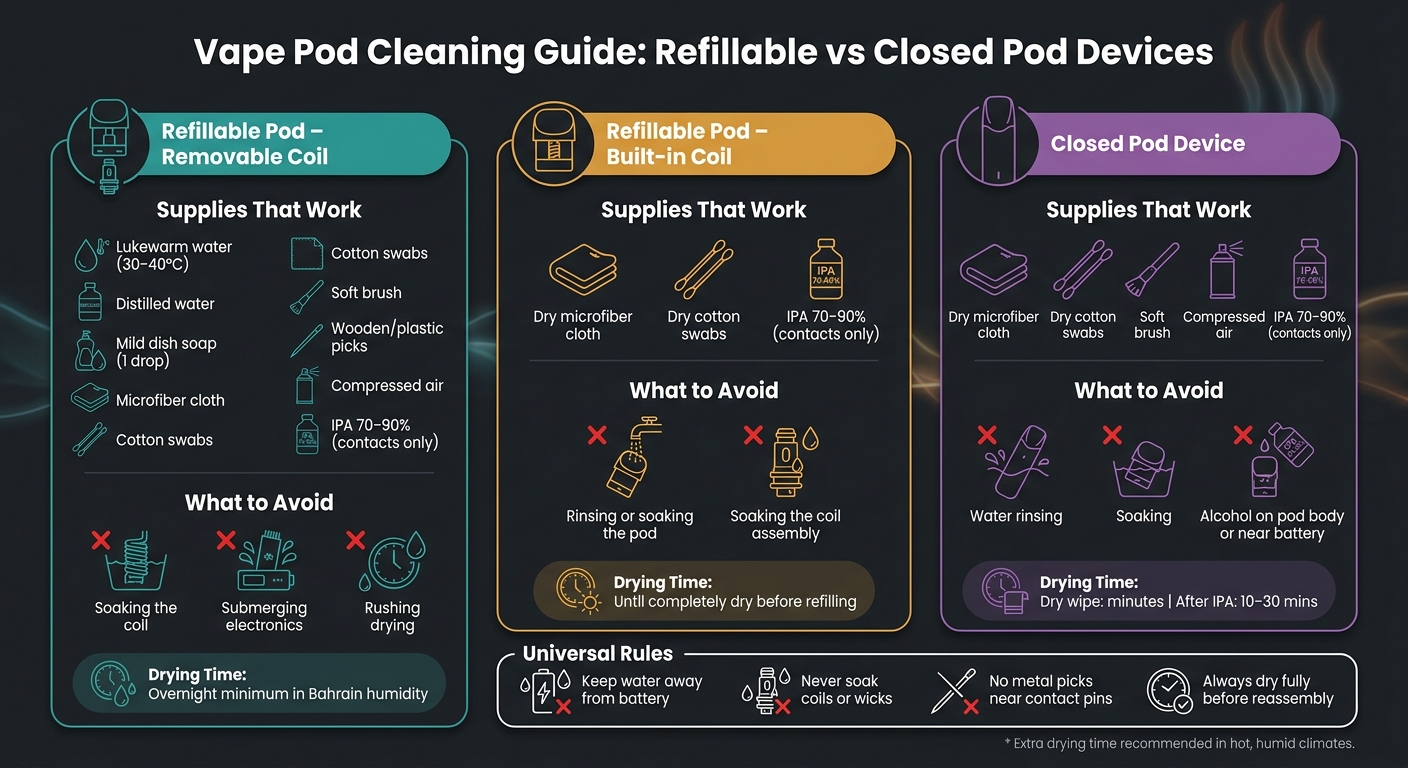
Vape Pod Cleaning Guide: Refillable vs Closed Pod Devices
The first thing to check is simple: is the pod refillable or sealed?
That one detail changes how you clean the device. Refillable pods can be rinsed in some cases. Closed pods should stay dry and only be wiped. Get that wrong, and you can flood the coil, thin out the flavour, or harm the device. It also tells you which cleaning items you should keep on hand.
Refillable pods with removable coils can be rinsed with water. You can also clean the pod chamber with a small amount of mild soap. One rule matters more than anything else: never soak the coil or any cotton wick. If the coil is built into the pod and can’t be taken out, treat that pod like a closed device. In plain terms, wipe only.
Closed pod devices are sealed units, with the coil and e-liquid pod built together. That means dry cleaning only, aside from a light swab on the metal contacts. Use a dry cloth, a dry swab, and a soft brush. Keep all liquid away from the pod itself.
The table below shows which supplies fit each pod type, along with the drying time to expect.
| Pod Type | Supplies That Work | What to Avoid | Drying time |
|---|---|---|---|
| Refillable pod (removable coil) | Lukewarm or distilled water, mild dish soap (sparingly), microfiber cloths, cotton swabs, soft brushes, picks, compressed air; IPA on metal contacts only | Soaking the coil, submerging electronics, rushing drying | Overnight in Bahrain’s humidity |
| Refillable pod (built-in coil) | Dry cloth, dry cotton swabs; IPA on metal contacts only | Rinsing or soaking the pod or coil assembly | Until completely dry before refilling |
| Closed pod device | Dry microfiber cloth, dry cotton swabs, soft brush, compressed air; IPA on metal contacts only | Water rinsing, soaking, alcohol on the pod body or near the battery | Dry wipe is ready within minutes; allow contacts to dry fully if IPA was used |
Once you know the pod type, matching each supply to the right job gets much easier.
Matching Each Supply to the Right Cleaning Job
Use the right tool for each part of the device. In Bahrain’s heat and humidity, speed and dryness matter most. The table below gives you a quick part-by-part match.
For day-to-day wiping, use microfiber. For pooled liquid, use a paper towel. Blot inward around the pod bay so the liquid stays away from the battery. After that, treat contacts and airflow as two separate jobs.
Start battery contacts with a dry cotton swab. If residue is still there, use a swab lightly dampened with 70–90% isopropyl alcohol to clear sticky residue or light oxidation, then dry the area straight away. For airflow, go in this order: brush first, blower second.
Use this as a fast reference when you need to clean in a hurry.
| Supply | Best Used On | Main Purpose | Keep Away From |
|---|---|---|---|
| Microfiber Cloth | Device exterior, matte and glossy shells | Wipe | Internal electronics, battery area |
| Paper Towel | Pod bay, base of device, large spills | Blot | Screens, high-gloss finishes, deep openings |
| Cotton Swab (dry) | Battery contacts, pod slot, fill-port edges | Clean contacts | Coil wicks |
| Isopropyl Alcohol (70–90%) | Metal contact pins, sticky residue on hard surfaces | Dissolve buildup | O-rings, silicone seals, plastic pod bodies |
| Soft Brush | Airflow intake slots, pod bay edges | Loosen lint | Internal sensors, delicate wicks |
| Wooden Toothpick | Fill-port seal grooves, tight corners | Lift debris | Battery contact pins |
| Compressed Air / Manual Blower | Airflow channels, pod bay after blotting | Clear droplets | Charging ports |
| Lukewarm or Distilled Water | Removable mouthpieces, refillable pod shells (no coil) | Rinse non-electronic parts | Device body, battery area, fixed-coil pods |
Quick Leak Cleanup Routine for Hot and Humid Days
When a leak starts, clean the device before residue gets to the contacts. On hot, humid days, e-liquid gets thinner and can slip into the pod bay and contact area much more easily.
If you notice warmth, seepage, or a gurgling sound near the pod bay, use this routine:
- Power off and remove the pod
Switch the device off straight away. Remove the pod and place it on a paper towel. Then clear only the liquid pooled on the outside. - Blot, then wipe
Press a paper towel onto the pod bay, the base of the device, and the outside of the pod. After that, use a microfibre cloth on the shell and around the mouthpiece. - Clear the contacts, then the airflow
Use a dry cotton swab on the metal contact pins and the pod base. Roll the swab as you go so it lifts residue cleanly instead of smearing it around. If the contacts still feel sticky, use a swab lightly dampened with 70–90% isopropyl alcohol, then dry the area at once with a fresh swab. For the airflow slots, use a soft brush first, then a short burst from a manual air blower. - Dry before reassembling
Keep the pod and device apart in a cool, shaded place. For a minor leak, 5–10 minutes is usually enough. If the pod bay or contacts were visibly wet, wait 20–30 minutes. Before you put the pod back in, check the contact area with a fresh dry swab to make sure it is clean and dry.
If leaks keep coming back, the next section looks at the common mistakes behind them.
Common Cleaning Mistakes to Avoid
Most cleaning problems come down to a few simple habits: using too much liquid, reaching for rough tools, and putting the device back together before it’s fully dry. Following a beginner’s safety guide can help you avoid these common pitfalls.
The main mistake is putting liquid where it shouldn’t go. Never soak the battery section or spray liquid straight into the device. If residue won’t come off, use a lightly damp isopropyl alcohol swab instead.
Isopropyl alcohol should be used for spot-cleaning only. It works on metal contacts, but keep it away from O-rings, seals, and plastic pod bodies.
Don’t rinse closed pods. Only empty refillable pods with removable coils should be lightly rinsed.
Then there’s contact damage. Metal picks, paperclips, and stiff brushes may seem handy, but they can scratch plated pins or bend spring-loaded contacts. Use gentle pressure and softer tools.
Drying matters just as much as cleaning. Do not reassemble the device while any part is still damp. In Bahrain’s heat and humidity, give parts extra drying time. A dry cloth or manual air blower can help clear moisture from tight spaces before you put everything back together.
Final Thoughts
For most pod users, the routine is pretty simple. A microfibre cloth, cotton swabs, paper towels, and 70–90% isopropyl alcohol will handle most regular cleaning. After that, it comes down to your pod type and how you clean it.
The gap between refillable pods and closed pod devices still matters. Refillable pods can usually be rinsed. Closed pod devices should only get dry cleaning on the outside.
In Bahrain’s heat and humidity, this habit can make a clear difference. A quick wipe after coming in from outdoors can help clear condensation around the pod base and contact area. That can cut down on misfires and auto-firing, and it also helps stop sticky residue from building up in pockets and bags. For most people, a daily wipe and a weekly check do the job. It’s a small habit, but it helps keep flavour cleaner and upkeep easy.
Gentle, steady cleaning works better than harsh or occasional deep cleaning. Use mild dish soap where it makes sense, lukewarm or distilled water for removable pod parts, and small amounts of 70–90% isopropyl alcohol only on metal contacts. Stay away from boiling water, bleach, and soaking whole pods or battery sections in alcohol. Keep all liquid away from the battery and the USB or charging port.
FAQs
How often should I clean my pod system in Bahrain?
In Bahrain’s hot climate, it helps to clean the device contacts and airflow channels every 2 to 4 days. Heat can speed up condensation and dust build-up, so wipe the mouthpiece daily or every other day.
If you spot leaking, sticky residue, or uneven hits, clean the device straight away. For the best performance and flavour, deep clean the tank every 7 days.
How do I know if my pod needs wiping or rinsing?
Wipe your pod as soon as you notice condensation, liquid build-up, or dust around the base and contact points. That small bit of mess can weaken the electrical connection and affect how the device works.
If the pod looks dark, sticky, or has residue on it, or you keep hearing gurgling or dealing with leaks, it may need a rinse. Only rinse pods that don’t have a fixed coil or a sealed cotton wick. For day-to-day care, use a dry cotton swab to keep the area clean and dry.
What should I do if my pod still misfires after cleaning?
If your pod still misfires after you’ve cleaned the device contacts and sensor area, the coil may simply be at the end of its life. Cleaning helps with dirt and residue, but it won’t fix burnt cotton or bring back muted flavour.
It’s also worth checking the pod itself for cracks, warped gaskets, or worn O-rings. Small faults like these can lead to leaks or a weak connection, which often causes patchy performance.
If the sensor is wet, let it dry for 24 hours before using the device again. If the problem still doesn’t go away after that, the pod or coil is likely worn out or damaged and should be replaced.
Related Blog Posts
- كيفية اختيار الفيب المناسب للمبتدئين
- قائمة فحص قبل شراء جهاز فيب جديد
- Beginner’s Guide to Pod Systems
- How to Maintain Vape Mods for Peak Performance
Frequently Asked Questions
In Bahrain’s heat and humidity, a daily wipe and a weekly check are usually enough to keep most pod systems clean and running smoothly. A quick daily wipe with a microfibre cloth or paper towel helps remove condensation and small leaks, while a deeper weekly check lets you clean contacts and pod bays before problems build up.
For routine pod systems cleaning, the essentials are a microfibre cloth, paper towel, cotton swabs, and 70–90% isopropyl alcohol. These cover most jobs, from wiping the outside and pod bay to carefully cleaning metal contacts when residue or e-liquid builds up.
For refillable pods with removable coils, the pod shell can be rinsed with lukewarm water around 30–40 °C, and a final rinse with distilled water helps clear out any remaining residue. If the inside feels sticky, a single drop of mild dish soap can be used, but the pod must be fully dried before reassembly.
Yes, 70–90% isopropyl alcohol can be used on metal contacts, but only after starting with a dry cotton swab first. If residue remains, a swab lightly dampened with isopropyl alcohol can remove it, and the parts should then be left to dry for about 10–30 minutes before using or charging.
Refillable pods with built-in coils should be wiped only and not rinsed with water, to avoid soaking the coil and cotton. A microfibre cloth or paper towel can handle the outside, while careful swabbing around the mouthpiece and pod base keeps things tidy without flooding the coil.
Closed pod devices should be kept dry, with cleaning focused on the outside body, pod bay, and the metal contact pins. A dry cotton swab and microfiber cloth are usually enough to remove condensation or light e-liquid, keeping the device firing consistently.
In a humid climate, refillable parts that have been rinsed often need to dry overnight before being used again. Parts cleaned with isopropyl alcohol on the contacts usually need about 10–30 minutes of drying time to make sure all moisture has evaporated.
Water should always be kept away from the battery section, and coils or cotton wicks must not be soaked to avoid damaging the pod. Metal tools should not be used near contact pins, and no part should be reassembled until it is fully dry to reduce the risk of misfires or short circuits.