

Vape Battery Storage Guide: Heat, Charge, Cases


If you store vape batteries the wrong way in Bahrain, heat is the main danger. A parked car can reach 72 °C in under 25 minutes, and once battery temperature goes above 40 °C, charge loss can speed up by about 22%.
If I had to sum up the whole guide in a few lines, it would be this:
- Keep batteries indoors in a cool, dry room
- Never leave them in a car, on a windowsill, or near heat
- Store them at 40–60% charge, not full and not flat
- Use a hard plastic case instead of carrying cells loose
- Stop using any battery with swelling, dents, leaks, or torn wraps
This is not just about battery life. It is also about avoiding short circuits, venting, and fire risk. For Bahrain, that matters more in summer, when outdoor heat builds fast in cars, drawers near windows, and other closed spaces.
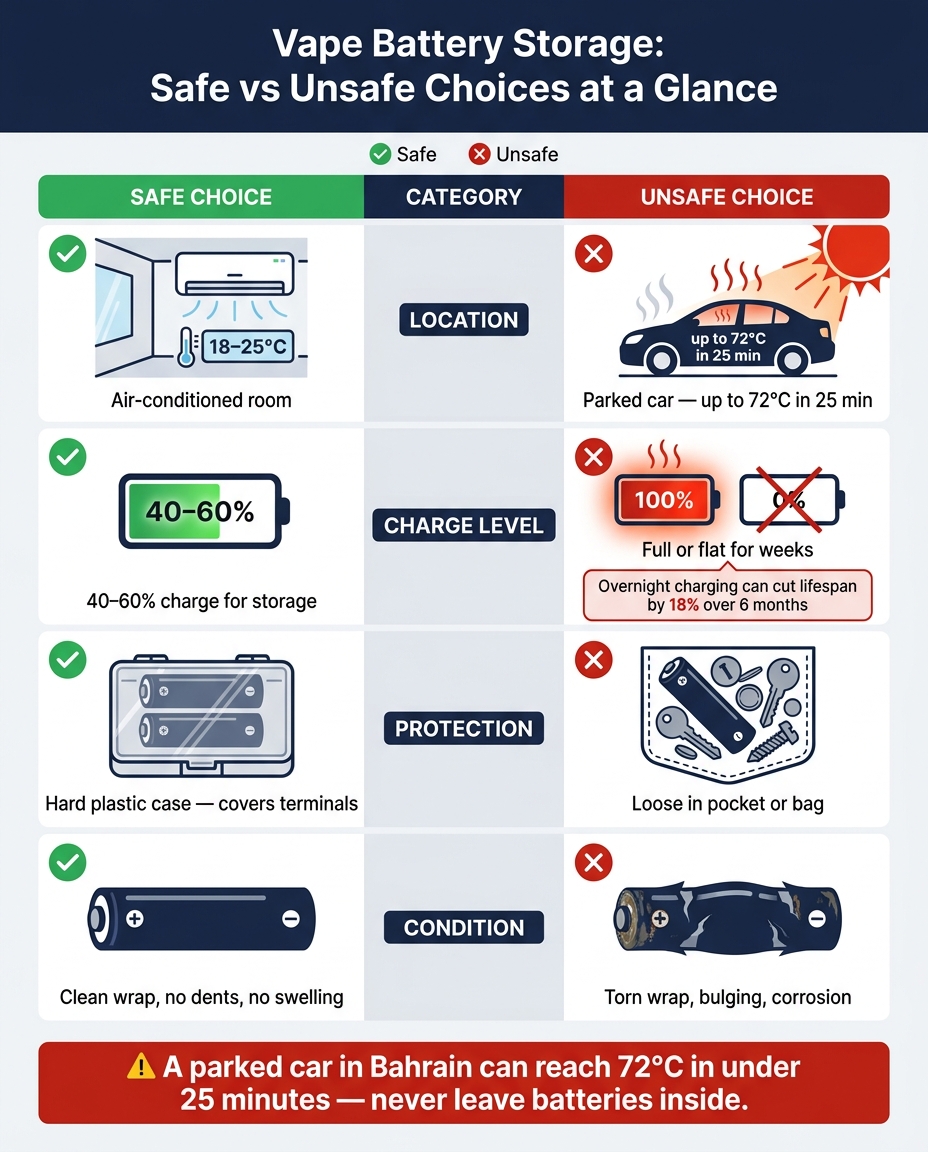
Vape Battery Storage: Safe vs Unsafe Choices at a Glance
Quick comparison
| Storage point | Safe choice | Unsafe choice | Why it matters |
|---|---|---|---|
| Location | Indoor AC room at about 18–25 °C | Car, balcony, sunny window | High heat wears cells down and can make them unsafe |
| Charge level | 40–60% | 100% or 0% for long periods | Full or empty storage puts extra stress on the cell |
| Protection | Hard plastic case | Loose in pocket, bag, or drawer | Loose cells can short against keys or coins |
| Condition check | Clean wrap, no dents, no swelling | Torn wrap, bulging, corrosion | Damage can lead to failure during use or charging |
The short version: I’d treat vape batteries like any other item that does not mix with heat, metal, or neglect. Keep them cool, half-charged, and covered.
sbb-itb-837e7ad
Keep batteries away from heat, sun, and parked cars
Store vape batteries in a cool, dry indoor spot, ideally in an air-conditioned room. In Bahrain, heat speeds up battery wear and can make stored cells less stable. If a battery still feels hot after storage, let it come back to room temperature before you use or charge it. Check for swelling or a bulging casing too, and follow essential vape safety tips to prevent accidents. Those are signs of internal damage, and a battery in that state should be removed from use at once.
Storage starts with location. Where you leave the battery matters more than how long it sits.
Safe vs unsafe storage spots at home and outside
A controlled temperature is what keeps storage safe. Skip glove boxes, windowsills, and shelves near stoves or ovens.
Use temperature-controlled spaces, and avoid places that trap heat.
| Location | Typical Temperature | Risk |
|---|---|---|
| Indoor AC room | ~25 °C | Low risk; maintains stability |
| Sunny window ledge | 40 °C – 50 °C+ | Stresses cells; causes heat damage |
| Parked car (Bahrain) | Up to 72 °C | Unsafe; high risk of venting or fire |
Moving a device from strong air conditioning into Bahrain’s outdoor heat can also lead to condensation. That moisture may interfere with electrical contacts.
Why fridges and freezers are not the answer
Fridges and freezers bring condensation risk. Once a battery warms back up to room temperature, moisture can settle inside charging ports or around the terminals.
Next, store cells at the right charge level so heat and overdischarge don’t combine.
Store batteries at the right charge level
Where you store a battery matters. But how charged it is matters just as much.
If a lithium-ion cell sits at 100% or 0% for a long stretch, that puts extra strain on the battery chemistry. For storage that lasts weeks or months, aim for 40–60%. After heat, this is one of the biggest storage mistakes people make.
Deep discharges and charging while hot both cut battery life.
Charge mistakes that shorten battery life
First, don’t leave batteries sitting at 100% for months. A full charge keeps internal stress high, and over time that can lead to permanent capacity loss.
Second, don’t store a battery right after the mod shuts off. If a cell stays flat for too long, it can slip into deep discharge, and at that point it may not recharge safely.
Third, stop overnight charging. Most modern vape kits reach full charge in 60 to 90 minutes. So if the device stays plugged in all night, the cell is just sitting there under extra heat for no gain. Over six months, that habit alone can cut total battery lifespan by 18%.
A simple storage routine for short-term and long-term use
For short-term storage, the goal is simple: don’t let the battery sit empty. Before you put it away, check the charge level on your mod’s screen or on an external charger display. If it’s above 60%, use a bit of that charge before storage. If it’s below 40%, give it a short charge. Then place the battery in a case.
For long-term storage, add a monthly reminder on your phone. Lithium-ion cells slowly lose charge on their own, so check them once a month. If needed, give the battery a small top-up to keep it in the safe range without filling it to 100%.
| Storage Charge | Capacity Impact | Safety Risk | Best Use Case |
|---|---|---|---|
| 100% (Full) | High – up to 18% loss over 6 months | Moderate | Immediate daily use only |
| 40–60% (Half) | Minimal – best for cell stability | Low | Storage for weeks or months |
| 0% (Flat) | Severe – risk of deep discharge | High on recharge | Never for storage |
Charge is only one part of storage. The next step is physical protection. Use a case or sleeve to help stop short circuits and damage.
Use battery cases and protect cells from damage
Once charging is sorted, the next step is physical protection.
A loose battery rolling around in a bag or drawer is one of the most common reasons vape battery accidents happen. If the positive or negative terminal touches a coin, key, or any other metal item, it can trigger a short circuit and heat up fast. Never store spare 18650, 20700, or 21700 cells loose with keys, coins, cables, or tools.
Before you put any battery into a case, give it a close look. Check the wrap for tears, nicks, or peeling. Even a tiny tear near the terminals can be dangerous. Roll the cell on a flat surface and see if it moves evenly, which can help you spot dents or bulging. Then look at the terminals for burn marks, corrosion, or discolouration. If the battery looks swollen or misshapen, stop using it at once.
A proper case is the easiest way to keep a good cell safe.
Plastic cases, silicone sleeves, and loose storage compared
A hard plastic case is the best option for most people. It covers the terminals, stops contact with metal items, and gives the battery some protection from drops and crushing.
Silicone sleeves are slimmer, which makes them easy to carry, but they may leave the terminals partly exposed and don’t do much against impact damage. Loose storage does nothing at all. No electrical protection. No physical protection.
| Storage Method | Electrical Safety | Impact Protection | Convenience |
|---|---|---|---|
| Hard Plastic Case | High – fully covers terminals | High – rigid shell helps prevent dents | Moderate – slightly bulky |
| Silicone Sleeve | Moderate – good insulation, but terminals may still be exposed | Low – minimal drop protection | High – slim and pocket-friendly |
| Loose Storage | None – direct short-circuit risk | None – prone to damage | High – but extremely dangerous |
Safe battery handling at home in Bahrain
At home, treat stored cells like any other high-risk item: cool, dry, and locked away.
Keep battery cases inside a closed drawer in an air-conditioned room at 18–25 °C. Stay away from utility rooms, balconies, garages, or any other place that gets hot. In Bahrain, heat builds up fast, especially in enclosed spaces, so storage location matters more than many people think. Keep cases out of reach of children and pets. A drawer with a child safety latch is a solid option.
Battery storage checklist and key takeaways
Use this simple schedule to keep stored batteries safe. It doesn’t take much. A few quick checks can help a battery stay safer and last longer. The three main things to watch are heat, charge, and physical protection.
The biggest slip-ups are heat and loose cells. Leaving a battery in a parked car – where temperatures can hit 72 °C in under 25 minutes – is one of the fastest ways to trigger venting or fire. Direct sun on a windowsill can cause the same kind of heat stress. Storing a cell at 0% or 100% for long periods also speeds up capacity loss. And tossing a bare cell into a pocket or bag with keys or coins is basically asking for a short circuit.
Daily, weekly, and monthly checks
Use this checklist after you store the battery, not instead of the storage rules above. For a quick check, stick to this routine.
| Action | Frequency | Risk If Ignored |
|---|---|---|
| Check stored batteries are still indoors, cool, and out of sunlight | Daily | Heat damage, venting, or fire |
| Check for new wrap damage before storage | Weekly | Short circuits when the cell contacts metal |
| Check charge monthly; keep cells at 40–60% | Monthly | Permanent capacity loss and reduced battery lifespan |
| Clean storage cases monthly | Monthly | Debris-related clogs or charging failure |
Even a small tear in the wrap can make a cell unsafe. Replace the wrap or retire the cell at once. If a cell is swollen, leaking, or damaged, take it out of storage and dispose of it the right way. In Bahrain, damaged cells should go to an authorised e-waste point.
"A 1mm tear in a battery wrap is a serious safety hazard; if you see one, replace the wrap or the battery immediately." – VapeShop.bh
FAQs
How long can I safely store a vape battery?
You can store a vape battery safely for weeks or even months, as long as you keep it in a cool, dry place with a steady temperature. Heat is the big problem here. Direct sunlight is no good, and a parked car is even worse, since the temperature inside can climb to 72°C very fast.
For loose 18650 or 21700 cells, keep them in plastic cases and store them at about 25°C. That simple step helps prevent contact with metal objects and lowers the chance of damage.
If the battery looks swollen, or the mod’s back panel starts to bulge, stop using it at once.
Can I use a battery again after it gets hot in a car?
No. If your vape battery gets hot in a car, don’t use it again. A parked car can hit about 72°C, and that kind of heat can lead to venting or thermal runaway.
If the battery looks swollen, bulging, or feels unusually hot, treat it like a hazard. Don’t charge it. Put it in a non-flammable container, such as a glass jar, and follow hazardous disposal instructions in Bahrain.
What should I do with a damaged vape battery in Bahrain?
Stop using it at once. Don’t charge it or tape it if it feels unusually hot, looks swollen or bulging, or is leaking.
Put it in a non-flammable container, such as a glass jar, then contact a professional waste management service or Bahrain’s Supreme Council for Environment for disposal advice.
Related Blog Posts
- Guide to 18650 Batteries for Vapes
- How Fast-Charging Works in Vape Devices
- How to Maintain Vape Mods for Peak Performance
- 18650 vs 21700 Vape Batteries: Comparison
Frequently Asked Questions
For Bahrain’s hot climate, vape batteries are safest in an indoor, air-conditioned room at about 18–25 °C, kept cool and dry. Avoid leaving them in parked cars, on balconies, or on sunny windowsills, as temperatures can rise quickly and make batteries less safe.
For longer storage, lithium-ion vape batteries are best kept at about 40–60% charge rather than fully charged or completely flat. Storing batteries at 100% or 0% for extended periods puts extra stress on the cell and can reduce performance over time.
A hard plastic battery case helps prevent short circuits by keeping loose cells away from metal items like keys or coins. Carrying batteries loose in a pocket, bag, or drawer increases the risk of them touching metal and causing a dangerous short.
Stop using any vape battery that shows swelling, dents, leaks, corrosion, or torn wraps. These signs indicate the cell may be compromised, which can increase the risk of venting, failure during charging, or fire.
Leaving vape batteries in a car is unsafe, especially in summer, because a parked car can reach about 72 °C in under 25 minutes. Once battery temperature goes above 40 °C, charge loss speeds up and the cell can become stressed and less safe.
A safe storage location is a cool indoor room with AC in the 18–25 °C range, where the battery is protected from direct sun and high temperatures. Unsafe locations include cars, balconies, and sunny windows, where heat builds quickly and can wear cells down or make them unsafe.
Improper storage, such as high heat or keeping batteries fully charged or fully empty for long periods, accelerates wear and charge loss. This not only shortens battery life but also increases the risk of short circuits, venting, and fire if the cell becomes damaged or stressed.