

One Switching to Vaping From Cigarettes Story

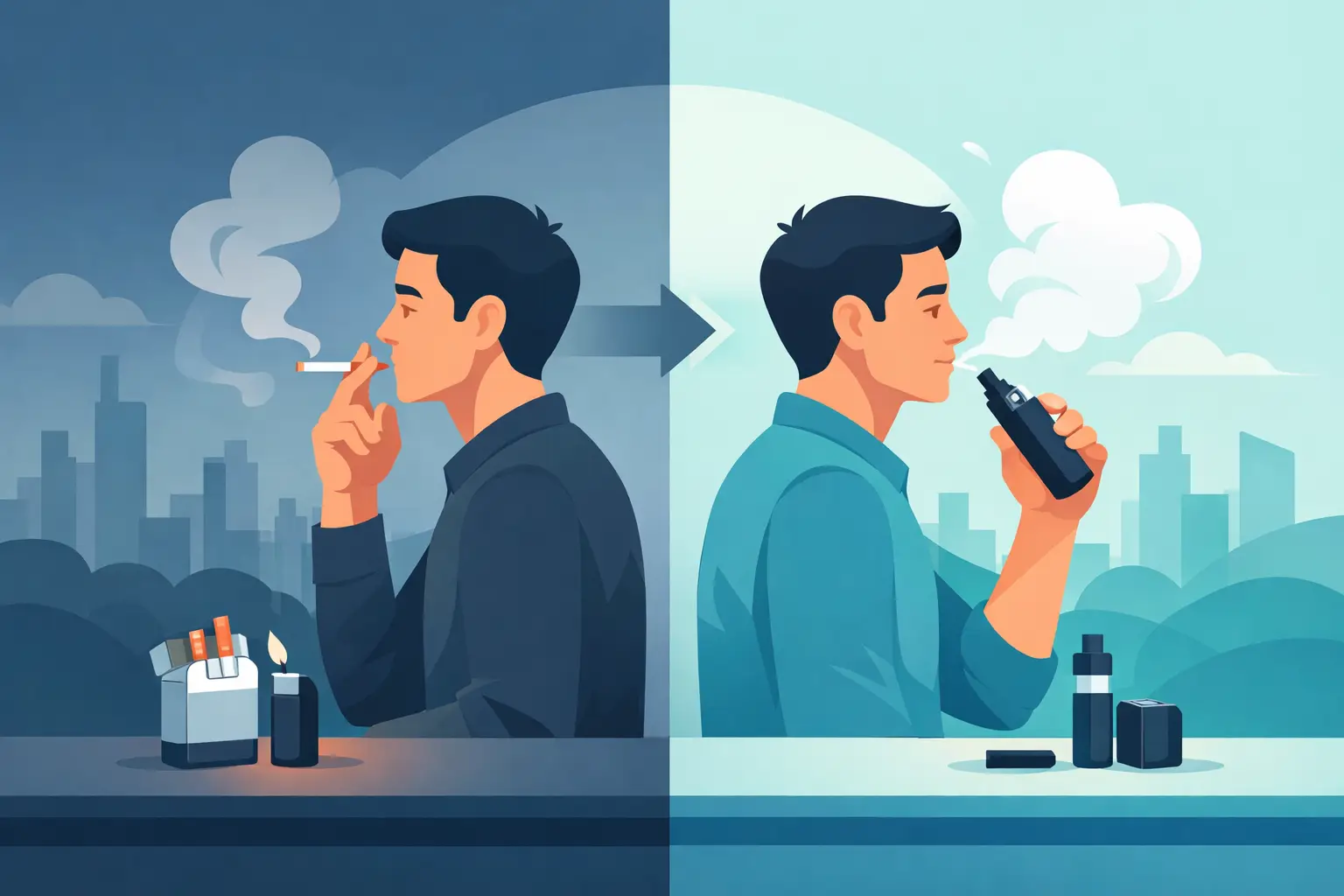
The first difficult moment came at 7:30 a.m., not after dinner or during a weekend out. In this switching to vaping from cigarettes story, an adult smoker we will call Sam had coffee in one hand, car keys in the other, and the familiar urge for a cigarette before the workday began. He had bought a vape the night before, but it stayed in its box because he was not sure how to use it, whether it would feel satisfying, or whether he would simply end up using both.
That hesitation is common. Moving away from cigarettes is rarely a dramatic, one-day transformation. It is usually a series of practical choices: selecting a device that is easy to live with, finding a nicotine level that fits an adult smoker’s current needs, learning a different inhaling style, and preparing for the routines that used to involve a cigarette.
This is a composite story based on the questions adult customers often ask. It is not a promise that vaping will make quitting easy or that one setup works for everyone. Cigarettes and nicotine can be hard to leave behind, and the best health outcome is to stop smoking and eventually stop nicotine use altogether. For adults who choose to switch from cigarettes to vaping, however, a clear plan can make the first weeks less frustrating.
Switching to Vaping From Cigarettes: The First Week
Sam’s first mistake was expecting his new device to behave exactly like a cigarette. He took a short, sharp puff, waited a few seconds, then decided it was weak. A staff member explained the adjustment simply: many beginner-friendly devices work better with a slow, steady mouth-to-lung draw. The vapor is drawn into the mouth first and then inhaled, rather than pulled quickly and directly into the lungs.
That small change mattered. It did not make the cigarette craving vanish, but it made the device feel more familiar. Sam also stopped treating every craving as proof that the switch was failing. Some urges were about nicotine. Others were tied to timing, stress, driving, coffee, or taking a break with coworkers.
For the first few days, he kept cigarettes available because he was anxious about running out of options. By the end of the week, he noticed something useful: the cigarettes he still had were mostly linked to automatic habits, not a careful decision that he wanted one. Seeing that pattern gave him something concrete to work on.
Start With Convenience, Not Complexity
A common beginner mistake is buying a device based on appearance, cloud size, or a friend’s recommendation. The better starting question is simpler: what will you realistically use every day?
For someone coming directly from cigarettes, a straightforward pod device or a simple disposable can reduce the learning curve. There are fewer settings, fewer parts to manage, and less chance of putting the device aside because it feels like another job. A refillable pod can be a sensible next step for adults who want more flavor choice and a reusable device, but it does require charging, keeping e-liquid on hand, and replacing pods or coils when performance drops.
There is a trade-off. Disposable options are convenient, especially during a busy first week, but they create more waste and may cost more over time. Refillable devices require a little more attention but can offer better long-term flexibility. Neither choice is automatically right. The useful choice is the one that keeps an adult smoker from reaching for cigarettes because the vape is empty, dead, leaking, or too complicated.
Sam chose a simple device first. He bought a backup only after realizing that a dead battery on a late shift was one of his biggest risks. That was not overbuying. It was planning for the moment when convenience matters most.
Choosing a Flavor Without Overthinking It
Flavor can be more important than new users expect. A flavor that feels too sweet, too cool, or too strong may make someone use the device less often, even if the device itself works well. On the other hand, choosing something completely unlike cigarettes can help separate vaping from an old smoking routine.
Sam started with a familiar, uncomplicated flavor profile. A few days later, he tried something lighter for the afternoon. He did not need ten options. He needed one choice he could depend on and one alternative that kept the experience from becoming boring.
The practical rule is to begin small. Pick one or two flavors, use them long enough to form an opinion, and then adjust. Buying a large collection before you know your preference often creates waste rather than confidence.
The Nicotine Question Requires Honesty
Nicotine strength is one of the biggest reasons an attempted switch can feel either uncomfortable or excessive. If the nicotine level is too low for a person who previously smoked frequently, they may take repeated puffs without feeling settled and return to cigarettes. If it feels too strong, the experience can be unpleasant.
There is no universal number because cigarette use, device type, and individual habits differ. An adult who smoked throughout the day may need a different starting point than someone who smoked only at certain times. The goal is not to chase the strongest sensation. It is to find a level that feels manageable and then reassess as smoking decreases.
Sam kept his approach simple. Instead of changing device, flavor, and nicotine level all at once, he changed one variable at a time. That made it easier to understand what was helping and what was not. If you are pregnant, have a medical condition, take regular medication, or have concerns about nicotine use, speak with a qualified healthcare professional before making changes.
Plan for the Cigarettes You Expect to Miss
The hardest cigarette is often predictable. For Sam, it was the one after lunch and the one during the drive home. He did not try to pretend those moments would not happen. He prepared for them.
He charged his device before leaving home, kept it where he could reach it safely when parked, and took a short walk after lunch rather than standing in his usual smoking spot. The point was not to create a perfect new routine overnight. It was to interrupt the automatic sequence: trigger, cigarette, relief.
When cravings appeared, he gave himself a short window before acting. A glass of water, a few slow breaths, or a five-minute walk sometimes reduced the urgency. When it did not, he used his vape rather than treating the craving as a reason to abandon the attempt. That distinction prevented one difficult afternoon from becoming a full return to smoking.
When Dual Use Happens
Some adults switch completely right away. Others use both cigarettes and vaping products for a period. Dual use is not the final goal, because continuing to smoke cigarettes maintains the harms associated with smoking. Still, a slip or a gradual transition does not mean the effort is pointless.
Sam had two cigarettes during his second week after a stressful work call. Instead of declaring the plan over, he asked what went wrong. His device had not been charged, and he had skipped lunch. The answer was not self-criticism. It was charging the device, carrying a backup, and recognizing that hunger and stress could amplify his urge to smoke.
A useful transition plan has room for honest course correction. Keep track of when cigarettes happen, what was happening beforehand, and whether the vape was available and satisfying. Patterns are more helpful than guilt.
A Small Routine That Keeps the Switch Practical
The most reliable setups are usually boring in a good way. Charge the device at the same time each day. Check e-liquid or pod levels before a long day. Keep a spare pod, coil, or device if running out would put you at risk of smoking. Store equipment away from children and pets, and follow the product instructions for charging and use.
In Bahrain, fast access can also make a difference when a pod fails late at night or supplies run low. VapeShop.bh supports adult customers with around-the-clock ordering and same-day delivery, which can be particularly helpful when a replacement is needed quickly rather than after a return to cigarettes.
The bigger lesson from Sam’s experience was not that vaping required willpower alone. It required fewer avoidable obstacles. Once his device was charged, his flavor worked for him, and he had a plan for his usual triggers, the decision became less dramatic.
If you are considering the change, start with one practical promise to yourself: make the cigarette alternative easy to reach before the next familiar craving arrives. Then pay attention to what that moment teaches you.
Frequently Asked Questions
This story is a composite based on common questions adult customers ask when moving from cigarettes to vaping, rather than a single real person. It is designed to show realistic moments, like the first morning coffee without a cigarette, and the hesitation about using a new vape.
The content is explicitly described as not a promise that quitting will be easy or that one setup works for everyone, but as a practical illustration of typical challenges.
No, the story clearly states that it is not a promise that vaping will make quitting easy or that one type of device works for every adult smoker. It emphasizes that cigarettes and nicotine can be hard to leave behind and that the best health outcome is to stop smoking and eventually stop nicotine use completely.
For adults who still choose to move from cigarettes to vaping, the story focuses on having a clear plan to make the first weeks less frustrating rather than guaranteeing results.
The story explains that switching is usually a series of practical choices: selecting a device that is easy to live with, finding a nicotine level that fits an adult smoker’s current needs, learning a different inhaling style, and preparing for routines that used to involve a cigarette. It shows how expecting a vape to behave exactly like a cigarette, such as taking very short sharp puffs, can make the first attempts feel weak or unsatisfying.
By following these steps and adjusting expectations, adult smokers can approach the first week with a more realistic and structured plan.
Yes, the story is written for adult smokers who are uncertain about using a new vape, whether it will feel satisfying, or whether they might end up using both cigarettes and vaping. It walks through common early mistakes, such as treating the vape exactly like a cigarette, and highlights the need to learn a slightly different inhaling style.
Adult readers in Bahrain can use the story as a realistic guide to planning their first week, without expecting a dramatic one-day transformation.
No, the description explicitly states that this is not a promise that one setup works for all adult smokers. It highlights that moving away from cigarettes depends on individual choices, including which device is easiest to live with and what nicotine level matches a person’s current needs.
The story is meant to illustrate typical questions and challenges rather than endorse a single device or method.
The story describes how an adult smoker, referred to as Sam, feels a strong urge for a cigarette with morning coffee and hesitates to use the new vape because of doubts about satisfaction and ease of use. It shows that the first mistake is expecting the device to behave exactly like a cigarette, with short sharp puffs leading to the impression that the vape is weak.
These moments illustrate that frustration in the first week is common, and that preparing for everyday routines can reduce that frustration.