
VCT E-Liquid Flavor Guide for Bahrain Vapers What to Order from Online Shops with Delivery

VCT E‑Liquid in Bahrain: What to Order, What to Pair, and Where to Get Fast Delivery
If you enjoy a tobacco note in your vape but don’t want to give up the warmth of vanilla and the comfort of custard, VCT is the lane you’ll want to shop. The catch is that “VCT” on a bottle sold in Bahrain can mean slightly different things depending on the nicotine type, PG/VG ratio, and the device it’s designed for—and getting those wrong leads to harsh hits, gunked coils, or a flavor that misses the mark. ⏱️ 7-min read
This guide is written for adult vapers in Bahrain who order online and want their first puff to match the label. You’ll learn how to decode VCT variants at a glance, match them to your disposable, pod kit or sub‑ohm tank, choose a nicotine format that fits how you vape, and order from reputable Bahraini shops that offer same‑day or next‑day delivery to Manama, Riffa, Juffair, Muharraq and beyond. Keep it handy before you hit checkout.
What is VCT and the flavor families you’ll see in Bahrain
VCT stands for vanilla–custard–tobacco, a style built to satisfy two cravings at once: the rounded, slightly dry character of tobacco on the inhale, followed by a soft sweep of vanilla custard on the exhale. Think of it as a familiar base wrapped in dessert—balanced, not syrupy. Most blends use a Virginia or RY4‑style tobacco to keep the edges defined, then layer vanilla and cream to round everything out. The better mixes don’t drown the tobacco; they let it anchor the profile so sweetness feels earned, not overwhelming.
When you browse Bahraini sites, you’ll typically bump into four flavor “families” under the VCT umbrella. Dry‑cured tobacco variations lean woodsy and slightly bitter, with minimal sweetener. They land closest to a cigarillo or dry pipe leaf, and they’re excellent if you want clarity and a firmer throat hit. Custard‑first versions push cream and vanilla forward for a richer, pudding‑like finish; these often feel fuller in the mouth and pair well with higher‑VG blends. In the middle are caramel or brown‑sugar bridges—VCTs that use a toffee note to stitch tobacco and cream together without tipping into dessert overload. Finally, blended RY4 or pipe‑style takes introduce molasses, spice, or a faint roasted smokiness to add dimension.
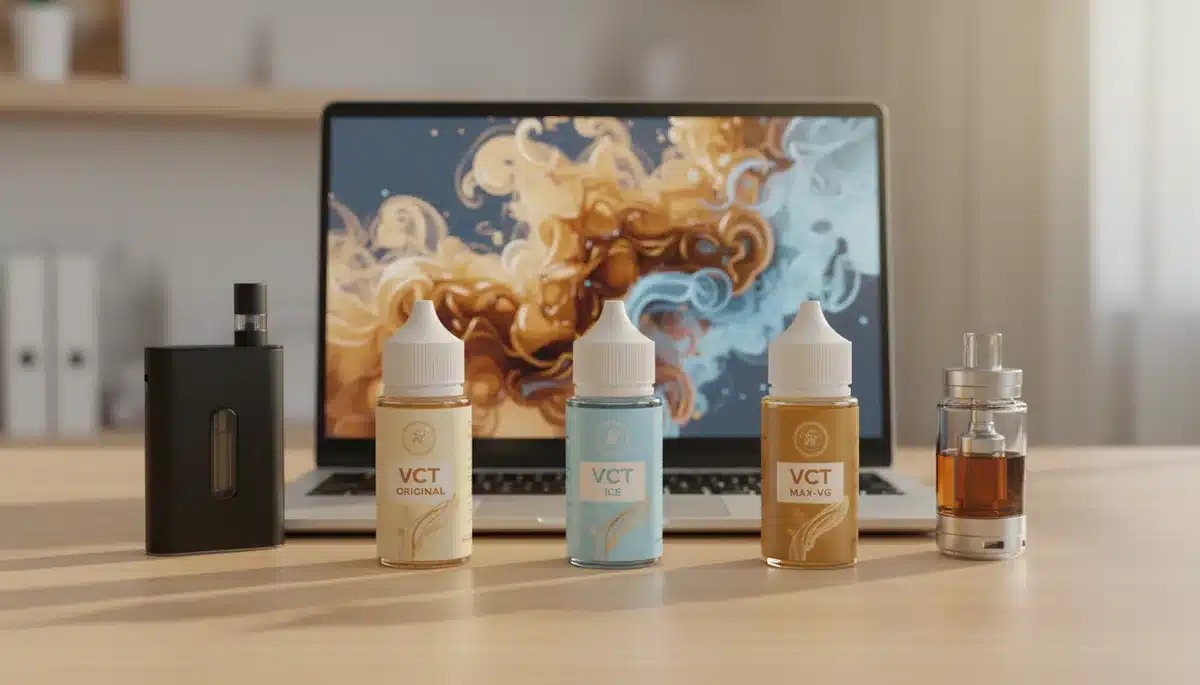
Beyond flavor, format matters. You’ll see “Original VCT” or “Classic” labels aimed at balanced tobacco/vanilla use across devices; “Ice,” “Cool,” or “Menthol” VCTs add a minty or icy lift for Bahrain’s warm climate; nicotine salt versions are built for low‑watt pods and disposables; and Max‑VG or sub‑ohm blends (typically 70/30 or thicker) are designed for bigger clouds and creamier mouthfeel in advanced kits. Always glance at the PG/VG ratio: more PG (like 50/50) sharpens tobacco detail and throat hit; more VG (like 70/30) fattens the custard and boosts vapor density. That one number will tell you how it’s supposed to feel and which device will make it sing.
A smart habit when ordering locally is to read the tasting notes and ratio together. If a product page says “vanilla custard up front” and lists 70/30 VG, expect a dessert‑leaning vape that wants more power and airflow. If it says “authentic tobacco with a hint of vanilla,” and shows 50/50, think subtle sweetness and a tighter draw. Those hints are there to help you—use them to filter quickly.
Choosing nicotine type and strength: salt nic vs freebase for Bahraini delivery orders
Choosing nicotine format before checkout saves you from a rough first day. Nicotine salt (nic salt) and freebase are not interchangeable across devices; each is formulated to deliver the right feel for a specific power range. Nic salts use organic acids to lower pH, making higher strengths smoother at low wattage. Freebase is the traditional form—clean, slightly sharper, and well suited to bigger vapor volumes where you naturally inhale more per puff.
As a rule of thumb for Bahrain orders: use nicotine salts in low‑wattage pods and disposables; use freebase in anything sub‑ohm or high‑watt. day-delivery-in-juffair/” rel=”nofollow noopener noreferrer”>Salt nic strengths commonly range from about 10–50 mg. In practice, 20–35 mg is the sweet spot for compact pods and MTL (mouth‑to‑lung) users who take frequent, shorter puffs. If you prefer a very tight draw and fewer, stronger hits (especially ex‑smokers using 1.0–1.4 Ω pods), 25–30 mg nic salt often balances satisfaction with smoothness. For disposable VCTs, you’ll typically see salts listed in 20 mg, 35 mg, or 50 mg; choose the lowest that keeps cravings at bay to preserve flavor detail.
Freebase nicotine shines in sub‑ohm tanks, DTL (direct‑to‑lung) pod mods, and box mods. Because those setups produce more vapor, you don’t need as much nicotine per milliliter. The most common strengths for freebase VCT are 3 mg and 6 mg. Go 3 mg if you vape at 40–70 W with airy airflow and large clouds; step up to 6 mg if you run cooler or if you’re transitioning from a stronger salt but want to keep flavor fullness without losing satisfaction. Freebase options do go higher (up to 12–18 mg), but those are best reserved for tighter, higher‑resistance MTL tanks, which are much rarer these days.
Before you hit order on a Bahraini site—especially with same‑day services that move quickly—double‑check three fields on the product page: nicotine form (salt vs freebase), listed strength (mg/ml), and the device section in the description (some shops explicitly tag “for pods” or “for sub‑ohm”). If anything is unclear, most local retailers, including options like VapeShop.bh, accept quick WhatsApp queries; a 30‑second chat can prevent a return, and local staff usually know which coil lines and strengths pair best with the stock they carry.
Pairing VCT variants to devices: disposables, pod kits, and advanced mods
The fastest way to ruin a good VCT is to pour it into the wrong setup. Disposables, pods, and sub‑ohm tanks vaporize liquid differently, and VCT’s custard components, in particular, can be demanding on coils. Start by matching the variant to your device category, then fine‑tune with resistance, wattage, and airflow to minimize gunk and bring the intended notes forward.
Disposables are simple: choose a VCT in nicotine salt form within 20–50 mg, and avoid heavy custard labels if you want the coil to last. Because disposable coils are fixed and wicking is limited, thick, sweet custards can caramelize fast, muting flavor after a couple of days. Tobacco‑forward VCT salts or “vanilla‑tobacco” blends tend to hold up better. If the product page mentions “ice” or “menthol,” expect a cooling lift that can emphasize tobacco dryness and keep puffs fresher in Bahrain’s heat. One practical tip: if your disposable starts to taste faintly burnt, pause for a few minutes between puffs; continuous hits on thick blends overheat the wick and accelerate gunk.
Pod kits split into two camps. MTL pods (roughly 1.0–1.4 Ω) pair best with VCT nic salts at 20–35 mg, especially tobacco‑first or mid‑sweet blends at 50/50 or 60/40 PG/VG. This keeps throat hit crisp and flavor defined without flooding. If your pod supports replaceable coils, look for smaller wicking ports for salts; they meter thinner blends well. DTL pod mods or lower‑ohm pods (below 1.0 Ω) work better with freebase VCT at 3–6 mg and a 60–70% VG ratio. Use a slightly more open airflow to let the custard note expand, and start 10–15 W below the coil’s mid‑range while breaking in. Mesh coils from brands like GeekVape or Vaporesso often distribute heat more evenly, extending coil life with creamier juices.
Advanced mods and sub‑ohm tanks are where custard‑heavy VCTs shine. Choose freebase at 3–6 mg with 60–80% VG. That VG range thickens the exhale and carries vanilla warmth without sacrificing wicking in modern tanks. For wattage, aim for 40–70 W on mid‑resistance mesh coils (0.15–0.3 Ω) and adjust to taste: lower wattage brings out tobacco nuance and reduces sweetener scorch; higher wattage pushes custard density and room‑filling clouds. To reduce coil gunk, prime generously (8