

Legal and Age Verification Guide for Ordering Disposable Vapes with Same-Day Delivery in Manama

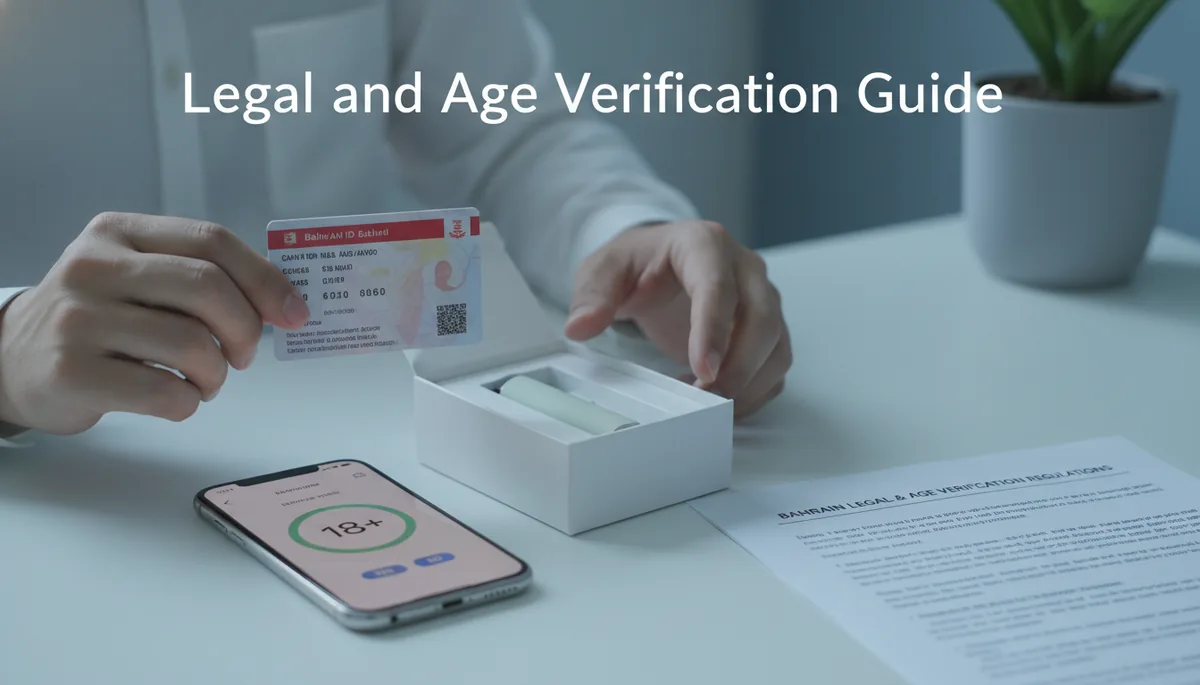
Legal and Age Verification Guide for Same‑Day Disposable Vape Delivery in Manama: A Practical Checklist for Retailers and Customers
Same‑day delivery has made it easy to buy disposable vapes across Manama, but the speed of service does not change the core rule: these are regulated products, and every order must meet Bahrain’s legal, safety, and age‑verification requirements. Retailers and delivery partners that treat vapes like ordinary courier items risk fines, permit suspensions, and lasting damage to customer trust. The good news is that a well‑designed compliance flow—clear licensing, layered age checks, trained drivers, and tight recordkeeping—can keep operations fast and lawful without frustrating legitimate adult customers. ⏱️ 11-min read
This guide unpacks Bahrain’s regulatory landscape as it applies to disposable vapes and same‑day deliveries in Manama. It gives retailers a concrete, step‑by‑step checklist and offers customers a simple playbook to order legally and avoid delays at the door. Wherever specific requirements can vary or change, you will see practical advice on how to confirm the latest rules with the appropriate authority. The result is a workable framework you can implement today—and a repeatable standard you can use to train staff, design your website flow, and set delivery policies that stand up to inspection.
Understand Bahrain regulatory landscape and licensing requirements
In Bahrain, the regulation of e‑cigarettes and disposables draws from national public‑health and tobacco control rules, import controls, and Manama’s municipal trading bylaws. Treat every disposable vape as a regulated good until confirmed otherwise. The Ministry of Health and the National Health Regulatory Authority (NHRA) lead on product safety, labeling, and health warnings; the Ministry of Industry and Commerce and Bahrain Customs cover import permissions and market surveillance; and Manama Municipality manages business licensing and enforcement within the city. If your model includes cross‑border sourcing, factor in customs controls early, because non‑compliant shipments can be detained before you ever list the product for sale.
Your first job is to map your business model to the correct licenses. A storefront selling only domestically sourced stock may need a retail trade license and any specific endorsements required for tobacco or nicotine products. If you import disposables or e‑liquids, you will typically need import permissions, product documentation from manufacturers (ingredient lists, nicotine concentration, batch/expiry), and in some cases registration or notification to health authorities. Keep digital and printed copies of each valid license and permit in your shop and delivery vehicles. Listing your license number on your website and receipts helps customers and inspectors verify your legitimacy quickly.
Before promoting same‑day delivery, verify any product‑specific restrictions that could affect your catalog. Authorities may limit nicotine concentration, require particular warnings, or restrict some flavors. Do not assume what is legal in one GCC market is permissible in Bahrain. For each SKU, maintain a technical file that includes nicotine strength (e.g., 20 mg salt nic), full ingredient list, battery type, batch number, and production/expiry dates. If your site serves zones outside Manama, confirm whether additional municipal permits are necessary for those districts and ensure your operating hours comply with local rules. Publish delivery zones and cut‑off times, but remember: business policies never override statutory obligations.
Finally, designate one compliance contact who maintains relationships with the Ministry of Health, NHRA, Customs, and Manama Municipality. Keep their official contact points in a living document and subscribe to any regulatory circulars. When guidance changes—whether labeling, flavor policy, or proof‑of‑age standards—you want an internal owner ready to update product pages, driver training, and age‑verification scripts the same day.
Know acceptable ID types and who is legally allowed to purchase
Age‑restricted sales begin and end with identity verification. For Bahrain, acceptable proof is a government‑issued photo ID showing the customer’s full name and date of birth. In practice, the most common documents are the Bahraini CPR/Civil ID, passports, and valid driving licences. Build your policies around those three and be explicit on your storefront and checkout screens: which IDs you accept, what must be visible (name, photo, date of birth, issue/expiry), and what will cause a refusal (expired ID, blurry image, or a screenshot only). The clearer your rules, the fewer tense conversations your drivers will have at the door.
Always verify the purchaser’s legal age against current Bahraini law using official sources. Laws can evolve, and different categories of nicotine products can attract different requirements, so do not rely on assumptions or neighboring‑market norms. As a retailer, you can choose to be stricter than the legal minimum. Some operators set a higher internal threshold for high‑nicotine salt products or for bulk orders, requiring a second form of ID or a live face match for customers who appear close to the minimum age.
For online orders, a visual verification of an ID image can be paired with automated checks to raise confidence. Document readers can confirm that machine‑readable zones match the printed data and detect basic tampering. However, technology supplements human judgment—it does not replace it. Train staff to spot common red flags: mismatched fonts on ID cards, missing holograms, incorrect date formats, and suspicious cropping that hides edges or barcodes. If your policy allows digital wallet IDs, ensure they come from an approved source and are validated by your chosen age‑verification provider.
Customers also benefit from knowing exactly what will be requested. State clearly at checkout and in order confirmations that an ID check will occur again at delivery and that the recipient’s name must match the order. A short, friendly reminder—“Please have your Civil ID, passport, or driving licence ready”—prevents delays and failed handoffs, especially for late‑evening, same‑day windows.
Build a layered age‑verification flow for online orders
A layered approach balances speed with certainty. Start with a simple age gate on site entry—date of birth entry plus a declaration that the user is of legal age for nicotine products in Bahrain. This is not sufficient on its own, but it filters out casual attempts and sets the expectation that further checks will occur. On product pages and at checkout, display nicotine strength, ingredients, and a health warning so customers understand they are purchasing a regulated product and why ID checks are necessary.
At checkout, add a second layer: an automated age check using a third‑party service or an in‑house process. The gold standard for high‑risk orders is document scanning and face matching. The user uploads a photo of a government ID and a live selfie; software reads the document (OCR), validates security features where possible, and compares the selfie to the ID photo. For established customers purchasing lower‑risk items or small quantities, a lighter verification—DOB plus a CPR/Civil ID number cross‑check—may suffice. Reserve enhanced checks for transactions that trigger your risk rules: larger baskets, multiple disposables, or higher nicotine salt strengths (e.g., 20 mg).
Build in a manual review queue. Automated systems will flag edge cases—glare on an ID, minor name variations, or borderline age calculations. Assign trained staff to resolve flags within tight service‑level targets so same‑day delivery still moves. A practical rule is to review flagged orders every 15 minutes during operating hours and communicate quickly with the customer when extra information is required. Where you cannot confidently verify age before your dispatch cut‑off, do not ship the order for same‑day delivery.
Finally, log everything. Create an audit record for each order that captures the user ID, time stamp, verification method (visual check, third‑party ID scan, face match), result (pass, fail, manual review), and the verifier’s initials or system ID. Couple this with a dispatch manifest that carries the verification status to the driver’s app or paperwork. That way, a courier arriving at the door knows whether to expect a second robust check or a simple face‑to‑ID match before handoff.
Enforce ID checks at delivery: driver procedures and refusal rules
The handoff is your final control. Train every driver to perform a calm, consistent ID check at the door. The process is straightforward: ask for an acceptable ID, examine the holograms and expiry date, match the photo to the person present, and confirm the name matches the order. If the recipient is wearing a mask, sunglasses, or a hat, politely ask them to remove or adjust it for a clear comparison. Do not accept photograph‑only IDs or images shown on a phone unless your company policy explicitly allows and the ID has already been verified through an approved scanner.
Document the check. Drivers should capture a delivery log entry that includes date and time, delivery address, the type of ID presented, the last four digits of the ID number (never the full number in the driver’s notes), and the driver’s initials. Where permitted, take a photo of the sealed package at the doorstep as proof of delivery; avoid photographing the customer for privacy reasons unless you have explicit consent and a policy to protect the image. Require a signature or digital acknowledgment when the check is complete. Make it impossible for a package to be marked “delivered” in your app until the ID‑check step is ticked and time‑stamped.
Every driver should carry a concise refusal script. For example: “I’m sorry, I cannot hand over nicotine products without a valid government‑issued photo ID that confirms age. We can reschedule once you have your ID, or I can cancel and arrange a refund.” Scripts keep the tone respectful and consistent, which defuses most conflicts. Back the script with a strict rule: never leave regulated products unattended, with a receptionist, or at a neighbor’s door if the named recipient cannot be verified.
When there is a suspected fake ID or an attempted sale to a minor, escalate exactly the same way every time: refuse the delivery, record the reason, notify dispatch immediately, and submit a brief incident report before the next drop. Keep a refusal log that captures the order ID, address, reason for refusal, timestamp, and GPS location from the driver’s app. Repeat problems at a single address—multiple failed age checks or requests to leave packages without ID—should be added to a blocklist pending further review by management.
Product compliance and label requirements for disposables and e‑liquids
Before an item appears on a same‑day product page, verify how it is classified and which rules apply. Regulators may treat disposable vapes as tobacco products or as electronic nicotine delivery systems (ENDS) depending on ingredients and delivery method. That classification dictates labeling, warnings, and sometimes point‑of‑sale rules. Obtain a clear specification from the manufacturer or importer for each SKU: nicotine strength in mg/mL, total nicotine content, ingredient list, battery chemistry, and safety certifications.
Labels should be unambiguous and legible. Include nicotine strength (for example, salt nic 20 mg), net contents, prominent health warnings, manufacturer or importer details, batch or lot number, production and expiry dates, and, where required, a QR code or serial number for traceability. Packaging should feature tamper‑evident seals and child‑resistant features. If you are repackaging multi‑packs for same‑day sales, ensure the outer packaging still carries required warnings and identifiers. Keep a sample of each product and batch label on file in case of a regulator request or a customer complaint.
Flavor restrictions and additive bans vary by jurisdiction, so check Bahrain’s current position before listing fruit, dessert, or confectionery profiles. When in doubt, segment your catalog clearly: separate pages for salt‑nic and freebase products, and clear labeling for puff counts (e.g., 9k, 15k, 20k). Puff counts are marketing claims; pair them with practical details (battery capacity, e‑liquid volume) to avoid misleading customers and to align with consumer‑protection expectations. If your due diligence reveals an ingredient under scrutiny—diacetyl or other diketones, for example—seek written confirmation from the supplier and keep test results on file.
Finally, align your product pages with your labels. Show the same nicotine strength, warnings, and importer details online that appear on the box the driver will hand over. Contradictions between the website and the physical label create confusion at the door and increase the chance of a refusal, return, or complaint. In same‑day operations, clarity reduces re‑deliveries and prevents disputes about what exactly the customer ordered.
Protect privacy and keep compliant records
Age verification and delivery confirmation require collecting sensitive personal data. Handle it with the same care you devote to product safety. Start by limiting what you collect to what is necessary: full name, date of birth, delivery address, contact number, and an age‑verification result. If your process requires an ID scan, consider storing a verification token and the last four digits of the ID rather than a full document image. The less you store, the less you can accidentally expose, and the easier your retention policy becomes to manage.
Adopt strong security controls. Encrypt data in transit (TLS 1.2+ at a minimum) and at rest (e.g., AES‑256 for databases and file stores). Use role‑based access so only trained staff can view verification results or delivery logs, and maintain an access log to record who accessed what and when. Separate operational access (what drivers see)
Frequently Asked Questions
The legal age to purchase disposable vapes in Bahrain is 18 years and older. Retailers verify age through government-issued ID during delivery or pickup. This ensures compliance with anti-smoking laws protecting minors.
Age verification for same-day vape delivery requires customers to show a valid government ID confirming they are 18 or older upon arrival. Delivery personnel check ID before handing over the order. This process follows Bahrain's regulations on tobacco and vape sales.
Same-day delivery for disposable vapes is offered in Bahrain for eligible orders placed early enough. Customers must complete age verification at delivery. Availability depends on location and stock at VapeShop.bh.
A valid government-issued ID such as national ID, passport, or driver's license is required to prove age 18+ for vape deliveries in Bahrain. The ID must be presented to the delivery person. This verifies compliance with local sales laws.
Disposable vapes remain legal for online orders in Bahrain as long as buyers are 18+ and products meet import regulations. No outright ban exists currently despite past MP proposals. Age verification is mandatory at delivery.
Bahrain vape delivery rules require strict age checks over 18 using official ID for same-day service. Orders must comply with nicotine limits under 20mg/ml and pod sizes up to 2ml. Delivery confirms all legal standards before handover.
Age verification happens at the door with a government ID showing 18 or older for same-day vape orders in Bahrain. No delivery proceeds without successful check. This upholds national laws on vape sales.