Insider tips for a successful 20k puff disposable vape bulk order in Bahrain

The Bahrain Reseller’s Checklist: How to Source, Import, and Sell 20,000‑Puff Disposable Vapes with Minimum Risk
Buying 20,000‑puff disposables in bulk sounds simple—until you miss a label requirement, a battery certificate, or an excise calculation and your shipment idles at port. Bahrain’s vape market is active, but it’s also tightly regulated and price‑sensitive. The businesses that thrive take a methodical approach: they lock their product specs early, verify compliance directly with the authorities, pressure‑test suppliers with samples and documents, and plan last‑mile logistics down to the carton. ⏱️ 7-min read
This practical, Bahrain‑specific guide walks small retailers, online sellers, and independent resellers through each step—defining SKUs, confirming legality, choosing suppliers, negotiating terms, securing safe packaging and shipping, testing batches, and presenting stock to customers. If you’re planning a wholesale order for local sale or distribution in Manama, Riffa, Muharraq or beyond, use this as your working checklist to cut delays, reduce defects, and protect margin.
Define order specs and minimums before you talk to suppliers
Every good deal starts with a clear spec. Before you send a single RFQ, write a one‑page brief that states exactly what you’re buying: “20,000‑puff disposable vape, rechargeable via USB‑C, mesh coil, 20 mg/mL nicotine salt in Arabic/English retail box.” Spell out flavor SKUs, nicotine type per SKU (freebase vs salt), and any zero‑nicotine variants. For Bahrain, popular strengths typically include 20 mg/mL salt for adult vapers; some retailers also carry 3 mg/mL freebase for crossover customers. If you carry both, list separate SKUs and flavor notes (e.g., “Mango Ice: bright mango, light menthol finish”) so suppliers quote the right mixes.
Lock technical specs so samples match production. Specify battery capacity (mAh), coil type (mesh or ceramic), e‑liquid volume (mL), and PG/VG ratio. Add the device dimensions and mouthpiece style if that matters for your target customer. A concrete example helps head off misunderstandings: “Battery: 1200 mAh; Coil: ceramic mesh; E‑liquid: 35 mL, 50/50 PG/VG; Dimensions: 120 × 25 × 15 mm; USB‑C rechargeable; Airflow: tight MTL.” Include your acceptable tolerances (for instance, ±10% on puff count and nicotine strength) to guide quality checks later.
Packaging and labeling details belong in the spec—not as an afterthought. Decide units per inner box and master carton, whether the products ship retail‑ready, and your barcoding standard (EAN/UPC). For Bahrain, plan bilingual labels (Arabic and English), list ingredients, batch codes, manufacture/expiry dates, nicotine concentration/type, and health warnings. If you require serialization or scannable lot codes for traceability, say so up front; the printer needs those fields in the dielines.
Finally, pick a realistic minimum order quantity and target unit price before you test the market. For 20k‑puff devices, MOQs can range widely depending on whether the factory is branding for you or selling a house brand. State the MOQ you can commit to today and build room for a 500‑ to 1,000‑unit pilot run that you can sell locally to validate flavor pull‑through. When you request quotes, ask for tiered pricing at 50/100/500 units (for local trials) and 2k/5k/10k units (for scale), so you can map price breaks to demand.
- Spec checklist: model name; puff count; rechargeable vs non‑rechargeable; nicotine type and strength per flavor; battery mAh; coil type; e‑liquid mL; PG/VG; dimensions; charging port; airflow; units per box/carton; Arabic/English artwork; barcodes; serialization; acceptable tolerances; MOQ; target unit price.
Confirm legal, import, and retail compliance in Bahrain
Before placing a bulk order, confirm the rules with the people who enforce them. Start by contacting the Bahrain Ministry of Health (MOH) and Bahrain Customs to verify whether the specific 20k‑puff devices you plan to import require prior product registration, import permits, or distributor licensing. Vape regulations evolve quickly worldwide; getting written confirmation—even if it’s an email from a published contact—reduces the risk of a port‑side surprise. Save names, emails, and any reference numbers for your records.
Verify taxes and duties early. Disposable vapes and related liquids in many GCC markets are subject to selective excise in addition to VAT. In Bahrain, the National Bureau for Revenue (NBR) can confirm the current rates, filing obligations, and registration steps. Ask directly: What excise, customs duty, and VAT apply to these HS codes? Should liquids and devices be declared separately? Factor those costs into your landed unit price before you negotiate with suppliers; an unexpected 100% selective excise on contents or devices will erase thin margins.
Labeling is non‑negotiable. Prepare bilingual (Arabic/English) labels with health warnings, nicotine concentration, ingredient list, batch code, manufacture/expiry dates, and importer contact details. Confirm font size, contrast, and placement expectations with MOH. Retailers such as Vapeshop.bh typically stock products with clear Arabic warnings and legible panels; following that retail precedent keeps your line‑up shelf‑ready. If you are rebranding or creating private labels, obtain artwork pre‑approval before printing.
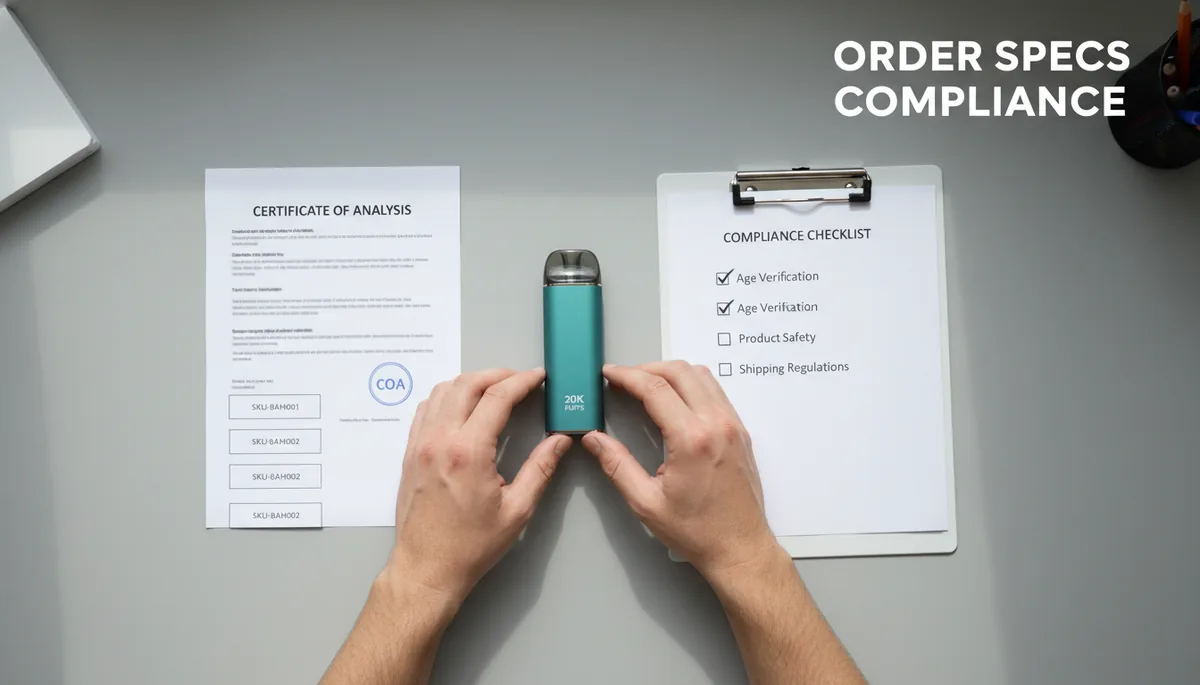
Safety documentation is part of compliance. Request full Material Safety Data Sheets (MSDS) for all e‑liquids and UN38.3 test certificates for the lithium batteries inside each disposable. For air transport, carriers will ask for IATA Dangerous Goods compliance; for sea, the IMDG Code applies. Keep digital copies in a central folder you can share with your broker and courier on request. When you’re unsure on any point—nicotine strength limits, point‑of‑sale warnings, or age‑verification expectations—call MOH or consult a licensed local vape shop for current practice. It’s faster and safer than guessing.
Shortlist reputable suppliers and assess credibility
There are three smart channels to build your shortlist: vetted B2B platforms, trade/industry referrals, and local retail recon. On platforms like Alibaba or Global Sources, filter for verified suppliers with vape‑specific certifications and export experience to the Middle East. Ask Bahrain‑based distributors who they import from. Then scan Bahrain retail sites and delivery services—such as Vapeshop.bh—to see which brands are already sold locally. If a brand has persistent presence and positive reviews in Manama or Muharraq, the underlying supply chain is more likely to be stable.
Run a simple pass/fail screen to avoid wasting time on risky factories. Ask for current business and export licenses, years in operation, and unedited factory photos. Confirm stated daily capacity; for disposable vapes, you want a production output in the thousands of units per day so 20k‑puff runs don’t bottleneck. Request recent product photos and production‑line videos for the exact 20k model, plus spec sheets for their 9k and 15k devices for benchmarking on size, mAh, and coil tech. Reputable suppliers will also provide third‑party audit snippets (SGS, Bureau Veritas) and quality system certificates (e.g., ISO).
Evidence beats assurances. Insist on the following documents during vetting: MSDS for each flavor, UN38.3 battery certificates, and any CE/RoHS declarations tied to the device’s electronics. Ask for two client references in the GCC region and call them. How often do they see DOA devices? How fast are replacements? Do they deliver consistent nicotine levels and flavor profiles across batches? A supplier that hesitates to provide references, hard‑date documents, or factory video is a red flag.
Communication style matters. During sampling, note responsiveness, clarity, and how they handle change requests. If you ask for Arabic/English label mockups and they deliver overnight with correct translations and dielines, that’s a sign they can execute retail‑ready work for Bahrain. Conversely, if they keep pushing house artwork and ignore your barcode/serialization needs, expect downstream friction. Maintain a living shortlist of two to three qualified suppliers to compare quotes and lead times, and to create a fallback if one stumbles.
- Pass/fail shortlist filter: verified licenses; export history to GCC; daily capacity in thousands; recent factory photos/videos; MSDS + UN38.3; third‑party audits; two GCC references; responsive, accurate communication.
Negotiate pricing, payment terms and bulk discounts
Walk into price talks with your landed cost model already set. Build it from the bottom up: factory unit price, artwork and packaging, inspection and lab tests, freight (air/sea), insurance, customs clearance and port fees, selective excise (if
Frequently Asked Questions
E-cigarettes and vaping products, including disposables, are allowed in Bahrain but regulated as tobacco products under the Technical Regulation of Electronic Nicotine Products (BH 2:2021), effective May 2022. Import requirements include compliance with set standards, registration of devices and liquids, and premarket notification. MPs have proposed a blanket ban on e-cigarettes and vapes, currently under review, which could impact future imports.
Vape imports in Bahrain require compliance with the 2021 Standard (BH 2:2021) for electronic nicotine products, including device and liquid registration and premarket notification. Products are regulated as tobacco equivalents by the Ministry of Industry and Commerce. Sale, import, and marketing of vaping products are permitted with strict advertising controls.
Bahrain regulates e-cigarettes, including high-puff disposables, under Technical Regulation BH 2:2021 as equivalents of traditional tobacco products, effective since May 2022. Vaping products face restrictions on public use and advertising, treated similarly to tobacco. A proposed parliamentary ban on all e-cigarettes and vape juices is under committee review.
Bulk imports risk shipment delays if missing label requirements, battery certificates, or excise calculations, as per general MENA compliance needs. A proposed ban by MPs on e-cigarette sales and circulation could halt resale if passed. Current rules allow imports with premarket notification and standards compliance.
Sale of vaping products is permitted in Bahrain, regulated as tobacco products with advertising bans in some cases. Compliance with BH 2:2021 standards for electronic nicotine products is required. Proposed legislation seeks a full ban on e-cigarette and vape juice sales, referred for review.
Imports must meet Bahrain's Technical Regulation BH 2:2021, requiring registration of devices and liquids plus premarket notification. Vapes are treated as tobacco products, so compliance with Ministry of Industry and Commerce standards applies. Check for any updates on proposed bans affecting circulation.