
How to Choose Vape Coils Without Guesswork

That “burnt” hit rarely comes out of nowhere. Most of the time, it’s a coil mismatch—wrong resistance for your style, too much power for the wick, or an e-liquid that your coil simply can’t keep up with. The good news is you don’t need to memorize a spec sheet to get this right. Once you know what the coil is designed to do, choosing becomes straightforward.
What a vape coil really controls
A coil is your device’s engine and filter at the same time. It heats e-liquid into vapor, but it also determines how fast liquid feeds in, how warm the vape feels, how airy the draw is, and how strongly flavors come through. Two coils that “fit” the same pod or tank can deliver completely different experiences.
When people say a coil is “better,” they usually mean “better for my setup and my habits.” That’s the mindset that prevents wasted money and burnt cotton.
How to choose vape coils based on your vaping style
If you’re deciding between coil options for the same device, start with how you actually vape day to day.
Mouth-to-lung (MTL): cigarette-like draw, tighter airflow
MTL users typically take smaller puffs and prefer a tighter draw with stronger nicotine satisfaction. For this style, higher-resistance coils are usually the right lane. They run at lower wattage, sip e-liquid, and keep vapor production moderate.
MTL coils tend to reward you with clearer flavor at lower power and a cooler-to-warm vapor temperature, depending on airflow. They’re also often more forgiving if you take quick puffs, because you’re not demanding huge liquid flow.
Direct-lung (DL): airy draw, bigger clouds
DL users inhale more like breathing in, with open airflow and larger vapor volume. That usually means lower-resistance coils that can handle higher wattage. These coils heat up quickly and produce warm, dense vapor—great for cloud volume and a bolder, punchier feel.
The trade-off is that DL coils consume more e-liquid and battery, and they can punish rushed chain vaping if the wick can’t re-saturate fast enough.
Restricted direct-lung (RDL): the middle ground
RDL sits between MTL and DL: slightly open airflow, satisfying warmth, and a fuller inhale without going fully airy. Many vapers in Bahrain end up here because it balances flavor, throat hit, and convenience.
If your device offers multiple coils, RDL-friendly options often sit in the mid resistance range. They’ll typically handle moderate wattage and work best with a balanced airflow setting.
Resistance (ohms): the fastest way to narrow your choices
Resistance is the number you’ll see as Ω. Think of it as a practical indicator of how the coil is meant to be used.
Higher-ohm coils generally run at lower wattage and suit tighter airflow. They can be ideal for nicotine salts and for anyone who wants less vapor but more control.
Lower-ohm coils generally run at higher wattage and suit more open airflow. They’re aimed at bigger vapor production and warmer hits.
Here’s the nuance: resistance alone doesn’t decide everything. A 0.6Ω coil in a small pod system can behave very differently from a 0.6Ω coil in a larger sub-ohm tank because the coil size, wicking ports, and airflow path change how it performs. Use ohms as your first filter, not your only decision.
Match the coil to your e-liquid (this is where most mistakes happen)
People often blame a “bad coil” when the real issue is that the liquid is too thick or the nicotine is too harsh for that coil.
Freebase nicotine vs nicotine salts
Nicotine salts are usually smoother at higher nicotine strengths, which is why many MTL pod users prefer them. They pair best with higher-resistance, lower-power coils where you’re not inhaling huge volumes of vapor.
Freebase nicotine is common in lower strengths and works well in higher-power setups, especially when you want bigger draws and more vapor. Using high-strength salt in a high-power, low-ohm coil can feel overwhelming fast.
VG/PG ratio: thickness and wicking speed
High-VG liquids are thicker. They’re great for cloud-focused devices, but they need coils with wicking designed for thicker juice and enough heat to vaporize it efficiently. If you run high-VG liquid in a small, tight MTL coil, you can get dry hits because the liquid can’t feed the cotton fast enough.
Higher-PG or 50/50 liquids are thinner and usually behave better in MTL pods and higher-resistance coils. Put a very thin liquid into a coil designed for thick juice and you may see more leaking or gurgling, especially if airflow is open.
Sweetness and coil life
Sweet, dessert-style liquids and heavily sweetened fruit flavors can shorten coil life because sweeteners caramelize on the heating surface. If you love sweet juices, consider coils known for efficient wicking and moderate wattage rather than pushing the top end of the range. You’ll often get longer life and steadier flavor.
Understand wattage ranges (and why “max” isn’t where you should live)
Most coils list a recommended wattage range. That range matters more than people think.
If you vape below the range, vapor can feel thin and flavor muted. If you vape above it, you can scorch the wick, darken the cotton quickly, and get that dry, burnt note.
A reliable approach is to start at the low end, take a few pulls, then nudge up slowly until flavor and warmth feel right. Many vapers end up happiest in the middle of the range, not at the top. The top end can be enjoyable, but it usually trades coil lifespan for warmth and density.
Coil materials and mesh: what’s worth knowing (without the jargon)
Coils come in different wire types and shapes. You don’t need to overthink it, but a few basics help you choose with confidence.
Mesh coils: easy flavor and even heating
Mesh is popular because it heats more evenly across a wider surface area. That usually means fast ramp-up, strong flavor, and a smoother vape. Many modern pods and tanks offer mesh options for that reason.
Traditional round wire: straightforward and consistent
Round wire coils are simple and dependable, and they can work very well—especially in MTL styles where you’re not demanding extreme vapor output.
Temperature control compatibility (only if you use it)
If you use temperature control modes, the coil material has to match the mode. If you don’t use temperature control, stick to standard power mode and choose the coil that best fits your resistance, airflow, and liquid.
Airflow and coil choice: they should agree with each other
A coil designed for a tight draw will struggle if you keep airflow wide open, and a coil designed for an airy draw can feel strange and turbulent if airflow is choked down.
If you want a tighter pull and sharper throat hit, pair that preference with a coil meant for lower wattage and tighter airflow. If you want a smooth, airy inhale, pair it with a coil designed for open airflow and higher power. When airflow and coil intention match, you’ll notice fewer spitbacks, more stable flavor, and more predictable nicotine delivery.
Practical signs you picked the wrong coil
Sometimes you only realize after a day of use. These are the common “tells,” and what they usually mean.
If you’re getting dry hits quickly, you may be using a coil that needs thinner liquid, lower wattage, longer priming time, or less chain vaping.
If you’re getting gurgling or leaking, the liquid may be too thin for that coil, the wattage may be too low to vaporize efficiently, or you may be drawing too hard on a coil designed for a looser inhale.
If flavor is muted but nothing tastes burnt, you may be under-powering the coil, running airflow too open for an MTL coil, or using a coil better suited to a different nicotine type.
Buying the right coil the first time (device fit matters)
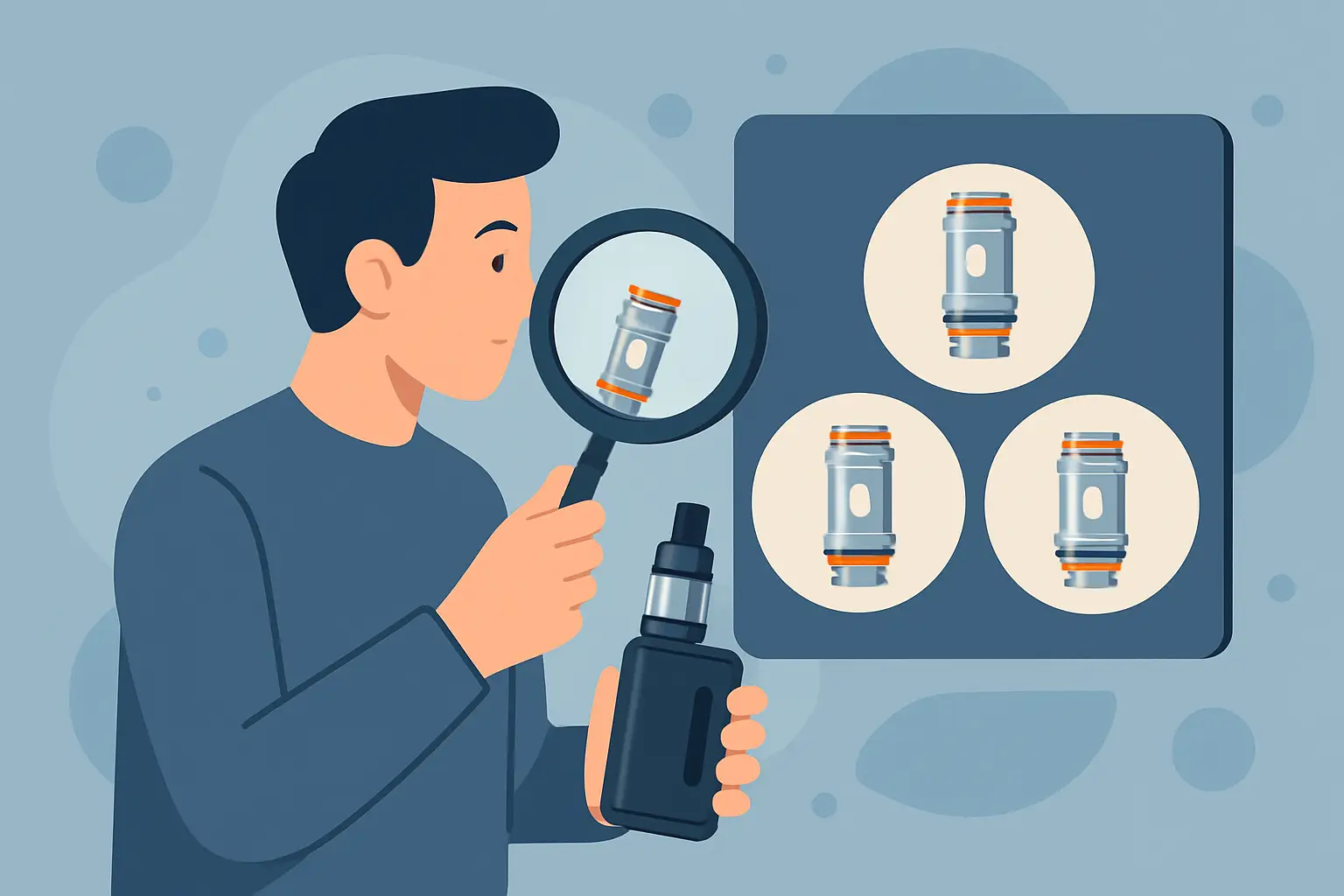
Coils aren’t universal. Even within the same brand, families of coils can look similar but fit differently. Before you check resistance, confirm the coil is made for your exact pod or tank model.
If you’re unsure, keep it simple: match the coil series name printed on your device or packaging, then choose resistance based on how you vape and what liquid you use.
For customers in Bahrain who want fast help matching the right coil to a specific device and e-liquid, VapeShop.bh can confirm compatibility quickly and get it delivered the same day.
Make your coil last longer (without babying it)
Coil life depends on liquid sweetness, wattage, and how quickly you vape. Still, a few habits make a noticeable difference.
Prime the coil properly by saturating the cotton (or giving a new pod time to soak) before you take the first real pulls. Start at lower wattage for the first few minutes and move up gradually.
Avoid running your tank or pod too low. When cotton starts to dry out, damage happens fast. And if you like long sessions, give the coil a few seconds between pulls so the wick can re-saturate.
A helpful closing thought: the “right” coil is the one that fits your device and makes your daily routine easier—comfortable nicotine, reliable flavor, and no surprises halfway through the day.